AI Ecommerce Personalization Tips to Enhance Shopping Experiences
244 Views
Summarize Article



Summarize Article
Shoppers now expect stores to know them a bit. One McKinsey study reports that 71 percent of consumers expect some level of personalization, and 76 percent feel annoyed when it is missing. Other reports show that companies that excel at personalization earn up to 40 percent more revenue than their peers.
So AI eCommerce personalization is not a trick for big marketplaces only. It is becoming a basic skill for any serious online store. This guide explains what it really means, where it helps in daily shopping journeys, and how WebOsmotic helps brands apply it without creating chaos.
Classic ecommerce relied on static menus and broad campaigns. One homepage for everyone. One weekly email for the whole list. That model struggles when shoppers move across devices and channels all day.
Recent stats show that:
AI helps because it can read large sets of behaviour data and respond in real time. It spots patterns in views, clicks, and orders that humans cannot see at speed. Good systems then turn those patterns into small helpful actions that feel natural, not creepy.
Done well, this lifts conversion, average order value, and repeat visits. Done badly, it sends random advice and hurts trust. The goal is to stay on the first path.
If most of your visitors still arrive through social feeds, it helps to pair these ideas with a plan for leveraging social media for ecommerce so traffic and personalization work together.
AI personalization is a way to shape each shopper’s experience based on signals such as past orders, browsing paths, and live actions.
Instead of one static journey, the site adjusts parts like:
The engine behind this can be a mix of models. Some predict which products a person might want next. Some rank deals. Some pick the best time to send a message. Modern tools also include conversational agents that answer questions and suggest items in chat.
Before running advanced features, it helps to understand the main pieces in the stack.
You need tidy product feeds, consistent tags, and clear events for views, add-to-cart, and orders. Messy data confuses models and leads to odd advice. A short audit often reveals missing attributes or duplicate IDs that need a fix.
Stores that already run campaigns for big events can reuse a lot of that tracking work by following the patterns in optimizing an ecommerce site for the highest ROAS in the holiday season.
You should know when the same person appears on different devices, and you must respect consent choices. Clear sign in flows, cookies banners, and preference centers let shoppers control what you can use. This protects trust and keeps you aligned with privacy rules.
This is where machine learning lives. It scores products, content, and offers for each person based on context. Leading brands use models that update with fresh behaviour so advice stays current and avoids stale patterns.
The same feedback loop shows up in AI automation for social media, where posts and timing keep shifting based on real engagement.
This is the visible part. Widgets on pages, blocks in email, and logic in chat. It pulls options out of the engine and displays them in a friendly way. Good UX keeps these units clear and easy to dismiss.
When these four parts work together, ecommerce personalization AI starts to feel smooth instead of patchy.
Here are common use cases that work well even for mid sized stores.
Recommender systems look at what a shopper has viewed, items often bought together, and patterns across similar shoppers. Then they surface:
Studies in sectors like e-grocery show that smarter top-N recommendations can cut search time and lift revenue by several percent.
AI search engines handle vague language, spelling mistakes, and long phrases. They also adjust ranking based on what drives engagement and orders, not only keyword match.
At the same time, merchandising tools can push or hold back items based on margin, stock, or season. Together, they make it easier for shoppers to find what they need in a few clicks.
AI can group shoppers by behaviour and value, then propose different bundles or discounts. High value loyal customers might see early access to new items. Deal hunters might see time bound bundles instead of pure price cuts.
Research on personalization shows that companies that tailor offers can see a good revenue uplift and better marketing ROI.
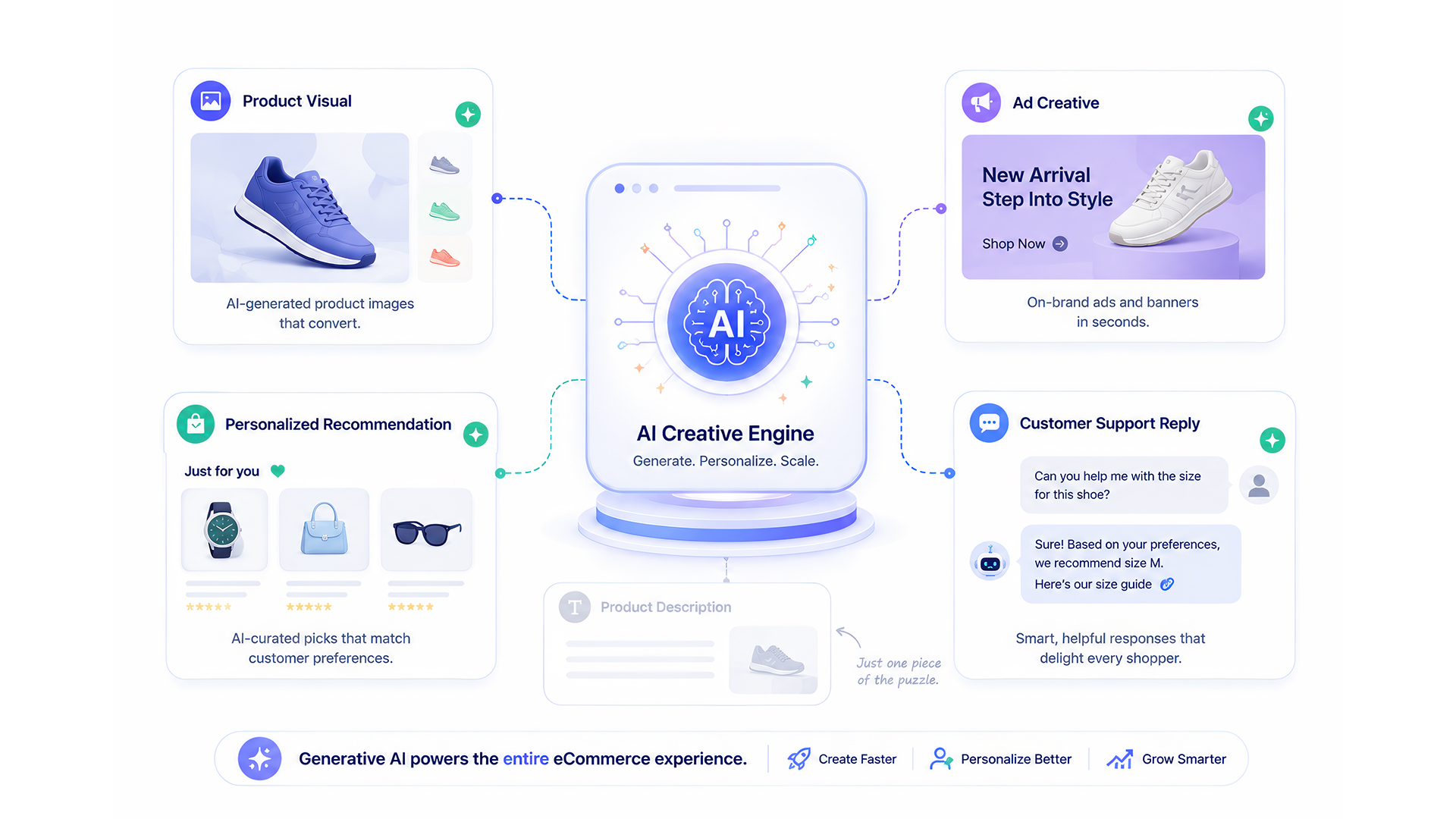
Generative tools can help draft subject lines, product copy, and on site banners that match a person’s interests. The content engine should still stay inside rules for tone and approval. Humans check claims and sensitive topics before publishing.
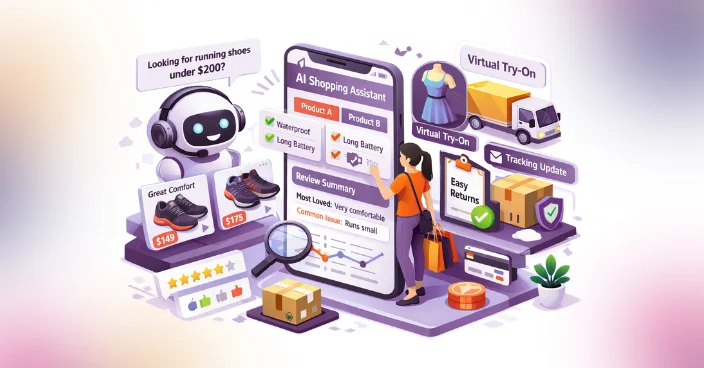
Chat and voice agents can answer questions on sizes, delivery, and use tips, then suggest products based on the current basket. Recent holiday shopping data shows that shoppers who use AI chat are much more likely to place orders than those who do not.
Many teams feel frozen because personalization sounds huge. You can break it into calm steps.
Many of the habits you build here are the same ones used to automate routine tasks with AI, so wins in one part of the business often spill into others.
If the result is positive and stable, roll it out wider. If not, inspect logs and sessions, adjust rules, and try again. The habit of small experiments matters more than any single model.
Also, keep a human in the loop. Merchandisers and marketers should see dashboards that explain why a model made certain picks. Clear controls for pinning items or setting guardrails keep the system honest.
WebOsmotic works with ecommerce teams that want real impact, not just new buzzwords in a deck.
Typical work includes:
Ethics and trust stay central. WebOsmotic helps teams set consent flows, privacy notes, and simple settings so shoppers can control what data powers their experience. That balance keeps AI personalization for eCommerce useful without feeling pushy.
AI will not fix a weak product set or broken service, yet it can make a good store feel far more tuned to each person. If you want help shaping that path, WebOsmotic can review your store, suggest safe first steps, and set up tracking so each experiment links back to revenue and loyalty.
Step by step, you can turn personalization into a steady strength in your ecommerce engine, and achieve much better revenue.