Mobile App Development vs Web Development: Key Differences Explained
311 Views
Summarize Article



Summarize Article
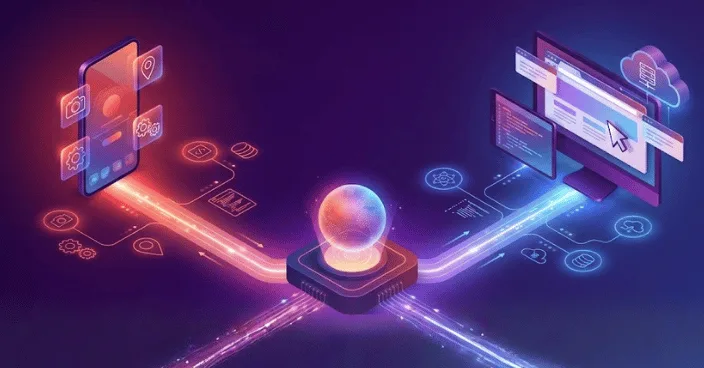
When people talk about mobile app development vs web development, thoughts and ideas get messy in a few minutes. You hear big terms, framework names, and strong opinions, yet you still do not know which path fits your idea.
WebOsmotic spends a lot of time helping founders and teams make this exact call, so let us break it down in simple language.
It’s the time to save your money and time, and add extra layers of perfection to your upcoming ideas.
Before any smart choice, you need clear meanings.
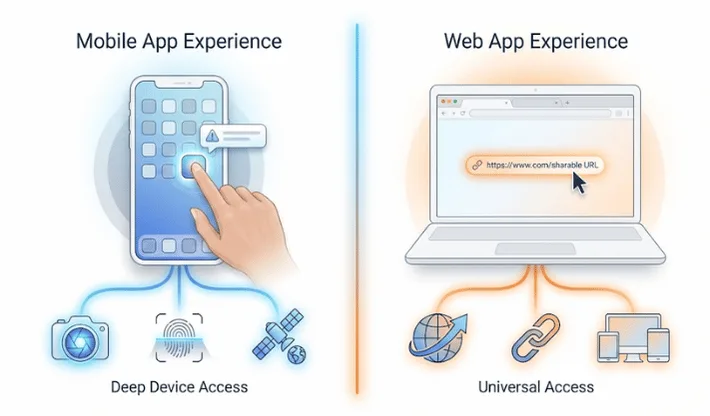
Mobile app development: You build apps that live on phones or tablets. Users install them from stores. The app can use device features like camera, GPS, offline storage, and push alerts.
Web development: You build websites or web apps that run inside a browser. Users open a link and use the product without installing anything. Updates reach everyone at once.
Both can look polished. Both can support real businesses. The difference is how deep you go into the device and how people reach you.
Here’s a vital stat – In the U.S., about 70% of all US digital media time comes from mobile apps, not desktop or mobile web.
When teams ask WebOsmotic for advice on web vs mobile app development, the first question is not about tech. It is about where users will show up more often and what those users need to do every single day.
At the planning stage, we help to review the whole building process.
In the U.S., mobile devices drive about 56.75% of web traffic, with desktops at 43.25%.
From the user side, the contrast in terms of User experience is simple.
If your product is something people open many times a day, like chat or task tracking, mobile can feel natural. If it is something people use on laptops at work, web development can be enough.
This is where the phrase mobile app vs web app development matters. Many teams do not choose one single thing. They start on the web to test flows faster, then add mobile once they see strong repeat use. WebOsmotic often helps clients design both with a shared backend so work does not double later.
Cost and time shapes every roadmap. The debate around mobile app development vs web development often starts here.
That does not mean mobile must be very expensive. Hybrid tools and shared APIs cut a lot of duplicate effort. Still, if you rush into full native builds without proof, you can burn the budget early.
WebOsmotic often suggests a simple path: start with a strong web app, then watch data. If users keep coming back and mobile visits grow, you can add a light mobile app that focuses on core tasks instead of every minor feature.
You will also hear people compare mobile app developer vs web developer as if they live on separate planets. In practice there is overlap, yet focus still matters.
A web developer spends more time on:
A mobile app developer spends more time on:
For a serious product, you want someone who respects both sides. WebOsmotic teams often mix skills so your mobile app vs web development plan does not lean too hard in one direction and ignore the other.
There is no single “right” stack, yet patterns help you plan.
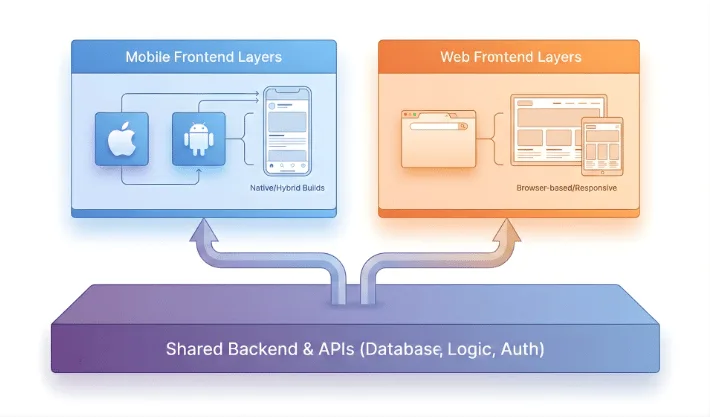
For web app development vs mobile app development, think in two layers:
A modern backend with clean APIs lets you serve a website, a mobile app, and even future screens like TV or in car panels. Then you can pick front end tools that suit each surface. That is the kind of architecture WebOsmotic likes to ship. It keeps you ready for growth instead of locked into one early decision.
A 2024 survey of U.S. consumers found 64% are more likely to use a retailer’s mobile app than its mobile website. Go mobile first when:
In these cases, web alone can feel thin. A crafted mobile app gives smoother taps, better access to hardware and more trust in repeated use.
Once you choose between native and cross-platform, the next big choice is cross app vs native app platform based on how often users will really open your product.
Choose web first when:
For internal tools, admin panels or early stage products, the web app can win for a long time. You focus on flows and learning instead of store rules and device quirks.
Instead of forcing one answer, WebOsmotic looks at your users, your budget and your rollout plan. The team has shipped pure web apps, pure mobile products, and blended stacks that start small and grow in waves.
If numbers and feedback say you should move from web app development vs mobile app development into a mixed model, WebOsmotic plans that shift with shared APIs, shared design systems and realistic timelines. That way, your users feel progress, not chaos.
The real story behind mobile and web is not a fight. It is a sequence. You pick the surface that matches your users today, then grow into the rest once the product proves itself. Clear goals, clean APIs and realistic timelines matter far more than one perfect framework choice.
If you want a partner who has seen both sides and can guide you through mobile app development vs web development without jargon, WebOsmotic is a solid place to start.
Should every new product launch on both web and mobile on day one?
Not always. Many teams launch on the web, watch real usage, then add mobile once they see clear repeat patterns. This keeps scope manageable in early months.
Is it cheaper to hire one team for web vs mobile app development together?
A combined team can help, as long as they respect differences in browser and device needs. Shared backend work saves money, but front ends still need care for each platform.
How do I decide between mobile app vs web app development for my startup?
List your top user tasks and where they happen. If they live on the move and need phone features, lean mobile. If they live at desks in browsers, lean web, then adjust as data comes in.
Can I switch later if I choose the “wrong” path first?
Yes, if you plan your backend and design with growth in mind. A clean API layer and a reusable design system make it much easier to add mobile or web later without starting again.