Generative AI for eCommerce: Content, Campaigns, and Conversions
240 Views
Summarize Article



Summarize Article

For many brands, generative AI for eCommerce has moved past hype and turned into daily work. Teams now use generative AI for eCommerce to write copy, design offers and qualify leads instead of staring at a blank screen. WebOsmotic sits with these teams as a build partner, helping clients turn models into clear flows that fit real store numbers.
A study of 30 ecommerce businesses found generative AI adoption led to 20% higher customer satisfaction, 30% higher conversion rates, and 25% revenue growth on average
But, is generative AI literally that helpful for eCommerce, and if yes, then in what ways. Let’s understand it.
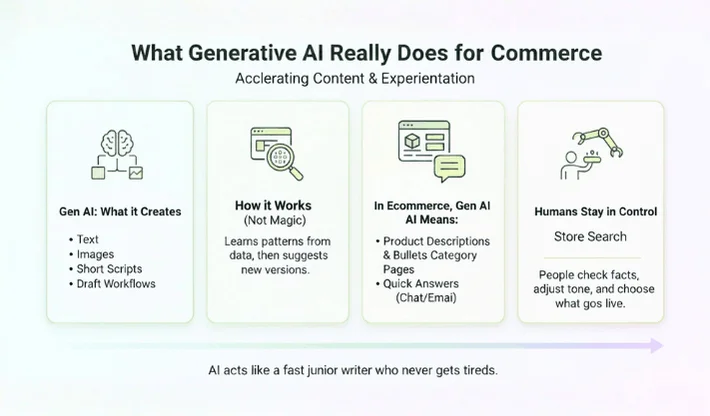
Generative AI could increase marketing productivity by 5–15% of total marketing spend, mainly by accelerating content and experimentation. Generative AI is a set of tools that can create:
It is not magic. It learns patterns from data then suggests new versions that match the same style. If you want to see how generative AI works in detail, we have broken the mechanics down with simple, non-technical examples.
In eCommerce that means:
You still need humans. People check facts, adjust tone and choose what goes live. WebOsmotic builds systems where staff stay in control and AI acts like a fast junior writer who never gets tired.
You can dive deeper into what generative AI is in our dedicated guide before mapping it to your own store.
Brands using AI-powered personalization report 10–40% revenue improvements, and personalization leaders grow about 10 percentage points faster than competitors.
When you hear generative AI for retail and eCommerce, think about the full path from first ad view to repeat purchase. AI can shape content at each step.
On ads and social posts it can draft hooks that match audience mood. On the site it can adjust copy for new visitors and loyal buyers in different ways. In post purchase flows it can suggest win back messages that do not feel like copy paste.
For example, a customer who always buys sports shoes might see different headlines than someone who buys home decor. The base product is the same. The story changes. WebOsmotic designs these content rules with clear guardrails so AI stays on brand instead of going off into random ideas.
We have also shared real store stories on using generative AI across ecommerce journeys in our ecommerce-focused breakdown.
Traffic alone does not pay bills. You need clear, ready leads. This is where AI for lead generation in eCommerce starts to show its value.
AI can:
Instead of blasting the same popup to everyone, you treat people differently based on signals. That is the heart of AI lead generation for eCommerce. You collect fewer fake emails and more contacts who actually want to hear from you.
If you are hunting for the best AI for lead generation in eCommerce, do not chase a single tool name. Focus on how the system reads behaviour, how easy it is to connect with your store and how clearly you can see the impact. WebOsmotic often builds light custom logic on top of good off the shelf tools so stores get the best mix of control and speed.
When teams talk about lead generation, they sometimes forget simple stuff:
AI works best on top of good basics, not instead of them.
Generative models can keep content pipelines full without burning out writers. You can:
WebOsmotic often sets up a small internal library. Teams feed in brand voice samples, top performing emails and best product pages. AI then works inside that frame. New drafts feel like part of the same family, not random text taken from the internet.
For campaigns, AI can generate subject line options, SMS hooks and ad variants that match a brief. Marketers still pick the final line. They just start with ten strong ideas instead of an empty box.
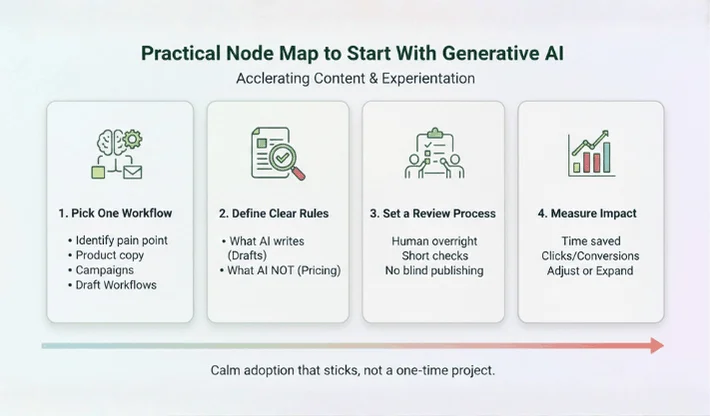
You do not need to flip your whole stack. Start small and keep it honest.
WebOsmotic walks teams through this path. The goal is calm adoption that sticks, not a giant one time project that fades after a month.
When we talk about lead generation for eCommerce AI, it’s vital to acknowledge that generative tools change fast. It is easy to feel lost in model names and new launches. WebOsmotic focuses on grounding all that noise in your eCommerce metrics. More qualified leads. Better average order value. Stronger repeat purchase.
The team can:
You keep ownership of data and direction. WebOsmotic keeps the tech side clean and stable as models change.
Generative tools are not here to replace your team. They are here to take away dull work and open space for smarter testing. With a clear plan you can use generative AI for eCommerce to write better content, run sharper campaigns and guide more visitors into real leads.
Do you want to move in that direction without drowning in jargon? WebOsmotic can help you design, build and refine a simple AI plan that fits your store and grows with your numbers. Contact our experts today!
Automation follows fixed rules. Generative AI creates new text or images each time based on patterns. That means you can have product copy, ads and emails that stay fresh without hand writing every line.
No. You can start with simple signals like pages viewed and time on site. Over time you can feed more data into the system, yet early gains often come from basic behaviour tracking.
Main risks are wrong facts and off brand tone. You reduce them with strong prompts, brand style guides and human checks before anything goes live.
Run short trials. Connect the tool to a segment of traffic. Compare sign ups, qualified leads and unsubscribe rates. Pick the one that improves numbers without making flows feel pushy.