AI for Logistics: Route Optimization Is the Easy Part
203 Views
Summarize Article



Key takeaways
|
Route optimization was the first AI for logistics use case because it was the most tractable. It has a clear objective function, a well-defined input set, and a decades-long history of operations research that gave AI systems a strong baseline to improve on. It also, in 2025, is table stakes. Every logistics operation above a certain scale is running dynamic route optimization.
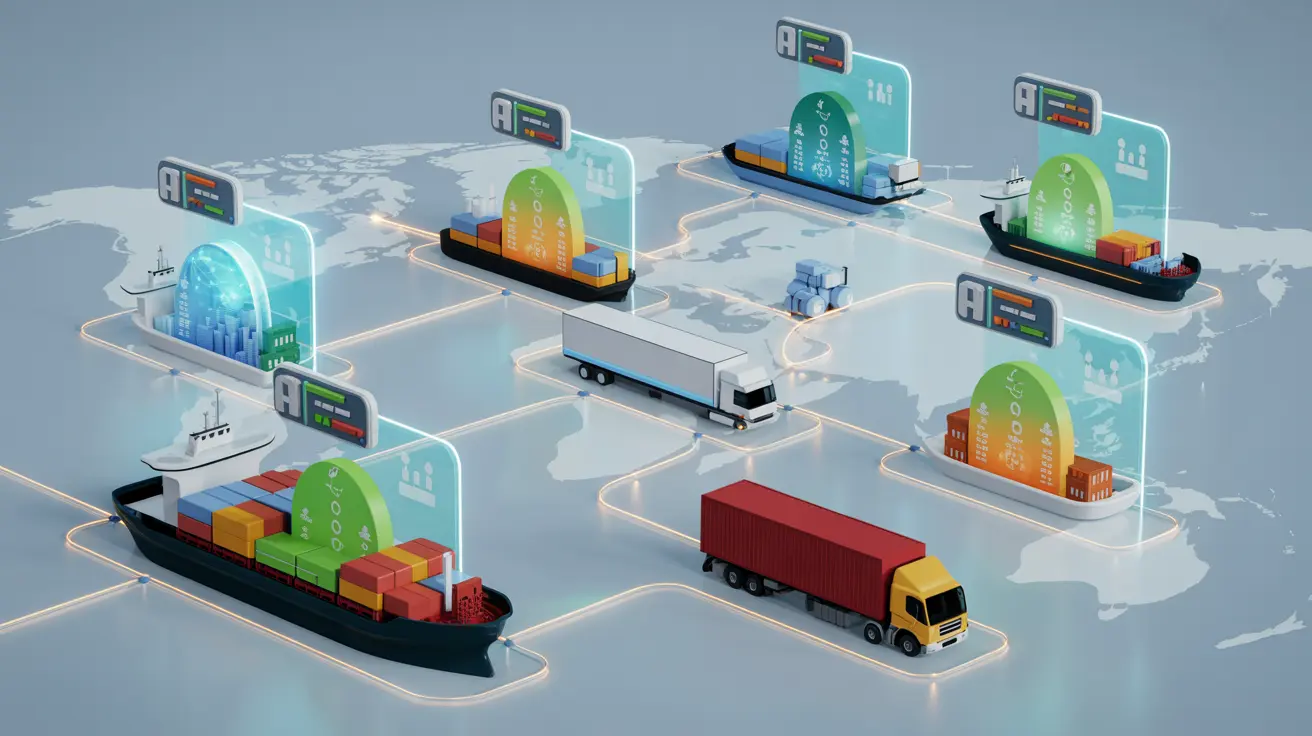
The teams that are building durable competitive advantages with AI for logistics are doing it in the layers where the problem is messier: demand forecasting that integrates real-time signals, warehouse operations that need to expand capacity without adding real estate, last-mile dispatch that generates human-level judgment at machine speed, and supply chain handoffs where 13 to 19 percent of total logistics costs evaporate.
McKinsey’s analysis finds that between 13 and 19 percent of US logistics costs, amounting to up to $95 billion annually, stem from inefficient handoffs between logistics chain participants. These are the blind spots where information is lost when goods change hands between shippers, carriers, and delivery networks. Generative AI-driven contextual communication and AI-based workflow automation can reduce this waste by up to 40%, per McKinsey’s analysis.
The AI in supply chain market is projected at USD 13.93 billion in 2025 and expected to reach USD 50.41 billion by 2032 at a 20.2% CAGR, per MarketsandMarkets. This post maps where that growth is concentrated and what the production results from deployed AI logistics systems actually look like.
| Building AI logistics infrastructure and need to scope the architecture? WebOsmotic builds demand forecasting systems, warehouse AI agents, last-mile optimization, and supply chain automation for logistics clients. We design the data architecture, agent orchestration, and integration layer before any model training begins. |
IBM documents that AI-powered demand forecasting allows businesses to spot sudden demand fluctuations and respond immediately, whether that means adjusting promotional strategies, reallocating inventory, or rerouting logistics. By processing information in real time from diverse data sources, AI forecasting provides the kind of agility that is particularly valuable in fast-moving markets such as fashion, electronics, and e-commerce.
McKinsey’s distribution operations analysis documents that AI can reduce inventory levels by 20-30% by improving demand forecasting through dynamic segmentation and machine learning. For a distributor carrying $100 million in inventory, a 25% reduction is a $25 million reduction in working capital deployed in inventory, before accounting for the reduction in carrying costs, markdowns, and obsolescence.
McKinsey documents that AI-powered warehousing tools can unlock 7-15% additional capacity in warehouse networks by identifying spare capacity, understanding variability in resource availability, and evaluating efficiency improvement opportunities. A major logistics provider used a digital twin to increase warehouse capacity by nearly 10% without adding new real estate, running simulations that identified optimization levers specific to each warehouse at hourly granularity.
Last-mile delivery is the most expensive segment of the logistics chain and the most directly visible to the end customer. It is also where AI is now generating the most asymmetric ROI relative to investment, specifically because the dispatcher function, which coordinates driver assignments, re-routes, customer communication, and exception handling, has historically been labor-intensive and was never automated by previous technology generations.
A McKinsey case study documents a last-mile operator with a fleet of more than 10,000 vehicles that implemented virtual dispatcher agents and achieved $30-35 million in annual savings on an investment of just $2 million. The agents augment human dispatchers by assisting drivers with troubleshooting and roadside assistance, handling routine exception management, and generating customer communications. McKinsey documents that a similar approach reduces logistics coordinator workload by 10-20% through auto-generating and consolidating shipping documents and identifying potential errors.
IBM documents that agentic AI is an emerging trend in supply chain, where AI agents can work across business functions, including procurement, supply chain management, and logistics planning, taking natural language queries and analyzing data to deliver relevant responses. IBM documents specific agent capabilities including improving order accuracy by checking shipment status, updating customer orders, and verifying stock availability.
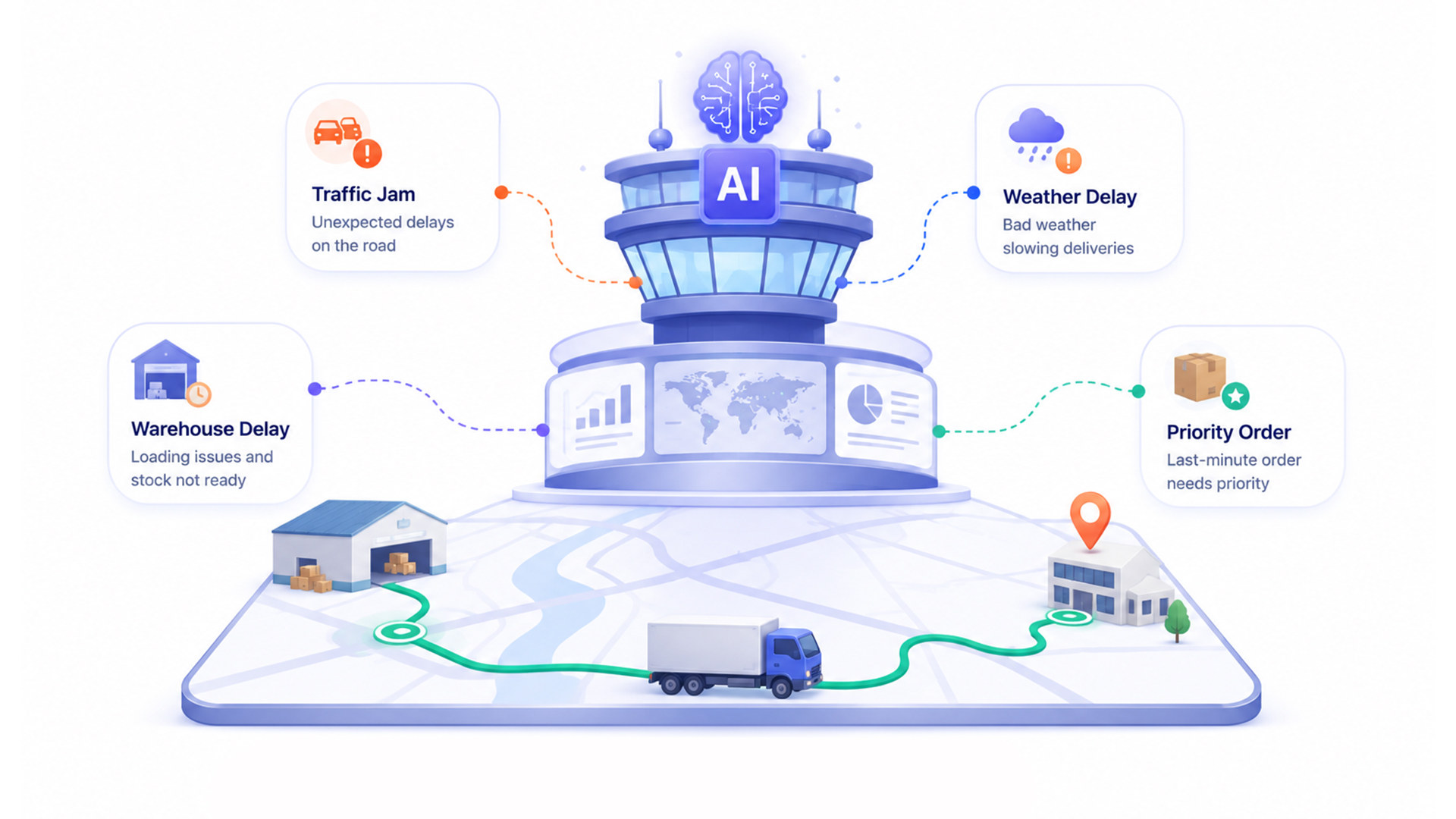
IBM’s generative AI in supply chain analysis documents that generative AI agents can dynamically optimize transportation routes based on traffic conditions, weather forecasts, and delivery deadlines, analyze historical data and market trends to generate demand forecasts, and run what-if scenario analysis at large scale and fine granularity to allow rapid pivots.
WebOsmotic’s logistics AI practice builds demand forecasting systems, warehouse AI agents, last-mile optimization, and supply chain automation for clients in logistics and eCommerce. The data integration architecture, which connects ERP, WMS, TMS, and real-time sensor data into a unified pipeline that AI models can consume, is typically the critical path in every engagement.
| Ready to deploy AI logistics that generates measurable operational impact? WebOsmotic builds demand forecasting architectures, warehouse AI agents, and supply chain automation for logistics operators and eCommerce companies. We work with teams across India and the US to scope and deliver production AI with ROI documented before development begins. |
What AI logistics use cases generate the fastest ROI?
McKinsey’s documented production results point to three: AI demand forecasting, which can reduce inventory levels 20-30%; warehouse AI, which can unlock 7-15% additional capacity without new real estate; and virtual dispatcher agents, where one documented case generated $30-35 million in annual savings on a $2 million investment. Route optimization is widely deployed but has lower marginal ROI than these use cases because most logistics operations have already captured the easily available routing efficiency. IBM documents AI demand forecasting as enabling real-time demand sensing and response, which is particularly valuable for operations affected by rapid market changes.
How does AI demand forecasting differ from traditional statistical forecasting?
Traditional forecasting uses historical sales data, often updated weekly or monthly, combined with seasonal adjustments and simple regression models. AI demand forecasting integrates real-time point-of-sale signals, external data including weather, events, and social trends, and applies dynamic segmentation to apply different model types to different demand pattern categories. IBM documents that AI-powered demand forecasting allows businesses to spot sudden demand fluctuations and respond immediately by adjusting promotional strategies, reallocating inventory, or rerouting logistics. The McKinsey-documented 20-30% inventory reduction from AI forecasting reflects the reduction in safety stock that better forecast accuracy makes possible.
What are virtual dispatcher agents and what problems do they solve?
Virtual dispatcher agents are AI systems that augment human dispatchers by handling routine exception management, driver troubleshooting, customer communication, and documentation tasks. McKinsey documents a last-mile operator with a 10,000-vehicle fleet that achieved $30-35 million in annual savings from virtual dispatcher agents on a $2 million investment. The agents reduce dispatcher workload by handling tasks that previously required human intervention for each exception: re-routing a driver around a road closure, notifying a customer of a delay, scheduling a re-delivery, and processing proof of delivery anomalies. Human dispatchers shift from handling individual exceptions to managing exceptions that require judgment or escalation.
How does AI expand warehouse capacity without new real estate?
AI warehouse systems identify underutilized capacity that manual planning cannot see. McKinsey documents that AI-powered warehousing tools can unlock 7-15% additional capacity by identifying spare capacity, understanding variability in resource availability, and finding efficiency improvements. A major logistics provider increased warehouse capacity by nearly 10% using a digital twin that ran hourly simulations of labor and equipment requirements against forecast volume. The practical levers are slotting optimization that reduces pick travel time, labor scheduling that eliminates systematic over-staffing during lower-volume periods, and dynamic task assignment that increases throughput from a mixed human-robot workforce.
What data integration does a logistics AI system require?
A production logistics AI system requires integration with the enterprise resource planning (ERP) system for order and inventory data, the warehouse management system (WMS) for warehouse operations data, the transportation management system (TMS) for route and carrier data, and real-time sensor and telematics data from vehicles, dock equipment, and IoT-connected warehouse infrastructure. IBM documents that AI in supply chain analyzes data from IoT sensors, enterprise systems, warehouse operations, and transportation networks in real time. The data integration layer that unifies these sources is typically the critical path in any logistics AI deployment.
How does WebOsmotic build AI systems for logistics clients?
WebOsmotic scopes the data integration architecture first: identifying which systems need to be connected, what data quality and latency requirements each AI use case demands, and where the integration gaps are in the existing tech stack. We build demand forecasting architectures that integrate ERP and real-time signals, warehouse AI agent systems that connect to WMS platforms, virtual dispatcher agent tools that integrate with TMS and communication systems, and supply chain visibility platforms that give operations teams actionable intelligence across the network. We work with logistics operators, eCommerce companies, and third-party logistics providers in India and the US.