Automated B2B Procurement Software: Engineering Agentic Commerce Workflows
141 Views
Summarize Article



Summarize Article
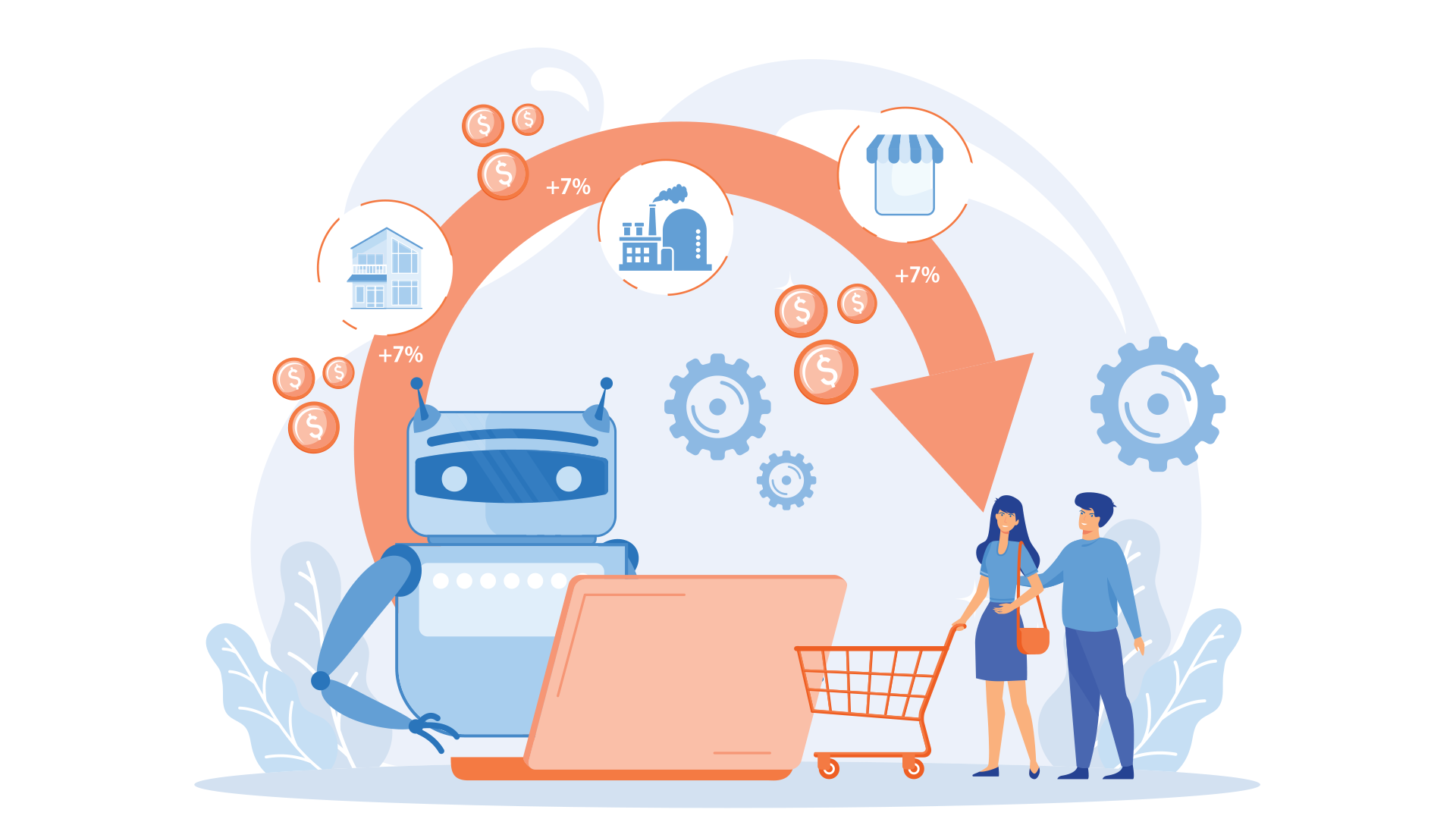
Gartner reports that by 2028, 90 percent of B2B buying will be AI agent-intermediated, pushing more than $15 trillion of B2B spend through AI agent exchanges. That single figure is why automated B2B procurement software has moved from a back-office efficiency project to a board-level architecture decision in under two years.
Most companies shopping for procurement automation today are still comparing dashboards and approval workflows. The companies that will actually run this way in three years are the ones asking a different question right now: can our purchasing systems perceive supplier data, negotiate terms, and execute a transaction without a human clicking approve at every step.
McKinsey’s own research on procurement functions puts a number on the gap: teams already manage 50 percent more spend per full-time employee than they did five years ago, and agentic AI is projected to make procurement 25 to 40 percent more efficient on top of that. This guide will explore what actually separates automated B2B procurement software built for that shift from a system that only automates the paperwork around it.
Gartner unveiled its top strategic predictions for 2026 and beyond at its IT Symposium, stating plainly that by 2028, 90 percent of B2B buying will be AI agent intermediated, pushing over $15 trillion of B2B spend through AI agent exchanges (Gartner, 2025). The same research adds that by 2030, 20 percent of monetary transactions will be programmable, giving AI agents the economic agency to negotiate, budget, and transact on their own (Gartner, 2025).
That prediction matters because it changes what counts as real procurement automation in the first place. A system that routes a purchase request to a human approver is not competing in the same category as a system where a buyer agent and a supplier agent settle price and terms directly.
Gartner’s forecast describes where B2B commerce is heading. McKinsey’s research describes what happens to a procurement team that gets there first. Procurement functions already manage 50 percent more spend per full-time employee than they did five years ago, and McKinsey projects that agentic AI could make the function 25 to 40 percent more efficient beyond that (McKinsey, 2025).
Forty percent of procurement functions have already implemented or piloted generative AI tools, according to the same research, mostly for tasks like invoice reconciliation and contract summarization rather than full transaction execution (McKinsey, 2025). That gap between piloting an assistant and granting a system real execution authority is where most of the architecture work still needs to happen.
A genuine agentic commerce workflow moves through three distinct stages, and each one requires different architecture than a traditional approval-based purchasing system.
The agent needs live access to supplier catalogs, inventory positions, and contract terms, pulled directly from an ERP integrated supply chain rather than a static spreadsheet someone updates weekly. Without this, the agent is working from information that is already out of date by the time it acts.
This is the stage most current procurement software skips entirely. A buyer agent compares supplier terms, checks them against budget and compliance rules, and in more advanced setups, negotiates directly with a supplier’s own agent within limits a human has already approved. Chaining that negotiation logic across suppliers is exactly the multi-agent orchestration problem covered in WebOsmotic’s guide to designing multi-agent systems for complex business operations.
Once terms are settled, the system needs to generate the purchase order, update inventory records in the ERP, and adjust stock positions immediately, not after a manual reconciliation cycle days later.
| Capability | Traditional procurement software | Agentic commerce workflow |
|---|---|---|
| Data source | Manual entry, periodic spreadsheet upload | Live ERP integrated supply chain feed |
| Supplier comparison | Human review of quotes | Agent-led comparison against policy and budget |
| Negotiation | Email or phone, human led | Agent to agent negotiation within approved limits |
| Execution | Human clicks approve at every step | Agent executes within delegated authority |
| Inventory sync | Batch update, often delayed | Automated inventory optimization in real time |
The technical capability to build this kind of agent-led purchasing already exists. What is missing in most pilots is a governance structure that tells the organization how much authority to delegate, and how to prove that authority was used correctly.
NIST’s AI Risk Management Framework, and its companion Generative AI Profile released as NIST AI 600-1, organizes exactly this kind of oversight into four functions: GOVERN, MAP, MEASURE, and MANAGE (NIST, 2024). Applied to procurement, this looks less like a document and more like a set of concrete architecture decisions.
| NIST AI RMF function | What it means for procurement automation |
|---|---|
| GOVERN | Set spend limits, category restrictions, and approval thresholds an agent cannot exceed without a human in the loop |
| MAP | Define which supplier categories, geographies, and contract types the agent is permitted to act on |
| MEASURE | Log every agent decision, price comparison, and negotiation step so the outcome can be audited after the fact |
| MANAGE | Build a rollback path so a bad agent decision can be reversed before payment or shipment executes |
Skipping this structure is the most common reason these pilots stay stuck before execution. A system that can negotiate a purchase but cannot prove why it made that decision will not survive its first internal audit, regardless of how well it performs on paper.
Building a system that can actually reach the execution stage means treating a handful of decisions as architecture, not configuration:
| Trying to figure out what your procurement stack actually needs before an agent can execute a transaction on its own? WebOsmotic’s AI agent development team scopes automated B2B procurement software around ERP integration, permission architecture, and audit logging before a single agent goes live. |
A genuine B2B digital commerce layer has to serve two very different users at once: a human buyer who still wants a clean interface, and a supplier or buyer agent that needs structured data it can parse without a person in the loop. This is the same problem WebOsmotic solves for eCommerce and D2C clients building digital commerce layers, just applied to B2B procurement rather than consumer checkout.
The practical difference shows up in a handful of places:
| Requirement | Built for humans only | Built for B2B digital commerce with agents |
|---|---|---|
| Catalog format | Rendered web pages and PDFs | Structured, machine-readable product and pricing feeds |
| Inventory visibility | Dashboard a person checks periodically | Automated inventory optimization exposed through an API agents can query directly |
| Order confirmation | Email sent to a person | Structured callback an agent can parse and act on immediately |
| Pricing updates | Manual price list refresh | Live feed an agent can renegotiate against in real time |
Companies that get this right are not rebuilding their entire commerce stack. They are exposing the data their ERP system already holds in a format an agent, and not only a browser, can read.
McKinsey’s research on procurement transformation notes that well-documented, routine processes such as purchase order creation and invoice processing are the ones most exposed to agentic automation right now, and many companies are actually insourcing this work rather than continuing to outsource it (McKinsey, 2025). That is a useful signal for where to start. This mirrors how WebOsmotic’s AI consulting engagements scope a rollout: start narrow, prove governance, then expand.
| Ready to architect a procurement system built for agent-led execution from day one? WebOsmotic builds automated B2B procurement software with ERP integration, negotiation logic, and NIST-aligned governance controls, using its own AI workflow automation practice, designed in from the start. |
Gartner’s $15 trillion forecast and McKinsey’s efficiency numbers describe the same shift from two different angles: procurement is moving from a workflow that routes decisions to humans, to one where agents perceive, negotiate, and execute within limits an organization has already approved. Automated B2B procurement software that treats ERP integration, machine-readable data, and NIST-aligned governance as core architecture will be ready for that shift. Software that only automates approval routing will not.
Talk to WebOsmotic about architecting automated B2B procurement software built for agentic commerce from day one. Get a Project Scoping Call.
It needs live, structured access to supplier and ERP data, a defined authority limit for what an agent can negotiate without a human, and a logging system that records every decision the agent makes. Without structured, machine-readable supplier data, an agent has nothing reliable to negotiate against, regardless of how capable the underlying model is.
A regular automation tool routes a request through a workflow and waits for a human to approve each step. An agentic commerce workflow lets the agent compare suppliers, check terms against policy, and in more advanced setups, negotiate directly with a supplier’s agent, executing the purchase itself within pre-approved limits.
Because an agent making a purchasing decision from stale or batch-updated data will make decisions based on numbers that no longer reflect reality. A live, ERP integrated supply chain feed is what lets the agent perceive accurate inventory, pricing, and contract terms at the moment it needs to act, not the moment someone last updated a spreadsheet.
NIST’s Generative AI Profile, published as NIST AI 600-1, offers a four-function structure, GOVERN, MAP, MEASURE, and MANAGE, that maps directly onto procurement decisions: setting spend limits, defining permitted categories, logging every agent action, and building a rollback path if something goes wrong.
Basic inventory automation can run on rules and thresholds without any agentic capability. Automated inventory optimization becomes part of a genuine agentic commerce workflow once it is exposed through an API an agent can query and act on directly, rather than a dashboard a person checks and updates manually.