AI Generated Code Testing: Why 40% Ships Untested
11 Views
Summarize Article



More than 40% of code written last year was generated by AI, according to Tricentis CEO Kevin Thompson’s own keynote at the company’s Transform 2025 conference. That statistic alone would be manageable if testing practices had scaled with it. They haven’t. Tricentis’ own 2026 Quality Transformation Report, based on a survey of more than 2,500 IT and QA leaders across six countries, found that 60% of organizations still deploy untested code to production, and for the first time, most of them admit it’s deliberate: 30% say the sheer volume of AI-generated code has become too large for their teams to test fully.
That gap, between how much code AI now writes and how much QA capacity actually grew to match it, is the entire subject of this article. This piece covers why ai generated code testing has to be structurally different from testing human-written code, what genuine AI code validation tools actually need to check, where autonomous test agents genuinely help and where they don’t, and what self-healing test automation solves that traditional frameworks can’t. The short version: testing AI written code well is a distinct discipline, not an extension of the QA process most teams already had.
Key takeaways
|
Code written by a human developer tends to fail in patterns a QA team has seen before: a forgotten edge case, a misunderstood requirement, a copy-paste error. AI-generated code fails differently. It is frequently syntactically clean, passes a quick manual read-through, and clears surface-level functional tests, while quietly missing boundary conditions, mishandling edge cases the model was never shown an example of, and introducing integration issues that only surface once the code interacts with the rest of a real system. A QA process built around catching human error patterns is not automatically equipped to catch this different failure shape.
The deeper issue Tricentis’ own data surfaces is not that teams don’t want to test AI-generated code properly. It’s that the volume has outpaced what existing QA headcount and processes can absorb, and 30% of organizations now admit that plainly rather than attributing untested code to an accident, as more of them did in the 2025 edition of the same report. Testing capacity is a real constraint, and pretending it will scale automatically alongside code generation volume is exactly how a team ends up in Tricentis’ 60% statistic.
Building this into a real engineering workflow, not a checklist run occasionally, means covering a specific set of validation layers:
| Not sure your current QA process is actually built for AI-generated code specifically? WebOsmotic audits testing pipelines against the failure patterns AI-generated code is documented to introduce, not just general coverage metrics. |
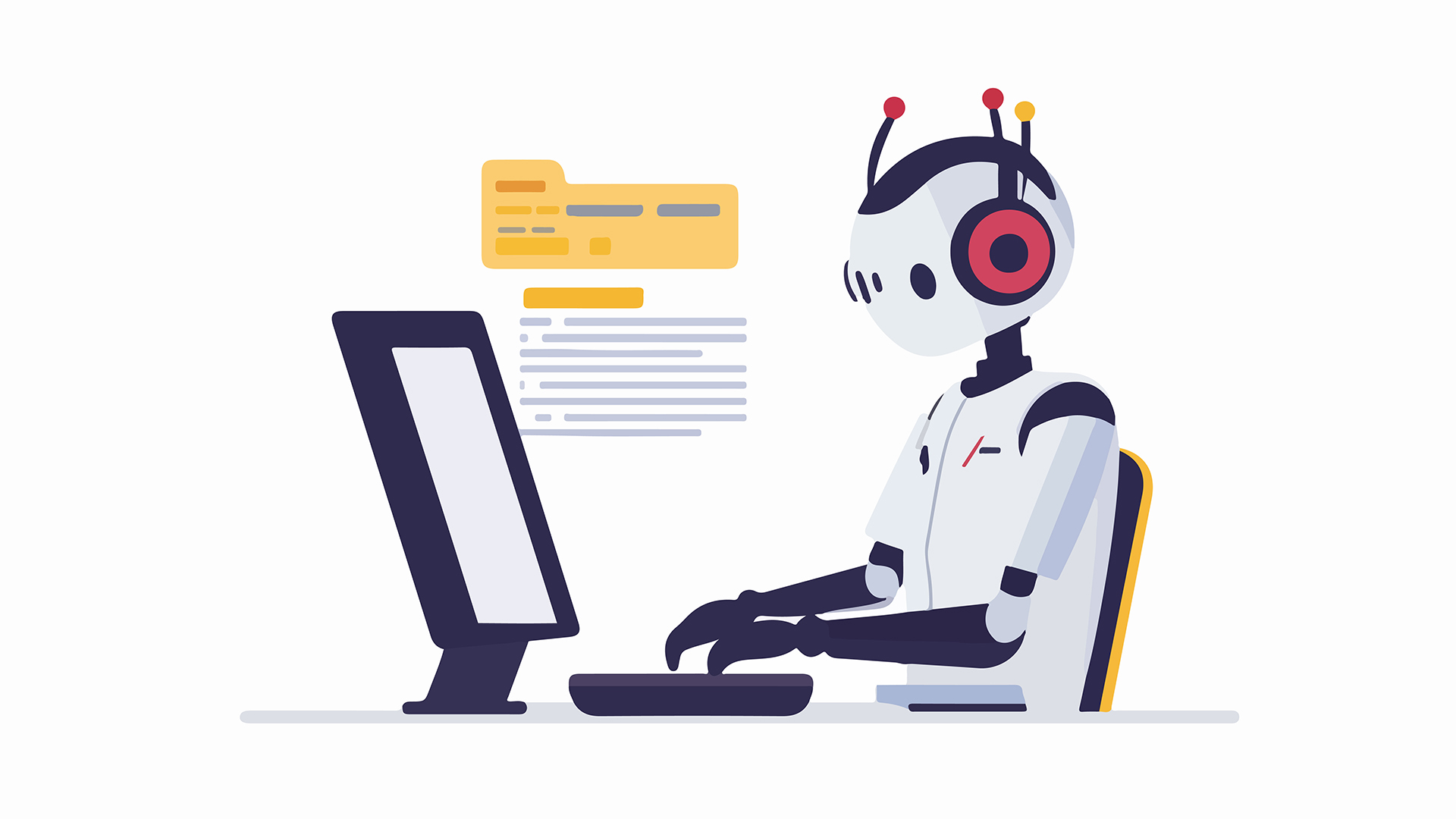
Autonomous test agents can generate a meaningfully larger volume of test cases than a human QA engineer could write manually in the same time, covering more input permutations and surfacing edge cases a person might not think to test explicitly. For breadth of coverage, especially on straightforward functional paths, this is a genuine, measurable improvement over manual test authoring alone.
Breadth is not the same as judgment. An autonomous test agent can generate a large number of tests without any of them actually validating the business logic that matters most, or without recognizing that a passing test is checking the wrong thing entirely. The pattern that separates teams getting real value from autonomous test agents from teams generating noise is a human review gate that curates and validates what the agent produces, rather than treating agent-generated test volume as inherently equivalent to test quality.
Traditional test automation breaks constantly when the underlying application changes, since most frameworks rely on fixed selectors and locators that stop matching the moment a UI element shifts. AI-generated code changes more frequently and more unpredictably than human-written code typically does, since it’s often regenerated or modified in response to a prompt rather than a deliberate, incremental edit, which makes traditional brittle test automation break even more often than usual. Self-healing test automation addresses this specifically: instead of a hardcoded selector, the framework identifies elements using multiple signals and adapts when the underlying structure changes, rather than simply failing and generating a false positive that a human then has to triage.
This matters directly for testing AI-written code, because a test suite that breaks constantly for reasons unrelated to actual bugs trains a team to ignore failures, which is precisely the habit that lets a genuine regression slip through unnoticed.
| Ready to build a testing pipeline that actually accounts for how much of your codebase is AI-generated? WebOsmotic implements AI code validation tools, autonomous test agent review gates, and self-healing test automation as a single integrated pipeline, not disconnected tools. |
Tricentis’ own CEO put a number on how much of last year’s code was AI-written, and the company’s own 2026 research shows testing capacity has not kept pace with it, with 30% of organizations now openly admitting the volume has outrun what their teams can test. Veracode’s independent security data confirms the technical stakes: a 56% average pass rate means a meaningful share of AI-generated code carries real vulnerabilities regardless of which model produced it. Genuine ai generated code testing is not a matter of running the same QA process faster. It requires validation layers built specifically for how AI-generated code actually fails, and teams that treat ai generated code testing as a distinct discipline, not an afterthought bolted onto existing QA, are the ones who won’t end up in next year’s version of Tricentis’ statistic.
What makes ai generated code testing different from testing code a human wrote?
AI-generated code tends to look clean and pass surface-level functional tests while failing at edge cases, boundary conditions, and integration points that traditional QA processes were built to catch based on how human developers typically make mistakes. Ai generated code testing done properly requires prioritizing boundary and integration testing specifically, rather than assuming the existing QA process automatically covers a fundamentally different failure pattern.
Are autonomous test agents actually reliable enough to replace manual test writing?
They’re reliable for generating a large volume of test cases quickly, which genuinely improves coverage breadth compared to manual authoring alone. They are not yet reliable enough to replace human judgment about which tests actually validate the business logic that matters, which is why the teams getting real value from autonomous test agents keep a human review gate on the output rather than accepting generated volume as equivalent to quality.
What is self-healing test automation and why does it matter more for AI-generated code specifically?
Self-healing test automation identifies UI elements and application behavior using multiple signals instead of a single fixed selector, so tests adapt when the underlying application changes instead of breaking. This matters more for AI-generated code because that code tends to change more frequently and less predictably than human-written code, which means traditional brittle automation breaks more often and trains teams to start ignoring failures, exactly the habit that lets real regressions through.
Is it true that most organizations are shipping untested AI-generated code on purpose?
According to Tricentis’ 2026 Quality Transformation Report, yes, increasingly so. 60% of organizations report deploying untested code to production, and unlike the 2025 edition of the same report, where this was more often attributed to accidental quality slips, 30% of organizations in 2026 now cite the sheer volume of AI-generated code as too large for their teams to test fully, a deliberate tradeoff rather than an oversight.
What should a team prioritize first if their QA process hasn’t adapted to AI-generated code yet?
Start with security scanning calibrated to AI-generated code’s documented vulnerability patterns, since Veracode’s data shows this is where the gap is most measurable and most costly if missed. From there, prioritize boundary and edge-case testing over growing general functional coverage, and track AI-generated code’s test coverage as its own metric so the gap becomes visible instead of hidden inside an aggregate number.