Self-Healing Infrastructure: What Agentic AIOps Actually Fixes
117 Views
Summarize Article



Summarize Article
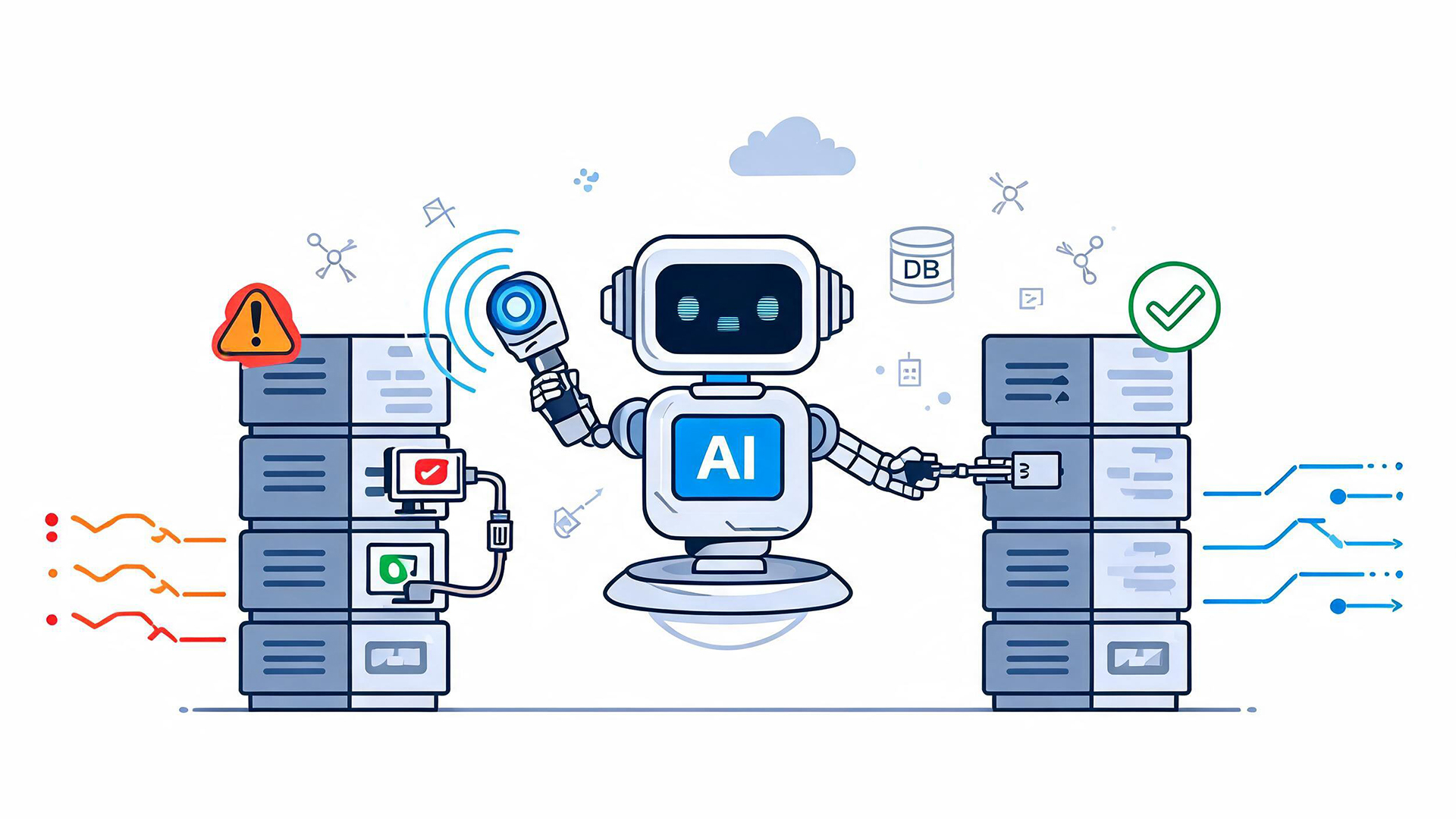
Most incident response conversations focus on the wrong number. Everyone tracks how fast a team resolves an alert once it fires. Almost nobody talks about what happens when nothing fires at all. NeuBird AI’s 2026 State of Production Reliability and AI Adoption Report, based on a survey of 1,039 SRE, DevOps, and IT operations professionals conducted in February 2026, found that 78% of organizations experienced at least one incident where no alert fired at all, leaving customers to discover the failure before the monitoring stack did. That gap is exactly what agentic aiops services are built to close.
That statistic is the real argument for agentic aiops services, and it’s a different argument than the one most teams are having. The conversation usually centers on alert fatigue: too much noise, not enough signal. That’s real, and the same survey found 77% of on-call teams receive at least ten alerts a day while only 30% of those alerts turn out to be actionable.
But noise reduction alone doesn’t fix a silent failure. Something has to actively watch for the things nobody thought to alert on in the first place, and increasingly, that something is an agent, not a dashboard.
The NeuBird survey put numbers on a cost most engineering leaders feel but rarely quantify: the majority of teams spend 40% or more of their time on incident management instead of building anything. When a business-impacting incident hits, 93% of organizations pull in three or more engineers, and nearly 40% pull in six to ten. More than a third of teams spend five to ten hours a week just writing incident reports and post-mortems, on top of the incident itself- cost that agentic aiops services are designed to reduce.
The financial exposure scales with that overhead. 61% of organizations estimate infrastructure downtime costs at least $50,000 an hour, and over a third put that figure above $100,000.
With almost 90% of companies handling up to 50 incidents a month, the math compounds fast: a one-to-two-hour resolution window on a critical incident, which is where nearly 60% of organizations report landing, represents tens of thousands of dollars in exposure before anyone accounts for the engineering hours lost to diagnosis and cleanup.
Most AIOps platforms built their value proposition on correlation: take a thousand alerts, recognize they’re all downstream of one root cause, and present a single enriched incident instead of a thousand separate tickets. That’s genuinely useful, and it’s why alert volume reduction became the industry’s favorite metric to advertise.
It’s also not the problem NeuBird’s data says is actually hurting teams most. Correlation helps once something has already triggered a signal. It does nothing for the 78% of organizations that had an incident where no signal fired in the first place.
That gap is structural, not a tuning problem: a static alerting rule can only catch the failure modes someone thought to define in advance. An agent watching system behavior continuously, comparing it against a learned baseline rather than a fixed threshold, can flag the failure mode nobody wrote a rule for.
The shift from traditional AIOps to agentic AIOps is the difference between a system that tells you something is wrong and a system that investigates, proposes, and in defined cases executes a fix.
That last point is the one most vendor pitches skip, and it’s the one that actually determines whether a team trusts the system enough to let it act. NeuBird AI’s own published Earned Autonomy Framework treats this explicitly: an agent’s permission to act in production should be scoped and expanded incrementally, tied to demonstrated reliability on specific incident types, not granted wholesale because the demo looked convincing.
Self-healing infrastructure is a specific case of a broader question we’ve written about before: when should an AI system be trusted to act autonomously, and what has to be true first? Our piece on multi-agent system design covers the same underlying tension from a different angle, deciding when a workflow genuinely needs autonomous, multi-step reasoning versus when a simpler, deterministic process is actually the safer and more maintainable choice.
The audit trail requirement matters just as much here as it does anywhere else an AI system takes an action with real consequences. The same discipline we apply to SOC 2 audit readiness, where every automated decision needs to be reconstructable after the fact, not just logged as “action taken,” applies directly to an agent that just restarted a production service at 3 a.m. without a human in the loop.
| Not sure which incidents in your environment are actually ready for agentic aiops services? WebOsmotic reviews your last six months of incident history and maps which failure patterns are genuinely ready for agentic remediation, and which still need a human in the loop. |
An agent that investigates and remediates production incidents is, underneath the SRE framing, still a system making decisions based on model output, the same discipline any agentic aiops services deployment requires. The same failure modes we’ve covered in how AI-generated code actually fails apply here: a plausible-looking diagnosis that’s subtly wrong is more dangerous than an obviously wrong one, because it’s more likely to get approved or auto-executed without a second look.
That’s precisely why the earned-autonomy model matters more than raw capability. An AI SRE agent that’s right 95% of the time but has no mechanism for a human to catch the other 5% before it takes a production action is a worse deployment than one that’s right 85% of the time but flags uncertainty honestly and routes anything it’s not confident about to a person.
Alert fatigue reduction DevOps teams actually want isn’t “fewer things to look at.” It’s “the right things reach a human, and everything else gets handled correctly without anyone needing to look at all.”
A genuine rollout of agentic aiops services requires the following:
Most teams evaluating agentic aiops services start by comparing platform feature lists: which vendor correlates better, which one claims the highest MTTR reduction, which dashboard looks the cleanest. That comparison matters less than it seems to. Every agentic AIOps platform on the market is only as trustworthy as the permission scoping, audit logging, and escalation logic wrapped around it, and that layer is rarely something a vendor ships fully formed for your specific environment.
This is the part of agentic aiops services that actually determines whether a rollout earns production trust within a quarter or sits half-adopted for a year: the integration work that connects a platform’s raw capability to your actual incident history, your actual risk tolerance for different failure classes, and your actual compliance requirements.
A team that skips this and grants broad autonomy on day one is optimizing for an impressive pilot demo, not for the outcome NeuBird’s own data says actually matters: fewer silent failures reaching customers before anyone on the team even knows something is wrong. Genuine autonomous incident response earns its name by being trustworthy under scrutiny, not by how confidently it acts in a demo.
NeuBird’s own data shows the gap between what executives believe is deployed and what practitioners actually see running: 74% of executives say their organization uses AI for incident management, while only 39% of practitioners agree. That gap is worth sitting with before any team commits budget to agentic aiops services.
The technology is real and the underlying problem, silent failures reaching customers before monitoring does, is real and expensive. What separates a genuinely useful deployment from an expensive pilot that never earns production trust is whether the permission model, the audit trail, and the escalation logic were built deliberately from the start.
| Ready to figure out what a scoped, trustworthy agentic aiops services rollout actually looks like for your stack? WebOsmotic builds the permission model, audit logging, and escalation logic that make autonomous remediation something your team can actually trust in production. |
What’s the actual difference between traditional AIOps and agentic AIOps services?
Traditional AIOps primarily correlates and reduces alert noise: taking many related alerts and presenting them as one enriched incident. Agentic AIOps goes further, with an agent that investigates root cause, proposes or executes remediation, and operates under a defined, expandable scope of production access, rather than just surfacing a better-organized alert for a human to act on.
Is self-healing infrastructure actually safe to run in production without constant human oversight?
It depends entirely on how the permission model is built. A well-scoped deployment expands an agent’s write access incrementally as it proves reliable on specific, well-understood failure patterns, with full audit logging and a clear escalation path for anything outside that scope. A poorly scoped deployment that grants broad access based on demo performance is a real production risk.
How does autonomous incident response actually reduce the 78% figure for silent failures?
By continuously comparing system behavior against a learned baseline rather than waiting for a static, pre-defined alert threshold to trigger. A silent failure is silent specifically because nobody wrote a rule anticipating it; an agent monitoring behavior directly, not just watching for known alert conditions, can catch the failure modes a static rulebook was never going to define in advance.
Do AI SRE agents actually reduce engineer burnout, or just shift the work?
Genuinely deployed well, they reduce it, since NeuBird’s data ties burnout directly to incident volume and after-hours interruption. But a poorly scoped agent that generates false confidence, or that requires constant babysitting because its escalation logic isn’t trustworthy, can add stress rather than remove it. The permission and escalation design determines which outcome a team actually gets.
What’s the first step toward alert fatigue reduction DevOps teams should actually take?
Start by categorizing existing incident history: which failure patterns are well-understood and repeatable, and which require novel diagnosis every time. That categorization is what determines which incidents are actually ready for agentic remediation today, and which still need a human’s judgment, rather than applying automation uniformly across an incident environment that isn’t uniform at all.