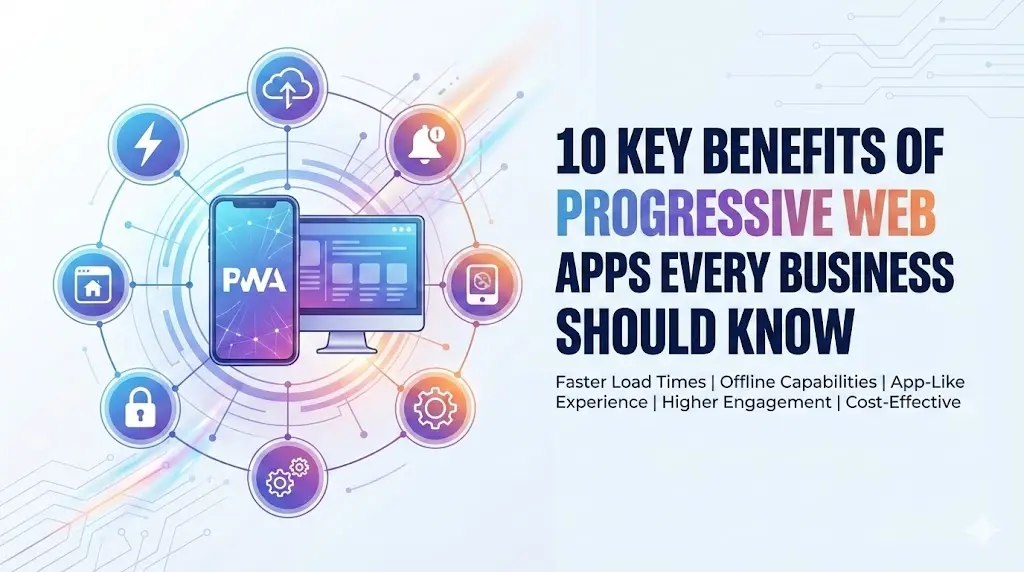
10 Key Benefits of Progressive Web Apps Every Business Should Know
126 Views
Summarize Article



Summarize Article
Progressive Web Apps, or PWAs, sit between websites and native apps. Users open them in a browser, yet the experience feels close to an app on the home screen. For many brands this mix is not theory. It already moves money. Starbucks, for example, launched a PWA that cut data usage while driving higher engagement for mobile web customers compared to their old site.
This case study shows the Starbucks PWA is only 233 KB, about 99.84% smaller than the 148 MB iOS app, and faster, which strongly supports the “cut data usage” part.
So the big question for teams is simple. What are the real benefits of progressive web apps and when do they make sense for your roadmap? Let us walk through ten clear gains in plain language.
PWAs focus on speed. They use techniques like service workers and caching so key assets stay close to the user. That means pages can show useful content in a few seconds even on patchy mobile data.
Faster load keeps people on the site. Many case studies link PWAs with higher conversions and lower bounce rates because users do not stare at blank screens.
For a store or booking site, this is one of the strongest benefits of a progressive web app. Every saved second in load time usually means fewer lost carts.
For front end teams, this mastering CSS article shares simple layout and styling tips that keep pages quick and stable.
A classic problem: users like apps but do not want to visit an app store, search, install, and update. PWAs solve a big part of this.
Visitors can add a shortcut to their home screen straight out of the browser. The experience opens full screen, with smooth transitions and stored state. There is no heavy install, no big storage use, and far fewer permission prompts.
For many brands this is a key benefit of progressive web apps. You get app style engagement without fighting app store ranking or long install flows.
Service workers let PWAs work in low network or even short offline windows. Users can see recent content, fill forms, or queue actions that sync once the signal returns.
For news, travel, learning, and ecommerce, this single feature keeps people calm on trains or in rural areas. They can still check key info or browse products during short drops.
This is one of the most practical advantages of progressive web app features and benefits for regions with uneven mobile coverage.
Native apps often need separate builds for iOS and Android plus a responsive website. That means three design and development tracks and three test cycles.
A PWA uses web tech for all devices. You still design for different breakpoints, yet the core stack stays the same. Over time this cuts maintenance work and lets teams ship updates faster.
For many start ups this cost control is the hidden benefit of progressive web apps. Less tech sprawl leaves more budget for content, marketing, and support.
If you want to see how device and platform choices are shifting overall, this mobile app development trends blog adds more context.
PWAs can send web push notifications to users who opt in. Offers, reminders, and status updates reach the lock screen even when the browser is closed.
Brands like Pinterest, Starbucks, and many travel sites use this to bring visitors back to their PWA again and again. Case studies show higher repeat visits and more clicks on offers when push is handled with care.
Done well, this is a powerful benefit of progressive web app design. It turns a quiet site into an ongoing conversation while still letting users control settings.
Many public numbers link PWAs with strong gains in conversions. Lancôme saw a 17% increase in conversions after its PWA went live.
Why does this happen? Users find the site faster, keep context between visits, and face fewer breaks during checkout. Each small comfort adds up.
For teams who ask about the clear benefits of progressive web app builds, revenue impact is often the headline.
PWAs often weigh far less than native apps. Many PWAs are more than fifty times smaller than their Android app. That means less data use for install-like behaviour and less storage pressure on older phones.
In markets where data is expensive, users notice this kindness. They can still shop or read or learn without clearing space or worrying about big downloads.
This lightweight nature is one of the quiet benefits of a progressive web app that helps with both access and brand perception.
With native apps, teams often wait for store review and then hope users update. With PWAs, updates go live on the server. The next visit pulls the latest version, often with clever caching so changes feel smooth.
Teams can also roll out changes in stages, test them on a segment, and roll back fast if issues appear. That control turns releases into calm events instead of tense nights.
For companies with active roadmaps this is a strong benefit of progressive web apps. The product can grow weekly without long queues.
PWAs still live on URLs. Search engines can index them. Users can share them by sending a link in mail or chat. This keeps organic traffic healthy and makes campaigns simple.
Native apps often need special deep link setups and store landing pages. PWAs keep the classic link model while still giving that app style feel when users add them to a home screen.
This mix of discoverability and app feel sits at the heart of many benefits of progressive web apps lists. It keeps marketing teams and product teams aligned.
Once the service worker, manifest, and core caching rules sit in place, adding new features gets easier. You can plug in background sync, smarter offline flows, or richer push logic on top of an existing base.
You can also test new layouts and flows with A/B tools that already work for websites. For digital products that plan to grow over years, this future friendly stack is a final, key benefit of progressive web app strategy.
Once the base is stable, this guide to artificial intelligence in web applications shows how AI features can sit on top of a solid PWA stack.
WebOsmotic does not treat PWAs as a fashion. The team starts with your real funnel, device mix, and market. Then they ask a few simple questions.
Out of those answers we design a PWA plan. Sometimes that means turning an existing responsive site into a PWA shell. Sometimes it means a fresh build that replaces both mobile site and native app.
Progressive Web Apps give businesses a way to offer fast, app-like experiences while keeping the open web strengths of links, SEO, and simple sharing. The benefits of progressive web apps range across speed, data use, cost, engagement, and long term flexibility.
If you want to see how this could work for your own product, WebOsmotic can review your current site, map out a light PWA pilot, and estimate clear returns. Step by step, a well built PWA can move your digital experience closer to what users expect on their phones and laptops every single day.