Custom Web App Development: How to Build Solutions That Fit Your Business
149 Views
Summarize Article



Summarize Article
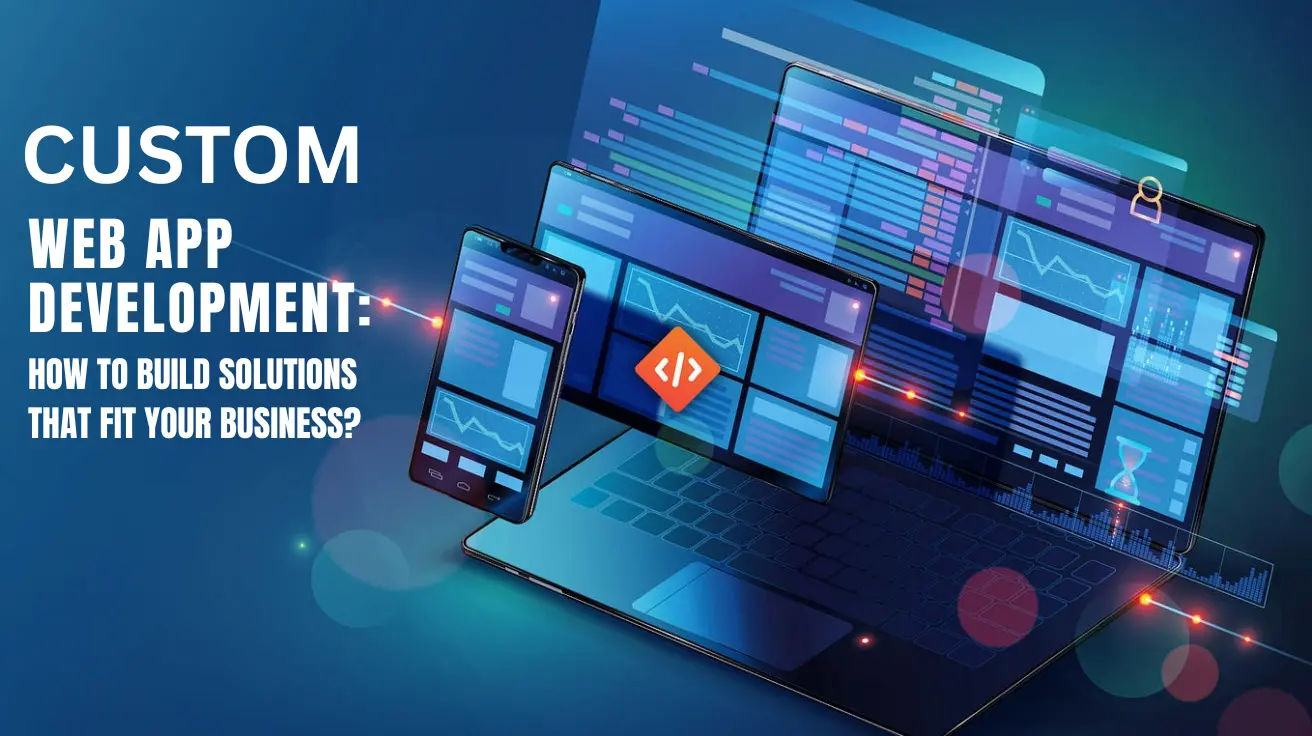
Custom web applications quietly sit behind a lot of daily life now. People use them to shop or book services, and they tap them again when they need quick updates or account info. Half the time, they do not even notice they are inside a web app instead of a simple site.
2025 analysis showing US custom software development services at 10.7 billion dollars in 2024, projected to 29.7 billion dollars by 2030. For a business, a custom web app development can turn messy workflows into one clear place to work.
It runs in the browser, so it does not care which device or operating system the user prefers. Teams can shape it around their own process and scale it as the company grows, instead of forcing staff to adjust to a generic tool.
This guide walks through what custom web apps can do and how they transform the digital world.
Custom web app market to reach $898.9B by 2029, growing 5.01% annually.Ready made SaaS tools are quick to start. They also come with limits you cannot change. You get fixed fields, fixed views, and update cycles set by someone else. If your team works in a niche workflow, that gap grows each month.
Custom web app development lets you:
You still use cloud hosting and common tech stacks. You just stop forcing staff to jump across five tools to finish one task.
The phrase custom web app development can sound wide. In practice, good projects focus on a few clear jobs.
A custom app might:
On the tech side, custom web app development services often include back end APIs, responsive interfaces, secure logins, and role based views. On the people side, they include workshops with staff, content for screens, and admin training.
Clarify roles early with a short refresher on web vs development so teams don’t mix design and engineering scopes.
When these pieces work together, your app feels less like a one time build and more like a living system you can extend.
Not every team needs a custom build. Some signs say you might be ready.
If two or three points feel close to home, a focused custom web app can remove pain without turning into a giant project. An honest custom web app development company will start with a small core instead of pushing a massive scope.
Good projects follow a calm path. WebOsmotic uses a simple pattern that you can adapt.
Modern business apps share a few qualities that users quietly expect. Any strong custom web app development solutions plan will protect these.
2024 SaaS stats report that companies use about 112 SaaS apps on average, with 49 percent of licenses unused and spend per employee above 5,600 dollars.
WebOsmotic focuses on useful outcomes, not just feature lists. Each project starts with one question: what would success look like six months after launch
For some teams, success means faster quote approvals. For others, it means fewer client emails because the portal answers most questions. The team uses these goals to decide which features go first.
As a custom web app development company, We bring:
AI can support search, smart defaults, or insight on patterns. We use AI in places where it really cuts effort, while still letting humans control choices that affect clients. See where AI software development fits cleanly into search, defaults, and insight without bloating scope.
Before you sign any custom build, run through a quick checklist with your team.
Share this sheet with WebOsmotic or your chosen partner. It keeps scope honest and protects your budget.
Custom web app development does not have to mean a huge, risky system. With a clear scope and the right custom web app development services, you can replace messy workflows with a single calm app that staff actually enjoy using.
If you want to see what this could look like for your team, WebOsmotic can review your current tools, map one or two journeys, and suggest a simple start. Step by step, a well planned custom web app can turn daily chaos into a tidy, trackable process that supports growth instead of blocking it.