Healthcare Wearable App Development: Connecting Tech with Wellness
123 Views
Summarize Article



Summarize Article
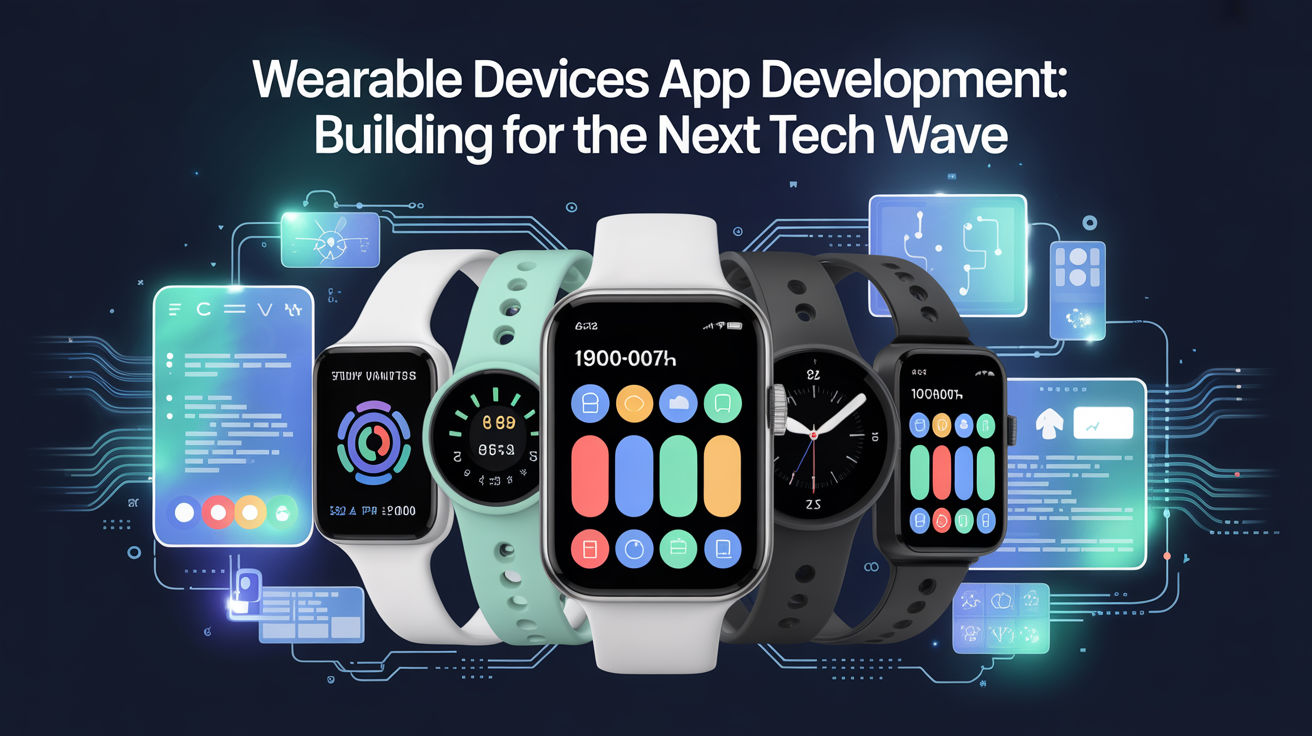
Wearables sit quietly on the body, yet they collect powerful health signals all day. These devices are just hardware with sensors. However, the real value appears inside the apps that read, clean, and present that data in a way people can act on.
A national study reports that almost one in three Americans uses a watch or band to track health and fitness, and more than eight in ten of those users are happy to share that data with their doctor.
That is where healthcare wearable app development becomes important. For real use cases, see our healthcare AI examples that turn raw signals into simple, daily decisions.
If you build digital health products, you already feel this shift. Patients want simple, daily support. Doctors want cleaner data, not more noise. Product teams want one clear roadmap. A good wearable app can connect these three needs in one place when it is designed with care.
Let’s know how wearable healthcare apps work, what features matter for patients and clinicians, and how a partner like WebOsmotic can help you build safely and at speed.
At a basic level, wearable healthcare apps do three jobs.
They collect data out of the device, such as heart rate or movement. They process that data into trends or alerts that make sense in daily life. They share pieces of that information with doctors or carers in a secure way.
Some apps focus on everyday wellness, like steps, sleep, or stress. Others support long term conditions, such as heart rhythm issues or diabetes. In both cases, the app must sit between two worlds. One world is technical, full of sensors and firmware. The other world is human, full of habits, fears, and limited time.
Good wearable healthcare apps development work respects both worlds at once. When streaming data needs models, our machine learning services convert sensor feeds into clean trends and alerts.
Many people open health apps when they feel tired or worried. A cluttered screen or loud colour choice can increase stress. That is why design for healthcare wearables must feel calm and forgiving.
Simple language helps. Instead of medical jargon, you can use short phrases and plain labels. Visuals should focus on trends, not just daily spikes. A single clear question like “Is my pattern normal for this week” matters more than ten charts.
Push alerts also need care. Too many alerts create fatigue. Too few alerts reduce trust. During healthcare wearable app development, teams should test alert flows with real users, then cut anything that feels noisy or confusing.
Keep screens calm with UX fundamentals on contrast, copy, and tap targets.
Patients rarely ask for fancy dashboards. They want help in daily life. Common features that land well include:
These features seem small, yet they shape habits. Ship these safely with AI services for healthcare that cover consent, dashboards, and audits.
A good healthcare app development company ties each feature back to one real behaviour change, then checks that it works on smaller and larger phones with one hand use.
Clinicians look at the same data through a different lens. They want clarity, not volume. They also have very little time for each consultation.
For care teams, strong wearable apps usually support:
Expert Advice: Clean PDF or web summaries help nurses and doctors add data into their existing records without long copy paste cycles. When you plan healthcare app development services, these simple workflows often matter more than any advanced AI layer.
Health data is sensitive. Wearable data includes location hints, sleep patterns, and sometimes heart rhythm or oxygen levels. If people do not trust the app with this data, they will not share it.
Strong security work in healthcare wearable app development includes:
Anchor policy on the HIPAA Security Rule and use HL7 FHIR to exchange records in a standard way.
Wearable data is most useful when it does not stay stuck inside one app. Clinics may use electronic medical record systems. Insurers may use their own portals. Even small practices might use shared spreadsheets or simple CRMs.
Good responsive adaptive web design for portals around your wearable app can help staff check data on tablets in wards and on desktops in offices. At the same time, mobile views help field staff or on-call doctors see key trends fast.
APIs play a big part here. During healthcare wearable app development, WebOsmotic teams usually design clear endpoints for summary data, alerts, and reports so partners can plug the app into their own tools without friction.
In the US, wearable health tech is already part of daily life. Recent survey data shows that about 40% of adults now use health apps and around 35% use wearable healthcare devices.
WebOsmotic does not treat health apps like generic fitness trackers. Projects start with listening sessions. Product owners, clinicians, and patient groups share what “success” really means in their context. That might be fewer readmissions, better sleep, or more stable blood pressure.
Once goals feel clear, the design team sketches flows that work for both patients and staff. Scope risk and roadmap with AI consulting before you code.
The engineering team then maps device SDKs, data storage needs, and any regional privacy rules.
Because WebOsmotic already works as a healthcare app development company, the team understands patterns like:
Each build cycle includes testing on real devices, not just simulators. That way, teams can see how the app behaves in bright light, sweaty hands, or older phones.
Wearables sit at the meeting point between daily life and health systems. Hardware gives you signals. Healthcare wearable app development turns those signals into support that fits real people.
By focusing on calm design, clear data for clinicians, strong security, and thoughtful integrations, you can turn a simple device into a trusted companion for patients and teams.
With the right healthcare app development services partner, you do not need to choose between speed and safety. WebOsmotic can help you shape a roadmap, build, and refine so your wearable app supports real wellness, one day at a time.