Why Remote Patient Monitoring Became a Big Shift in Modern Healthcare
39 Views
Summarize Article


Summarize Article
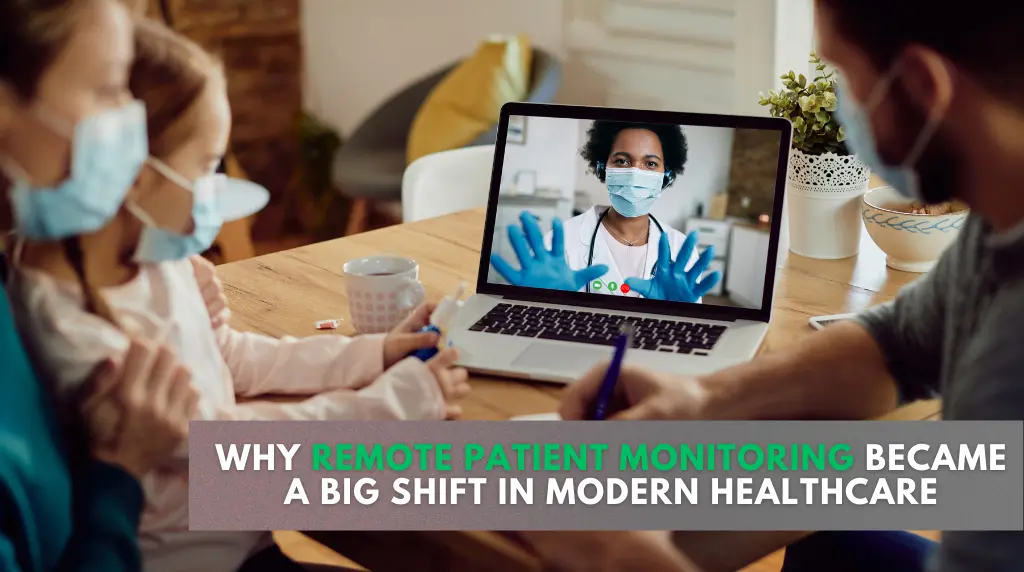
Healthcare used to be built around visits. You came in and shared symptoms. Then, you got a checkup and went home. The problem is that many conditions do not behave on a clinic schedule. Blood pressure can spike at night. Blood sugar can swing after meals. Breathing can worsen slowly over a week. A single visit can miss the whole story.
That is why remote patient monitoring became such a big shift. It lets care teams see what is happening between visits. This way, they can respond earlier and adjust care with more confidence. It also helps patients feel supported without living at the hospital.
This guide explains what RPM is and why it grew fast. Also, learn how to think about software and services in a practical way.
Remote patient monitoring is a care approach where patient health data is collected outside a clinic. Furthermore, this data is shared with a care team. The data can come through devices like blood pressure cuffs and glucose monitors. Other devices include pulse oximeters, weight scales, etc.
The goal is not to watch every second. The goal is to track the right signals over time and take action when something looks off.
A good remote patient monitoring system does two things well. It makes it easy for patients to send readings, and it makes it easy for clinicians to spot risk and respond without extra noise.
Remote care is not new, but RPM became mainstream because the pressure points became too obvious.
Conditions like hypertension, diabetes, CHF, COPD, and post-surgery recovery need monitoring over time. When you only see patients in appointments, you miss days of useful signals.
Clinicians are busy. RPM helps teams focus on the patients who need help now, instead of relying only on scheduled visits.
Many people struggle with travel time, mobility, work schedules, and caregiver duties. RPM supports care in the place people actually live.
Most RPM programs follow the same simple flow.
A patient uses a device at home or wears it daily. Readings might include blood pressure, heart rate, oxygen saturation, temperature, weight, or glucose.
The data goes into a dashboard, usually through Bluetooth, cellular devices, or a phone app.
The platform flags readings that cross thresholds or show risky trends. Trend matters more than a single number.
A nurse or clinician reviews alerts, contacts the patient, updates care instructions, or escalates if needed.
This is where remote patient monitoring software matters. A good platform keeps it simple and reduces false alarms.
The benefits of remote patient monitoring look different for each group.
Patients get a clearer view of their health and quicker support when changes happen. That often improves confidence, especially for chronic care and post-discharge monitoring.
Clinicians get trend data, not just point-in-time readings. That supports better decisions, especially when symptoms and numbers do not match.
Organizations can reduce avoidable visits and improve follow-up. RPM can also support care quality programs when implemented with clean workflows.
Do you want to automate procedures? Cherish our AI services for healthcare that can scale your automations to a whole new level.
If you are comparing tools, you want less complexity, not more.
Good remote patient monitoring software usually includes:
If you have EHR integration needs, confirm those early. Integration projects can become the slowest part of rollout if not planned well.
If you are evaluating remote patient monitoring companies, focus on fit and reliability.
Here are the key questions that matter in real programs.
Older patients may need simpler devices and more onboarding support. Tech comfort varies a lot.
A cardiology-focused program might need weight, BP, and symptom tracking. A diabetes program might focus on CGM and medication adherence support.
In the US, HIPAA expectations apply. You want strong access controls, encryption, and clear data handling policies.
Many programs fail because patients stop taking readings after a week. A good partner will have a plan for that.
RPM is not plug-and-play. The problems are predictable, so you can plan ahead.
Patients might start strong, then forget. Programs that include reminders, simple instructions, and quick support tend to do better.
If your thresholds are too tight, every small swing becomes an alert. That leads to alert fatigue. Trend-based rules and smart escalation paths help.
Home readings can be inconsistent. Patients might measure wrong, or devices might have errors. Training matters.
The platform is only one part. The bigger part is what happens after an alert. Who reviews it, how quickly, and what actions are allowed.
RPM is moving toward more personalized care. The systems are getting better at spotting patterns. Also, suggesting which patients need attention first.
Also, it is becoming more integrated with broader virtual care workflows. This way, patients do not feel like they are using a separate tool. The biggest winners will still be the programs that keep things simple for patients while allowing care teams to predict things.
Remote patient monitoring became a big shift because it brings healthcare closer to real life. It helps teams see trends and support patients between visits.
The best results come when the technology is paired with strong patient onboarding. If you are choosing remote patient monitoring software, start with one clear use case. For example, prove adoption, then scale with confidence.
Do you want to create a personalized patient monitoring software? Contact our expert software development team now!
Remote patient monitoring tracks health data at home and shares it with a care team. It helps spot issues earlier between visits.
Patients get quicker support and clearer health trends. It can reduce stress, especially for chronic care and post-discharge follow-ups.
They support onboarding, device logistics, and routine outreach. This helps clinics run RPM without overloading internal staff.
Look for easy setup, useful alerts, trend views, and clean reporting. Security and EHR integration also matter for many programs.
They differ in device support, onboarding help, workflow design, and integrations. The best fit depends on your patients and care goals.