Contacts
Get in touch
Close

Smart Locker Software Development for Logistics Businesses in Canada

Unattended Parcel Locker Network Software for ParcelPort: Case Study

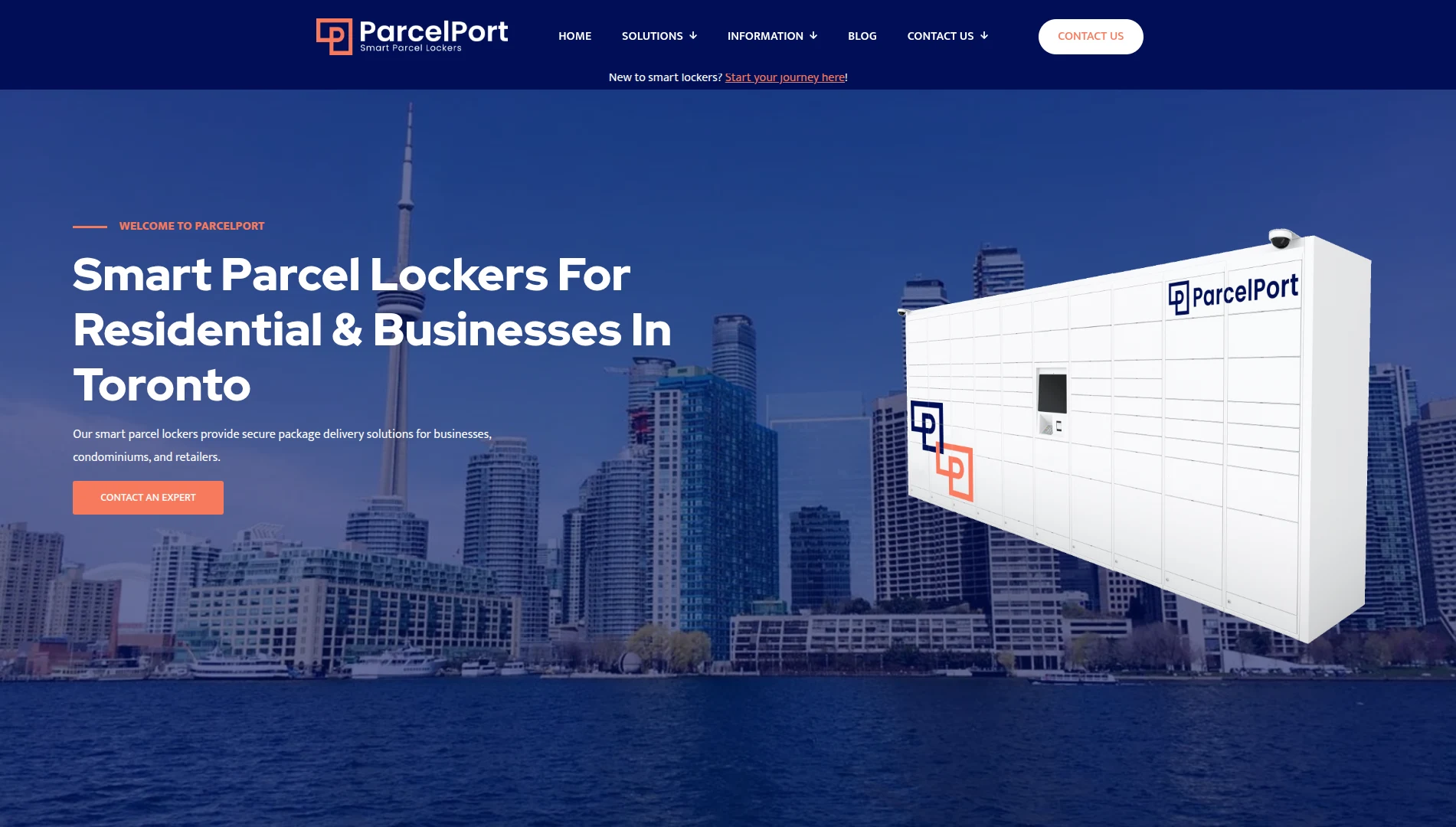
WebOsmotic delivered the smart locker software development behind ParcelPort, a smart parcel locker network in Canadian buildings. The team built and still runs every layer: the touchscreen app at the locker, the service that talks to the hardware, and the cloud portal that runs the network, through cloud engineering, DevOps, mobile app development, and web development.
parcelport 2 smart locker software development

Smart Locker Software Development Overview for ParcelPort

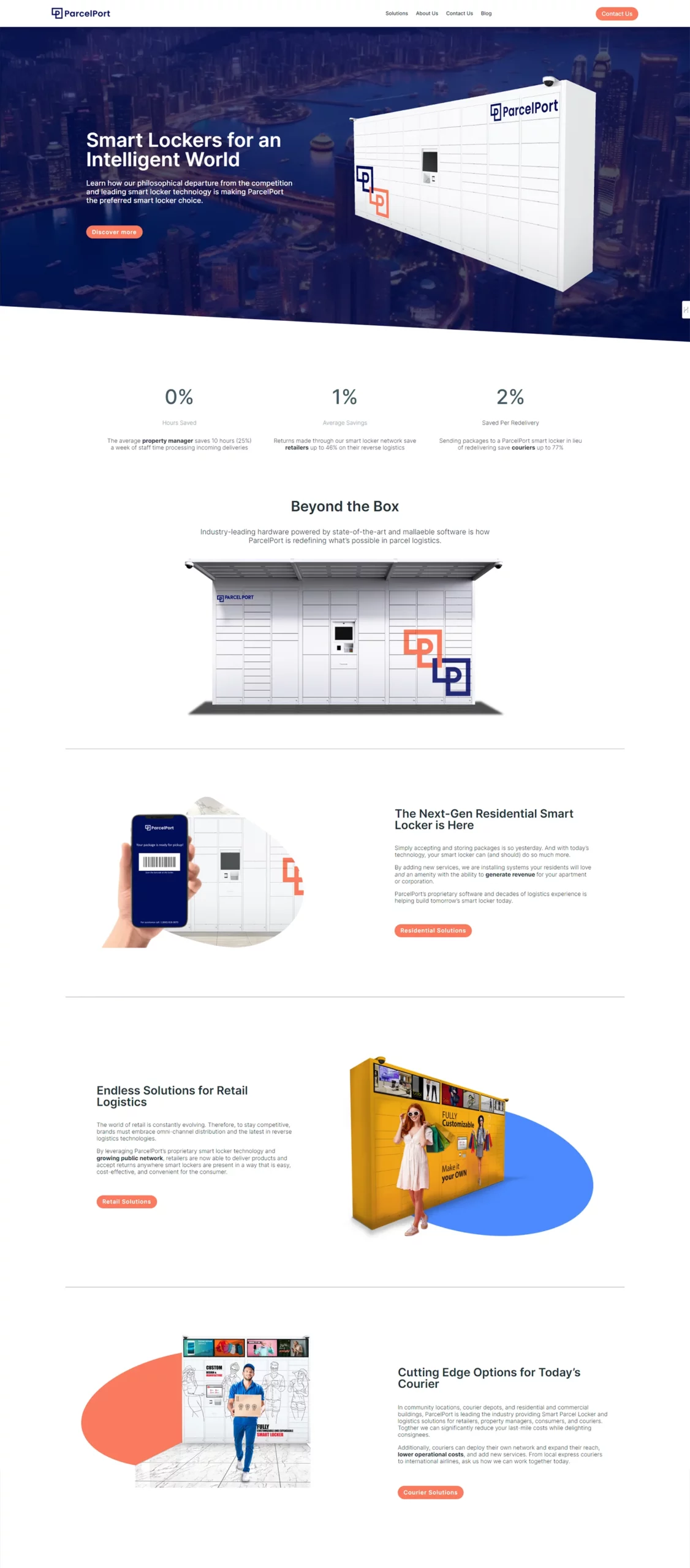
ParcelPort runs smart parcel lockers in Canadian buildings. WebOsmotic built everything from the touchscreen at the locker to the cloud that keeps the network running, joining the device, the hardware link, and the cloud into one job owned by one team. The real work in this smart locker software development project was making a machine in a lobby behave correctly with nobody there.
Property managers, couriers, and retailers share one platform, each seeing only their own view. The same WebOsmotic team has carried the product from the first release to a network of sites, through more than one generation of locker hardware, across an eight-year engineering partnership that continues today.
Goals, Final Analysis & Consultation Summary
  • Building staff handled every delivery manually: receiving parcels, recording them, notifying residents, and handing them over later. Based on the client’s figures, this took around five minutes of staff time per parcel, with larger buildings handling up to 200 deliveries per day.
  • Deliveries outside office hours were hard to manage, and missing parcels were difficult to trace because every delivery depended on someone being available at the desk.
  • The locker needed to keep working when the network was unavailable, so deliveries and pickups had to complete offline and synchronise later without data loss.
  • The application could not be tightly coupled to the hardware, because each board, scanner, and printer used its own byte-level communication protocol.
  • Compartment allocation needed strong concurrency controls so that a single compartment could never be assigned to two parcels at the same time.
  • Software updates and maintenance had to run remotely, which required centralised management of device health, state, and software versions without on-site visits.
  • The app on the locker screen: guides couriers through drop-offs and recipients through pickups in their own language, verifies the collector before opening a compartment, and resets between users.
  • One service that talks to the hardware: a dedicated service abstracts the individual protocols used by lock boards, scanners, and printers, so the application can request a compartment without handling hardware-level communication.
  • The portal that runs the network: an operator portal manages sites, lockers, compartments, parcels, and users from one place, with visibility into the status of every device in the field.
  • Offline-first reliability: the core of this smart locker software development work. A dropped connection does not stop deliveries. Lockers keep operating offline and reconcile data later, and cloud-based compartment allocation stops two parcels from being assigned to the same door.
  • Remote fleet management and notifications: devices report their state and receive updates from the cloud, which removes the need for on-site visits for software fixes. Carrier notifications run as separate background jobs, so couriers are never blocked by message delivery.
  • Centralised parcel management: ParcelPort moved parcel handling away from the front desk to a centralised locker network that can be managed, monitored, and updated from a single platform.
  • Unattended delivery operations: lockers now operate independently of office hours, so parcels can be delivered and collected whenever convenient for couriers and recipients.
  • Staff time recovered: manual handling took around five minutes of staff time per parcel, with larger buildings handling up to 200 deliveries per day. The locker network removes that desk work from every delivery.
  • Scalable infrastructure: the platform supports growing sites and delivery volumes without a fundamental rebuild of the underlying system.
  • Remote software deployment: new capabilities and software updates reach lockers already operating in the field, which removes unnecessary site visits.
  • End-to-end parcel traceability: every parcel keeps a complete record from drop-off through pickup, giving building operators clear visibility at each step.
  • An eight-year engineering partnership: the same team has carried the product from first release to a network of sites, through more than one generation of locker hardware, and continues today.

Why This Smart Locker Software Development Project Matters

ParcelPort shows what smart locker software development looks like when the software has to control real-world hardware with nobody standing next to it. The locker app, the hardware service, and the cloud portal were built as one system by one team, so an offline locker, a new lock board, or a software update never needs a site visit. Building operators get parcel traceability from drop-off to pickup, and the network grows site by site without a rebuild. For logistics businesses in Canada and beyond, this case study is the reference point for parcel locker software that stays accurate and manageable from a distance, and it sits alongside WebOsmotic’s other logistics software work.

FAQs: Cost and Timeline for Smart Locker Software Development

A parcel locker software platform with a touchscreen app, hardware abstraction service, operator portal, and cloud infrastructure typically costs between $60,000 and $150,000 for a first release, depending on the hardware variants, integrations, and number of sites.
A first production release usually takes 5 to 8 months, covering discovery, hardware protocol integration, the locker app, the operator portal, offline sync, and field testing. Adding a new locker hardware generation to an existing platform takes far less.
Yes. The ParcelPort software is offline-first. Deliveries and pickups are completed at the locker when the network is down, and the device reconciles its records with the cloud once the connection returns.
Yes. WebOsmotic has run ParcelPort’s software for eight years, through several hardware generations, with remote updates, device monitoring, and DevOps support included in the engagement.
[ { "@context": "https://schema.org", "@type": "Article", "headline": "Website Maintenance & PHP Upgrade for CAA Centre — Improved Stability Case Study", "description": "WebOsmotic performed a PHP version upgrade and comprehensive website maintenance for CAA Centre, ensuring better performance, security, and long-term compatibility without disrupting the live site.", "url": "https://webosmotic.com/portfolio/caa-centre/", "image": { "@type": "ImageObject", "url": "https://webosmotic.com/wp-content/uploads/2026/05/vvxnfs21zocearhsqtm6.webp", "width": 408, "height": 230 }, "datePublished": "2026-05-01", "dateModified": "2026-05-29", "inLanguage": "en-US", "author": { "@type": "Organization", "name": "WebOsmotic", "url": "https://webosmotic.com" }, "publisher": { "@type": "Organization", "name": "WebOsmotic", "url": "https://webosmotic.com", "logo": { "@type": "ImageObject", "url": "https://webosmotic.com/wp-content/uploads/2025/04/WO-black-logo.svg" } }, "about": { "@type": "Service", "name": "Website Maintenance & PHP Upgrade", "description": "WebOsmotic upgraded CAA Centre's WordPress website to a stable and supported PHP version, performed compatibility code adjustments, bug fixes, and stability improvements — all while maintaining uninterrupted live site functionality.", "serviceType": [ "Web Maintenance", "Website Enhancement", "PHP Version Upgrade", "WordPress Development" ], "provider": { "@type": "Organization", "name": "WebOsmotic", "url": "https://webosmotic.com" } }, "keywords": [ "PHP upgrade", "WordPress maintenance", "website maintenance", "web performance", "website security", "PHP compatibility", "CAA Centre", "web enhancement" ] }, { "@context": "https://schema.org", "@type": "BreadcrumbList", "itemListElement": [ { "@type": "ListItem", "position": 1, "name": "Home", "item": "https://webosmotic.com/" }, { "@type": "ListItem", "position": 2, "name": "Portfolio", "item": "https://webosmotic.com/portfolio/" }, { "@type": "ListItem", "position": 3, "name": "CAA Centre", "item": "https://webosmotic.com/portfolio/caa-centre/" } ] }, { "@context": "https://schema.org", "@type": "Organization", "name": "WebOsmotic", "url": "https://webosmotic.com", "logo": "https://webosmotic.com/wp-content/uploads/2025/04/WO-black-logo.svg", "contactPoint": [ { "@type": "ContactPoint", "telephone": "+91-87801-44391", "contactType": "sales", "areaServed": ["IN", "US"], "availableLanguage": "English" } ], "sameAs": [ "https://www.linkedin.com/company/webosmotic/", "https://www.instagram.com/webosmotic_official/", "https://www.facebook.com/webosmotic/", "https://www.youtube.com/@webosmotic" ] } ]

Build Your Smart Locker Software With WebOsmotic

Get a free consultation for your smart locker software development project, from the locker touchscreen to the cloud platform that runs the network. WebOsmotic is an IoT software development company with parcel locker software, cloud engineering, and DevOps experience for logistics businesses in Canada and other markets worldwide.