How to Use AI in Ecommerce Effectively: A Beginner’s Guide
295 Views
Summarize Article



Summarize Article
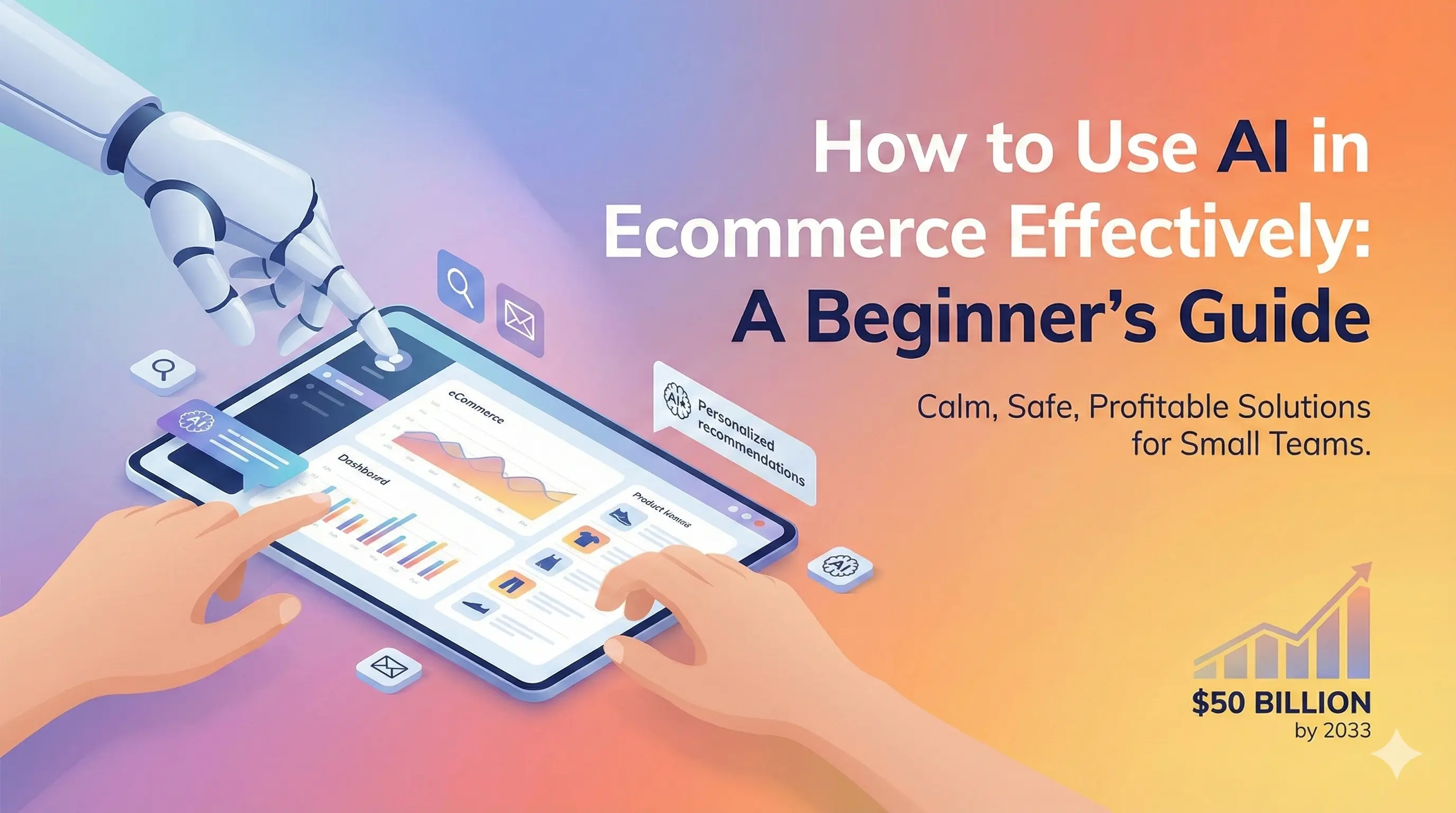
AI is no longer a distant idea for big tech brands. It already sits inside search bars, chat widgets and email tools that many stores use every day. One report says around 80 percent of online retailers now use some form of AI in their business.
Another study expects the AI in eCommerce market to grow to more than 50 billion dollars by 2033.
So the real question is not “should we try AI” but “how do we use it in a calm, safe way that helps customers and profit.” This guide explains how to use AI in ecommerce step by step, so a small team can start without feeling lost.
AI in online retail covers tools that learn patterns out of data and then take small actions. The actions can be:
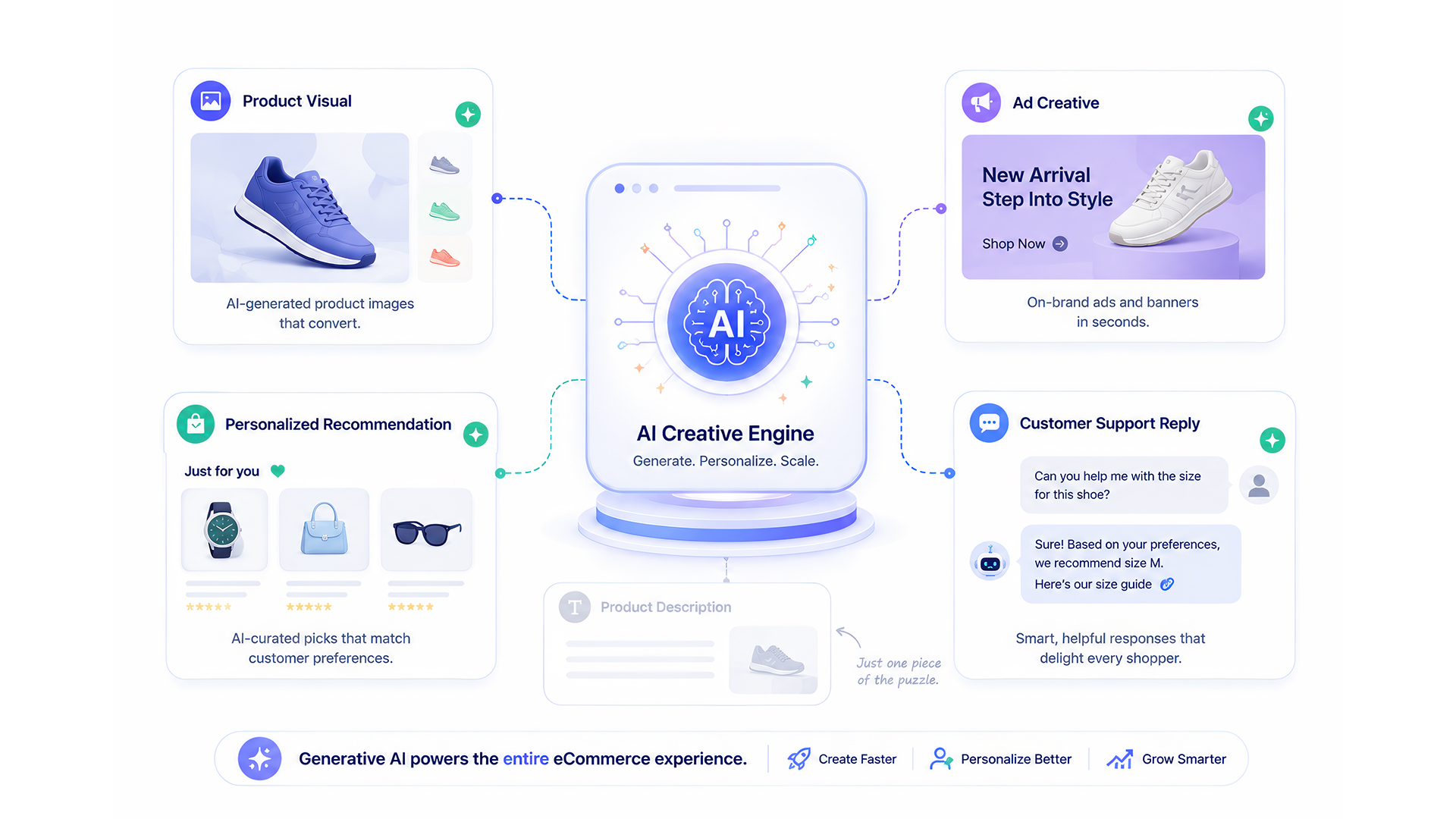
Some tools use classic machine learning. Newer ones use generative AI in ecommerce to write text, create images or build whole workflows. Teams who want more detail on text and media can check this generative AI in ecommerce article.
As a store owner you do not need to master math. You only need to know what job each tool should do and how you will measure the outcome.
Here are common AI use cases in ecommerce that give value even for small stores.
AI powered search can understand spelling mistakes, slang and long phrases. It can show relevant results when a user types “black shoes office wear” or “gift for a teen gamer.” Good search shortens the path between intent and product.
Recommendation engines then show “you may like” items based on browsing and purchase patterns. When tuned well, they lift average order value without feeling pushy.
These AI use cases in ecommerce overview collects more examples across search, pricing and stock control.
AI can use browsing history, location and past orders to pick which banners, collections or coupons to show. A loyal buyer might see bundles. A new visitor might see a simple welcome offer.
A report by McKinsey suggests that strong personalisation can lift ecommerce revenue by up to 15 percent and improve marketing efficiency by about 30 percent.
Chatbots used to feel stiff. Modern agents can answer simple questions about orders, returns and delivery in a more natural tone. They free human agents to handle complex cases that need empathy or special rules.
This is one of the easiest forms of using AI in ecommerce because you can start with a limited set of FAQs and then grow.
AI tools can predict demand for key SKUs, flag risky orders, and help with product tagging. These jobs are less visible to customers but can cut stockouts and fraud. Even a basic demand model is better than pure guessing.
AI runs on data. If product feeds are messy or orders sit in different systems, results will stay weak. Before you plug in new tools, check three basics.
You do not need perfect data on day one. You just need a level that an AI tool can read without daily manual fixes. WebOsmotic often starts with a light data audit before any install.
Here is a calm way to start, even if you feel new to this space.
Do not start with ten tools at once. Choose one pressing issue such as low onsite search use, high cart drop, or slow support replies. This focus makes it easier to judge success.
Check which tools work with your ecommerce platform and existing analytics. For example, a search and recommend app that connects easily to Shopify or Magento and respects your privacy rules.
WebOsmotic helps clients compare feature lists, data needs and pricing, then picks one or two options to test.
For brands that need a partner, this AI services for ecommerce page shows how WebOsmotic supports audits and builds.
Turn the tool on for a part of traffic or for a single category. Set a clear metric such as search exit rate, conversion on product pages, or time to first reply in chat. Run the test long enough to cover weekday and weekend patterns.
Look at numbers and also read real sessions and chat logs. Check if answers feel helpful. Check that recommendations stay fair and do not push low quality items. Adjust rules or guardrails where needed.
If the test shows real gain, extend the feature to more categories or traffic groups. Keep a simple log of changes, so you know which tweak caused which shift in numbers.
Many teams feel stuck between hype and fear. WebOsmotic works in the middle. The focus stays on calm, practical steps.
A typical engagement looks like this:
Because WebOsmotic also builds custom modules, the team can join ready made tools with bespoke logic. For example, AI search on the front, plus a small internal app that shows buyers which queries need new content or new SKUs.
AI will not replace a weak product or a broken promise, but it can make a good store feel smoother for both shoppers and staff. By starting with one problem, keeping your data tidy, and running small tests, you can gain real value without large risk.
If you want a partner who lives inside AI and retail both, WebOsmotic can help shape your roadmap, pick tools and track results. Step by step, you can turn AI in ecommerce into a steady advantage instead of a buzzword that only appears in slide decks.