AI Shopping Assistant – How Is It Transforming Shopping Experience?
268 Views
Summarize Article



Summarize Article
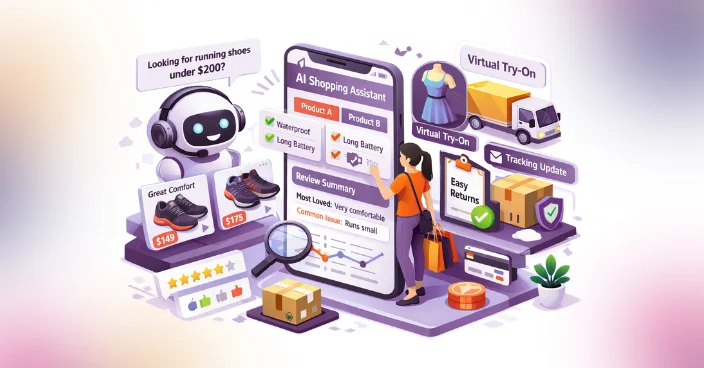
Shopping online used to be simple. You searched, picked a product, and paid.
Now it is confusing. Too many options. Too many “almost right” products. Too many tabs open just to compare sizes, delivery dates, and returns.
That is why the AI shopping assistant is showing up everywhere. It sits between your intent and the product list, then helps you reach a decision faster, with less second guessing.
And it is not a niche feature anymore. In an Adobe survey of 5,000 US consumers, 38% said they have already used generative AI for online shopping, and 52% said they plan to use it this year.
Time to cherish AI assistant shopping capabilities now.
An AI shopping assistant is a conversational layer that helps a shopper find the right product using plain language.
Instead of forcing a person to speak in filters, it lets them speak in intent.
Examples:
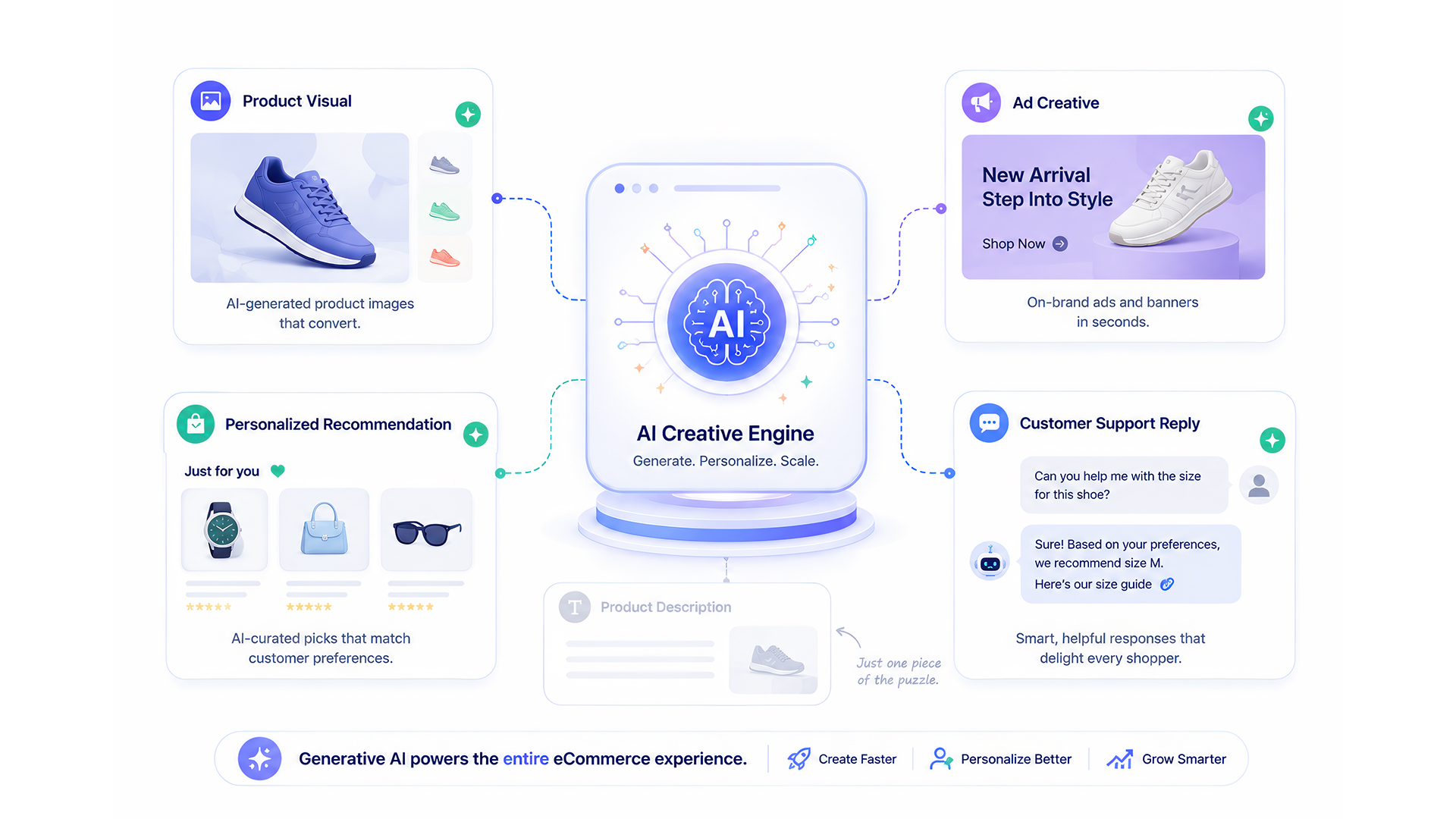
A good assistant does more than chat. It pulls details using store data, then gives a short answer with options and reasons.
This is also why people mix up “chatbot” and “assistant.” A chatbot often answers FAQs. An assistant moves the shopping journey forward.
Amazon’s Rufus is a clear example. Amazon describes it as a shopping assistant trained on its catalogue plus information across the web, built to answer questions, compare items, and help discovery inside the shopping experience.
The product universe got bigger, but attention did not.
People also trust peer feedback more than brand claims, yet reading dozens of reviews takes time. Add delivery promises, return conditions, and variant confusion, and the purchase feels like work.
Cart abandonment research also keeps reminding brands that a lot of intent dies late in the funnel. Baymard’s checkout research regularly shows high abandonment rates across ecommerce, often tied to friction and uncertainty at checkout.
So the goal is simple. Reduce effort and reduce doubt.
An assistant does that by answering questions at the moment they appear, inside the same screen, with less back-and-forth.
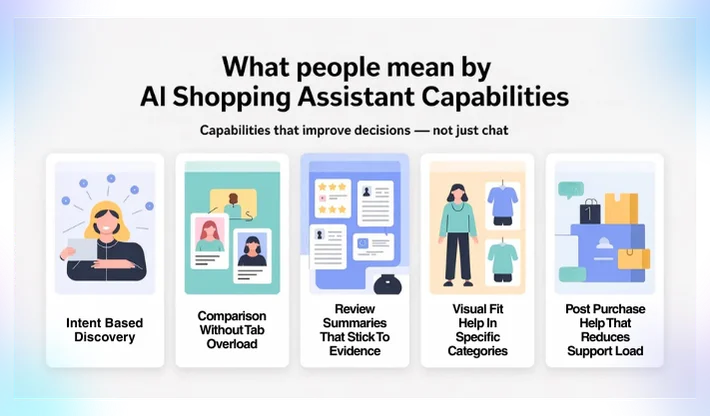
When teams discuss AI shopping assistant capabilities, they usually mean, “What can it do that improves the decision, not just the chat?”
Below are the capabilities that matter most in real stores.
Search works best when the shopper knows the exact words.
Assistants work best when the shopper describes a situation. They can handle messy prompts like “gift for a colleague who likes coffee” and still land on a product set that makes sense. If you want more ideas on AI ecommerce personalization, this guide shows how stores turn intent into better recommendations.
This is also where AI assistant shopping capabilities feel most human. The assistant can translate fuzzy intent into clear product constraints without making the shopper learn your category language.
A strong assistant compares two items and highlights trade-offs in plain English.
It can point out size differences, warranty differences, and compatibility mismatches. It can also tell you what is missing, like “this listing does not mention waterproof rating.”
That is valuable because most comparison pages still make shoppers do manual work.
Reviews help, but they are noisy.
Good AI shopping assistants summarise common themes and separate “most liked” and “most complained.” The key is evidence. It should quote patterns, not invent conclusions.
Fashion and beauty have a different kind of doubt. People worry about fit, drape, shade, and comfort.
Google has been building AI-led shopping features such as virtual try-on experiences that show how apparel may look on different body types. That kind of experience pairs well with assistants because it answers the “how will this look” doubt that stops many purchases. This connects well with mobile app personalization, since phone shoppers expect quick, tailored suggestions.
The shopping journey does not end at payment.
A helpful assistant can handle order updates, return steps, and warranty basics. That reduces support tickets and keeps customers calmer, especially during delivery delays.
The biggest change is that product content becomes “assistant-ready.”
Earlier, copy was written for a product page and a human reader. Now it is also written for an assistant that needs clear facts to answer questions.
This creates a new advantage for stores that take content seriously. If your product data is clean, the assistant can speak clearly. If your product data is vague, the assistant either stays silent or guesses, and both outcomes hurt trust.
There is also a second shift. You start learning real buyer intent at scale. Assistant chats show what people ask before buying, which objections repeat, and which product details are missing. This also helps you pick the right AI tools for ecommerce businesses based on real buyer questions.
That is better than guessing in a meeting.
Most stores do not fail because the assistant is “bad.” They fail because the assistant has no solid facts to work with and no clear rules to follow. Use this quick checklist to avoid a messy first release and keep answers consistent. Test it with 20 real shopper queries before you show it to everyone. For a bigger rollout plan, how to use AI in ecommerce shares a simple path teams can follow.
Confirm every top product has clean titles, variant details, pricing, stock status, delivery estimates, and return rules. Add key compatibility notes and care instructions in plain words. If any key field is missing, the assistant will fill gaps with guesswork, which hurts trust fast.
Decide how answers should look. Keep replies short, show 2 options, and add one reason per option. Also decide how the assistant should handle uncertainty, like “I cannot confirm this, here is what to check.” Keep a consistent tone across categories.
Set hard limits on sensitive topics, payments, and personal data. For the payment side, secure payment gateways in ecommerce development covers checks that keep checkout safer. Log every answer and tool call so issues are easy to trace quickly. Add a simple handoff to a human agent for edge cases, like warranty disputes or damaged deliveries, so the shopper does not get stuck.
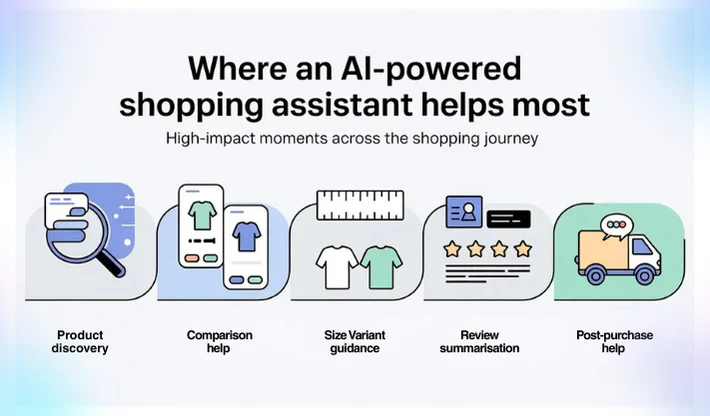
A shopping assistant works when three pieces are solid: catalogue data, retrieval logic, and guardrails.
WebOsmotic helps teams design a practical assistant that stays accurate in real shopping flows, not just demos. That includes cleaning product data for assistant use, setting answer rules, and connecting the assistant to stock and policy systems so it does not hallucinate details.
If you already have an assistant and it feels “chatty but not helpful,” the fix is usually better product knowledge and better answer structure, not more prompts.
No. A chatbot answers questions. An assistant also guides selection and helps the shopper reach a decision with comparisons and clear reasons.
Start with product discovery and comparison inside one category. It is easier to test accuracy when product attributes are consistent.
Improve product data, then use retrieval based answers instead of “freeform guessing.” Add guardrails and a human handoff for edge cases.
Not fully. Filters still help power users. Assistants help shoppers who think in intent and situations, or those unsure about what to pick.
Start with product pages and catalogue data. Better data improves both your current conversion and the assistant’s accuracy.