Manufacturing Process Automation: How Factories Increased Speed and Accuracy
349 Views
Summarize Article



Summarize Article
This has always been the aim of factories: produce more with less wastage without quality change. The issue is that the manual work, the checks that take a lot of time and disconnected systems drag it all down.
One small delay in a station can have an impact on the entire line. A small error in measurement can lead to more rework as well as missed delivery schedules.
This is why the automation of the manufacturing processes became such a significant change. It assists factories to outsource repetitive duties into controlled systems which are faster and have minimal errors.
It also enables the managers to have a better picture of what occurs on the floor hence making decisions to occur earlier rather than after an issue becomes bigger.
Let’s understand everything about how automation is transforming manufacturing and why factories are turning to it as a way of enhancing speed and accuracy.
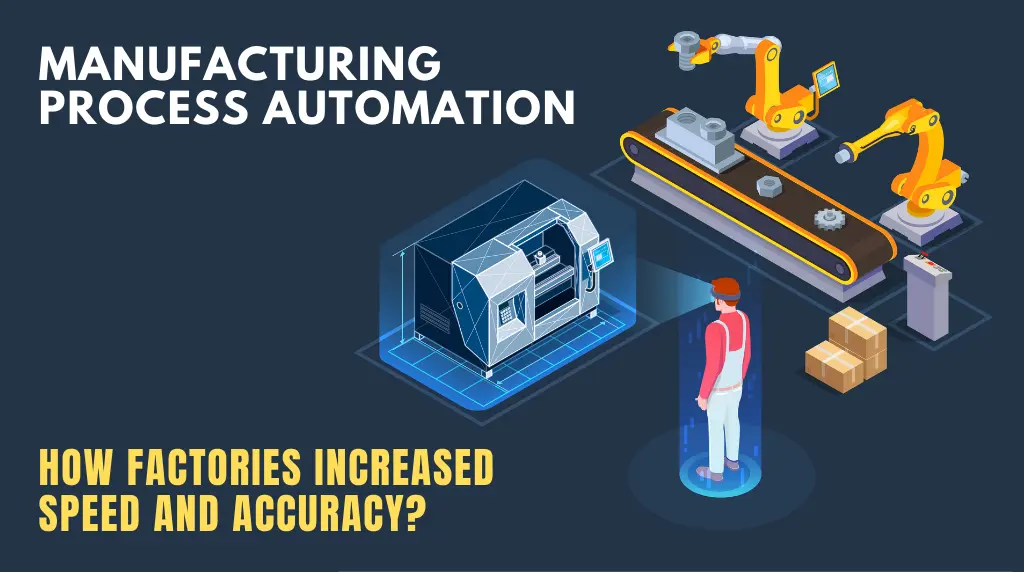
Automation of manufacturing processes refers to the implementation of machines, software, sensors and control systems in order to finish production processes with reduced human input. This may contain assembling, inspection, packing, transportation of materials, machine control, data gathering and scheduling.
When they hear of robots, some people envision fully automated factories. In fact, automation can be far less complex. Even a single process on the line, such as label application, temperature control, or inspection, may give a significant improvement when automated by a factory.
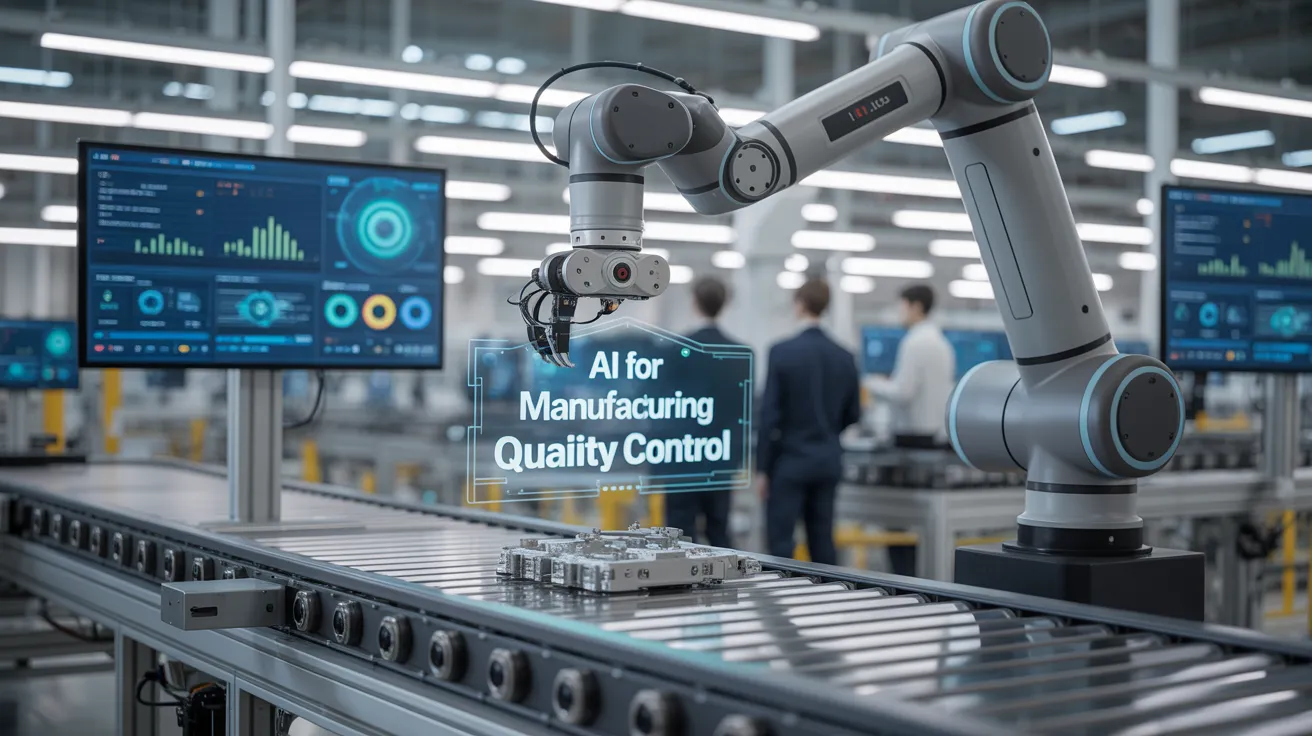
The main idea is simple. Allow systems to perform repetitive, rule-based operations, as people may devote attention to oversight, enhancement, and exception management. If you want the AI side of shopfloor automation, AI for manufacturing quality control shows how vision and detection reduce defects.
If you want the AI side of shopfloor automation, AI for manufacturing quality control shows how vision and detection reduce defects.
Automation was not an immediate response to the fact that technology was becoming better. Their reason is that the pressure became heavier.
To begin with, there was a change in customer expectations. The buyers are demanding speedier delivery service and quality uniformity. Second, tasks that were labour intensive were difficult to scale. Third, factories had to gain better control over waste, downtimes and increased costs of operations.
Automation in manufacturing process came in handy here. It provided factories with an opportunity to maintain the level of output without relying solely on manual inspections and human labor.
Speed in a factory does not merely consist of the speed of one machine only. It is concerning the degree to which things go along well.
Paper-based handoffs are time-consuming. Conveyor and machine-to-machine communication systems are automated to minimize the time between stages.
Robots have the ability to perform the same action or step thousands of times with minimal changes. That assists in filling, cutting, packaging, sorting and assembling.
When systems gather the performance data on a real time basis, the supervisors do not have to wait till the end of shift reports. Issues are easily identified and addressed.
The automation connects stations previously operating on their own. Delays are reduced when one of these systems is aware of what the other system requires.
That is why process automation in manufacturing can help reduce manual labor work. It is not a single faster machine. It is a smoother chain.
Speed is not more important than accuracy. A defective fast line is not efficient. It merely generates a bigger waste at a faster rate.
The automated systems take the same order of the program on a cycle basis. That eliminates variation in actions that require accuracy.
Dimensions, alignment, fill levels and surface quality can be checked far more reliably using sensors and machine vision devices than spot checks.
Monotony of labor and work results in error and particularly during lengthy shifts. The automation assists in replacing the jobs where exhaustion influences the quality.
Process data is automatically captured using automated systems. That simplifies the process of traceability and quality reviews.
This is part of the reason why in the industries with tight tolerances and high-cost errors an automated manufacturing process tends to perform better.
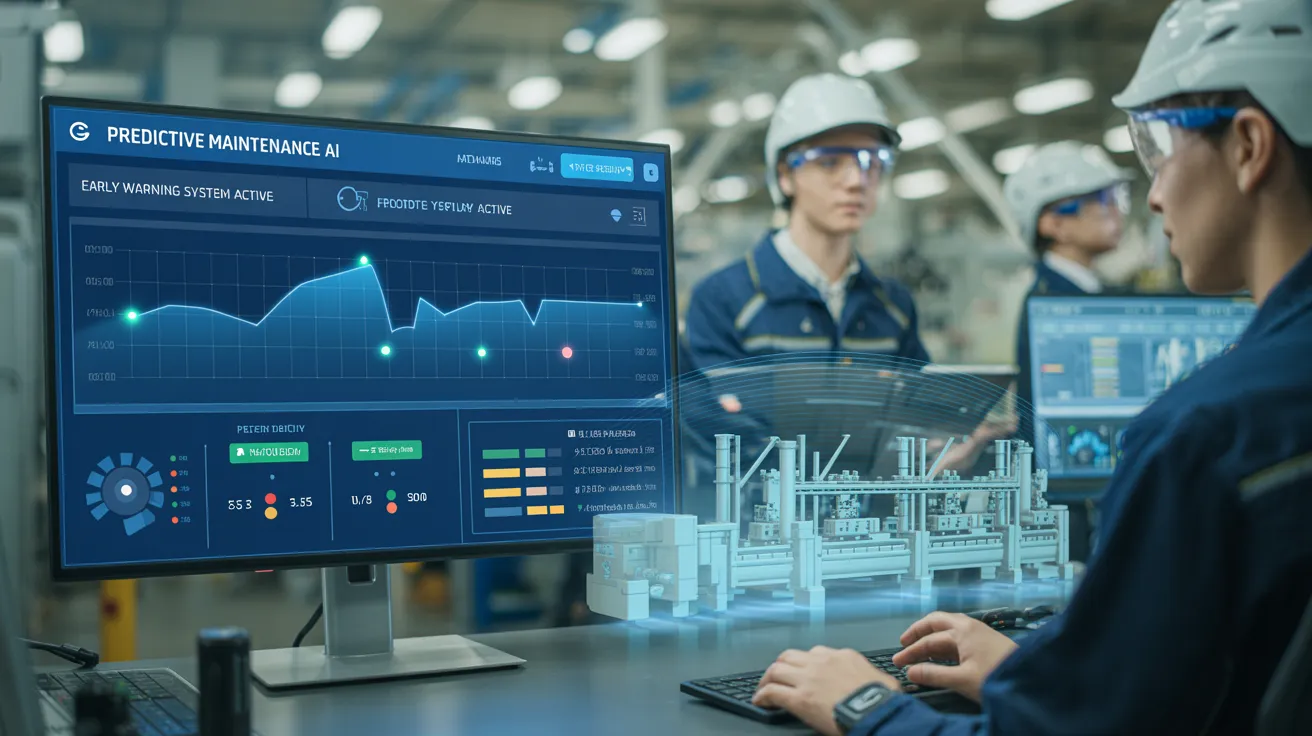
For breakdowns on uptime and sensor-driven fixes, AI for predictive maintenance in manufacturing explains the most common early wins.
Automation does not necessarily need to begin everywhere. The majority of factories are started in the locations with the most lucrative returns.
pick-and-place robots, robotic arms, fastening tools, guided assembly stations enhance consistency and minimize the cycle time.
Automation targets Packing, sealing, labeling, and palletizing are repetitive tasks that are easy to standardize.
Vision systems are able to check the products in terms of their defects, missing parts and misalignment within a shorter duration of time.
AGVs, conveyors and robot loaders minimize hand movement and enhance the flow between the stations.
Automation maintains temperatures, pressure, speed, and timing in the range of a set in food, chemical, pharmaceutical, and heavy manufacturing.
Whenever one hears the phrase robotic process automation in manufacturing, they tend to imagine floor robots. Nevertheless the term may take two layers.
One of them is physical automation, such as machine cells and robotic arms, which process production.
The second layer is software automation which covers routine business processes including production related such as inventory, work order movement, quality records and reporting.
This is the reason why the automation of robotic processes in manufacturing is being more productive than most factories anticipated. It is not just the machines that make products. It is also concerning the software to lessen office-side delays in procurement, planning, and compliance procedures.
The factory might speed up on the floor and end up losing time in paperwork. The gap can be bridged with software automation. If your team wants this built as a full system with data pipelines and dashboards, AI services for manufacturing maps how WebOsmotic helps you automate manufacturing tasks.
Consider a medium-size packaging facility working in three shifts. Prior to automation, operators used to check labels manually, count completed units and update reports at the conclusion of every shift. Errors were common. Small jams were not noticed long enough. Rework kept building.
After automation:
The line becomes more stable. Scrap drops. Reporting gets cleaner. Operators do not need to have to spend time checking things repeatedly but rather they find actual problems.
Such is the practical value of automation of manufacturing process. It not only enhances the circulation around the product, but the product itself.
It was also necessary to automate manufacturing processes since factories require additional speed, accuracy, and control. It saves laborious repetitive work, enhances consistency and provides managers with more precise information to work with. The most effective victories are not always made with all-encompassing transformation, but with a single clever leap in the right direction.