Is There an AI With No Restrictions in 2026?
92 Views
Summarize Article




People search for an AI with no restrictions because they want one simple thing: an assistant that never says “no” and never limits output. If you are paying for a tool, you want it to just work.
Here is the honest answer in plain words: a truly unrestricted AI is not something reputable companies can offer at scale. In 2026, most serious providers still run safety rules, abuse checks, and legal guardrails. That is not only “morals”, it is also liability, platform policy, and user protection.
So if you are hunting AI with no boundaries, it helps to pause and ask: do you want fewer content blocks, fewer usage caps, or more privacy? These are different problems, and each has a cleaner solution.
Also, it’s worth cherishing the negative part. If there was literally something like totally no-restriction AI, think of the fact that 9 out of 10 students want to learn more about AI in school. Imagine what content they will be exposed to.
AI market size is expected to grow by at least 120% year-over-year. New curiosities will always stay in trend, “no restriction” being one of them. Most users mean one of these:
They want the assistant to answer any request. This is the risky version, because it often includes harmful or illegal asks. Reputable tools will not go there.
They want unlimited messages, fast replies, and no throttling. This is a pricing and infrastructure issue, not a “free speech” issue.
They want private work, no training on chats, and control of what gets stored. This is where local tools and enterprise setups help.
When someone advertises AI with no boundaries, they usually mix these together on purpose, because it sounds exciting.
If you want the language to stay clean, point readers to this AI glossary so they do not mix “privacy” with “limits”.
If you are asking is there an AI with no restrictions, it helps to know why restrictions exist in the first place.
Unfiltered systems can be used for scams, harassment, and dangerous instructions. When a tool scales to millions of users, those edge cases become daily cases.
Companies have to follow laws around fraud, abuse, privacy, and copyright. A tool that ignores this becomes a legal target fast.
App stores, browsers, payment processors, and enterprise buyers all require some baseline safety posture. “No rules” kills distribution.
So the big reality: the more popular a tool is, the more guardrails it will have.
You may still find tools marketed as:
Some of these are:
They claim no filters, but you trade safety for risk. Many have unstable uptime, weak privacy, and unclear ownership. Some log prompts aggressively. Some inject ads. Some push you to shady upgrades.
This is the closest you get to “unrestricted”, because with open source models, you control the system. Still, “no restrictions” is not the same as “no consequences”. You remain responsible for what you do with it, and your workplace policies still apply.
If your goal is flexible writing, coding help, idea generation, or internal knowledge work, local open models can be a solid fit. If your goal is harmful content, better change the plan.
Instead of chasing AI with no boundaries, aim for “AI with the right boundaries”.
Here are practical routes that give you more freedom without stepping into risky territory.
Some assistants are stricter on certain topics and looser on normal business tasks. If your issue is constant false positives, switch tools or adjust how you ask.
Example: If you write health content and the tool blocks basic education, you may need an assistant tuned for medical writing policies, not a tool built for casual chat.
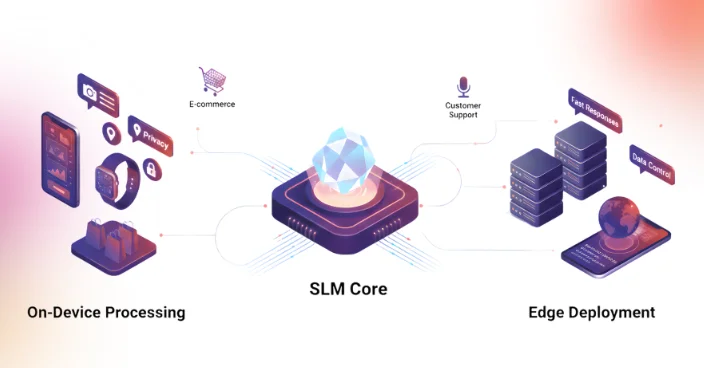
Running a model on your machine can reduce “mystery filtering” and gives you control over storage. It also helps with confidential drafts.
Trade-off: local setups need decent hardware, and output quality can vary. Also, you still need your own rules so you do not accidentally produce risky content in a work setting.
Enterprise AI often gives clearer data handling, audit logs, and admin controls. It is not “no restrictions”, but it feels less random because policies are documented and stable.
This also connects with AI data governance, which explains how serious teams handle access, logging, and retention.
If a site promises a Free AI chatbot with no restrictions, ask these two questions before you trust it:
A safer move is paid tools with clear policies, or local setups where you control the files.
If your prompts are normal and still blocked, try this:
Say what you are doing and why. “I am writing a blog on home safety” often gets better results than “Tell me how to do X”.
If you need help on sensitive topics, ask for prevention, warning signs, or safer alternatives. That usually stays allowed and still solves your real problem.
Draft structure first, then fill sections. Many blocks happen when everything is packed into one prompt.
This approach gives you the “feels unrestricted” experience for legitimate work.
If you want a clean one-liner to anchor the article:
A fully unrestricted AI is not a realistic offer in 2026 for any reputable provider, but you can get more flexibility using local models, enterprise setups, and better prompt framing.
That hits the truth without hype.
Not in any mainstream, reputable product. Tools that claim it often cut privacy, safety, or reliability.
It usually means weak filtering and weak policy enforcement. It can also mean unclear data handling.
Often no. Many free “no restriction” tools have unclear privacy, unstable quality, and higher scam risk.
For normal work, the smarter goal is “low friction” plus clear policies. Local models can help if privacy matters.
Use clearer context, split tasks, and pick tools built for your use case. For private work, run local AI.