Why Voice Agents Hallucinate on Live Calls (And How to Guardrail Retell AI Workflows)
47 Views
Summarize Article



Summarize Article
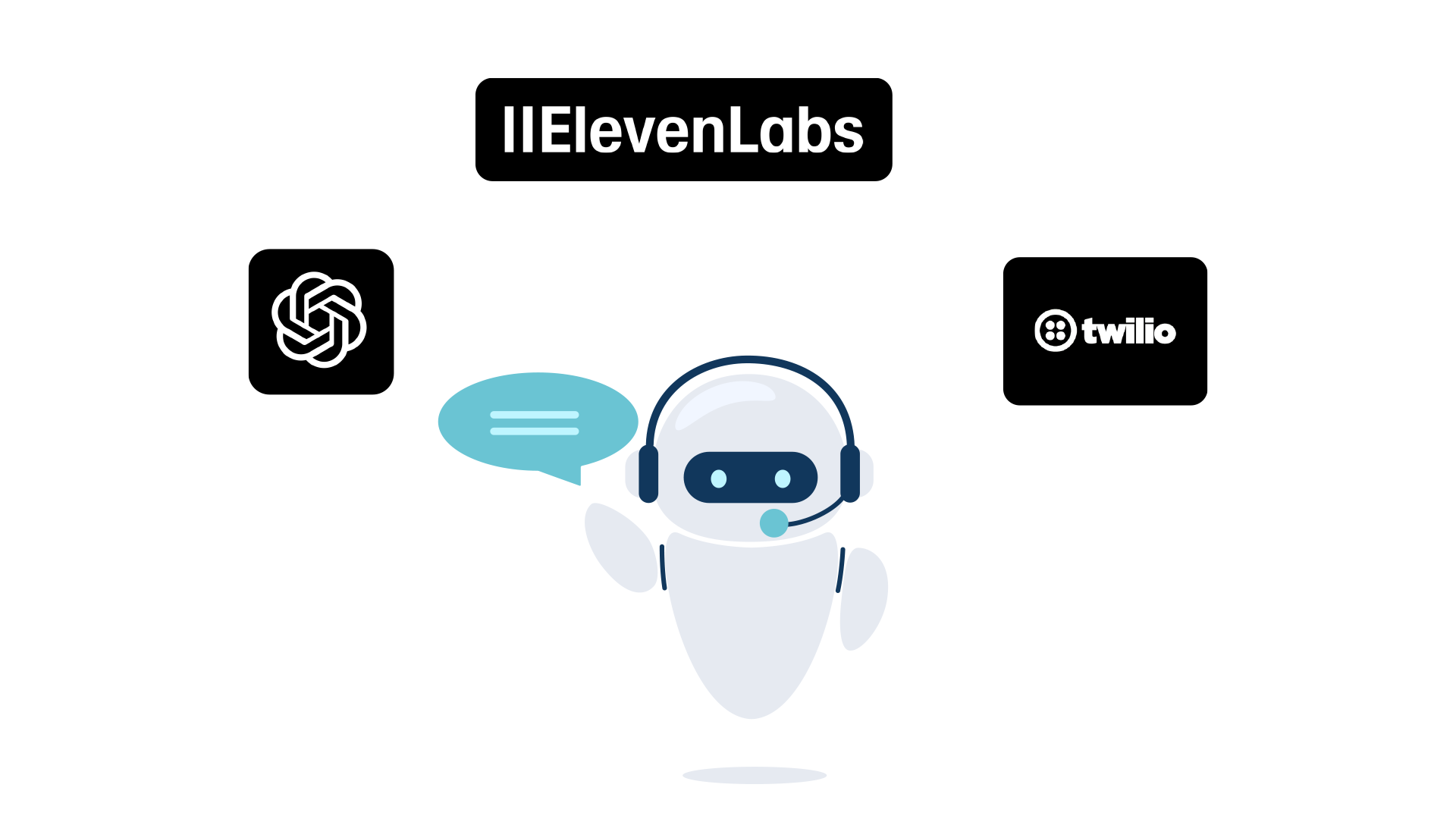
A production twilio elevenlabs integration built with OpenAI as the reasoning layer comes down to one core mechanism, straight from both platforms’ own documentation: Twilio opens a WebSocket to your server the moment a call connects, streams the caller’s audio as base64-encoded 8kHz mu-law frames, and waits for synthesized audio to come back over that same connection. Everything else, the STT provider, the LLM, the TTS voice, is a component you plug into that WebSocket bridge, and understanding this mechanism is the actual prerequisite for any custom twilio elevenlabs integration, not just a technical curiosity.
This article covers how that bridge actually works according to Twilio’s and ElevenLabs’ own technical documentation, when SIP trunking or a WebRTC voice agent architecture fits better than a standard PSTN call, and what a genuinely production-ready custom voice telephony bridge requires beyond a working demo. This is the same integration architecture question we’ve covered with Retell AI’s managed platform, approached from the opposite direction: building the bridge yourself instead of relying on a managed layer above it.
Twilio’s own Conversation Relay documentation describes the flow directly: a caller dials a Twilio number, Twilio fetches a TwiML document from your webhook, and that TwiML’s <Connect><Stream> instruction tells Twilio to open a WebSocket to your server rather than handling the call with static prompts. From that point forward, Twilio streams the caller’s audio to your endpoint in real time and expects synthesized audio streamed back the same way.
ElevenLabs’ own build guide fills in the rest of the cascade: your server forwards the incoming audio chunks to a speech-to-text service, sends the finalized transcript to an LLM once a caller’s turn ends, and synthesizes the reply, using a low-latency model chosen specifically for real-time use, back into the same 8kHz mu-law format Twilio expects. Every component in that chain, the STT engine, the LLM, the TTS voice, is swappable independently, which is the entire architectural point of building a custom bridge instead of using a fully managed platform.
ElevenLabs’ own documentation is direct about the reasoning: using WebSockets means maintaining a single persistent connection instead of establishing a new HTTP connection for every turn in the conversation, which reduces the connection-setup overhead that would otherwise add latency to every single exchange. For a phone call where a caller notices even a half-second pause, that per-turn HTTP overhead is exactly the kind of cost a well-built custom voice telephony bridge is designed to eliminate.
This is also why audio format matters more than it might initially seem. Twilio Media Streams uses 8kHz mu-law audio specifically, and configuring your STT and TTS services to accept and emit that same format directly avoids a transcoding step that would otherwise add processing time on both ends of every exchange. A bridge that transcodes unnecessarily is adding latency for no architectural reason.
| Not sure whether your custom Twilio bridge is actually configured to avoid unnecessary transcoding? WebOsmotic will audit your audio pipeline for format mismatches and connection overhead that’s adding latency nobody’s noticed yet. |
ElevenLabs’ own documentation lays out the actual decision clearly: a native integration, where ElevenLabs hosts the LLM and you configure it through the agent dashboard, is simpler and has fewer moving parts. A custom LLM integration, where you host the LLM on your own infrastructure using the Speech Engine SDK, gives full control over the model choice, retrieval-augmented generation, function calling, and business logic, at the cost of more infrastructure to build and maintain.
The right choice depends on whether the conversation logic actually needs that control. If a standard agent configuration handles the use case, the native integration reaches production faster with less to maintain. Reach for a custom LLM bridge specifically when the brain needs to run code on your own infrastructure, hit internal systems directly, or use a model and orchestration setup the native configuration doesn’t support.
Standard Twilio phone numbers connect calls over the traditional public telephone network, but SIP trunking voice AI deployments route calls through a SIP connection instead, typically because an enterprise already has existing telephony infrastructure, a PBX system, or specific carrier relationships the deployment needs to integrate with rather than replace. Twilio’s Elastic SIP Trunking product supports this pattern, connecting your existing telephony infrastructure to the same Media Streams architecture rather than requiring a full migration to Twilio-issued numbers.
This matters specifically for enterprise deployments where a phone system migration isn’t realistic on the project timeline. A SIP trunking voice AI architecture lets the AI layer plug into calls arriving through infrastructure that already exists, rather than forcing an organization to route every call through new numbers before the voice AI project can even start.
A WebRTC voice agent architecture applies when the interaction happens inside a browser or app rather than over the traditional phone network, a voice assistant embedded in a web application, for instance, rather than something a caller dials into. WebRTC’s peer-to-peer-capable, low-latency design makes it a natural fit for this use case, but it’s a genuinely different connection method from Twilio’s PSTN or SIP-based telephony, not an interchangeable alternative.
The practical implication for a twilio elevenlabs integration specifically: if the actual use case is phone-based, Media Streams over a standard Twilio number or a SIP trunk is the right architecture. If the use case is browser or app-based voice interaction with no phone number involved at all, a WebRTC voice agent architecture is the better starting point, and pulling a twilio elevenlabs integration into that use case adds a telephony layer the deployment doesn’t actually need.
| Building a custom voice telephony bridge and not sure whether PSTN, SIP trunking, or WebRTC actually fits your use case? WebOsmotic scopes the right connection architecture for your twilio elevenlabs integration based on how your callers or users actually reach the agent, not a default that happens to be easiest to demo. |
A twilio elevenlabs integration built with OpenAI or another LLM isn’t really three separate products stitched together. It’s one WebSocket-centered architecture where Twilio handles audio transport, ElevenLabs handles the speech layer, and the LLM handles reasoning, each swappable independently because the bridge between them is built on open standards rather than a single vendor’s closed pipeline. Getting that bridge right, persistent connections, matched audio formats, the correct connection method for how users actually reach the agent, is what separates a genuinely production-ready twilio elevenlabs integration from a demo that happens to work on a good network day.
How does a Twilio ElevenLabs integration actually connect a phone call to an AI agent?
Twilio opens a WebSocket to your server when a call connects, using a TwiML <Connect><Stream> instruction, and streams the caller’s audio as base64-encoded 8kHz mu-law frames in real time. Your server forwards that audio to a speech-to-text service, sends the transcript to an LLM, and streams synthesized audio back over the same WebSocket connection for Twilio to play to the caller. This handshake is the foundation of any twilio elevenlabs integration, regardless of which LLM or STT provider sits behind it.
Why does the integration use WebSockets instead of standard HTTP requests?
Because a WebSocket maintains a single persistent connection for the entire call, avoiding the connection-setup overhead a new HTTP request would add on every single turn of the conversation. For a phone call where latency is immediately noticeable to a caller, that per-turn overhead is exactly the kind of cost a well-built bridge is designed to eliminate.
When does SIP trunking voice AI make more sense than standard Twilio phone numbers?
When an organization already has existing telephony infrastructure, a PBX system, or specific carrier relationships that a voice AI deployment needs to integrate with rather than replace. SIP trunking connects that existing infrastructure into the same Media Streams architecture without requiring a full migration to new phone numbers.
How is a WebRTC voice agent different from a Twilio-based phone integration?
A WebRTC voice agent handles voice interaction inside a browser or app, with no phone number or traditional telephony network involved at all. Twilio’s Media Streams architecture is specifically for phone-based interaction, over PSTN or SIP; the two are different connection methods suited to genuinely different use cases, not interchangeable options for the same problem.
Should a team default to ElevenLabs’ native LLM integration or build a custom LLM bridge?
Default to the native integration if a standard agent configuration handles the actual conversation logic, since it reaches production faster with less infrastructure to maintain. Build a custom LLM bridge specifically when the conversation needs to run code on your own infrastructure, call internal systems directly, or use a model and orchestration setup the native configuration doesn’t support.