Voice Agent RAG Pipeline: Why “vs” Is the Wrong Question
4 Views
Summarize Article



Summarize Article
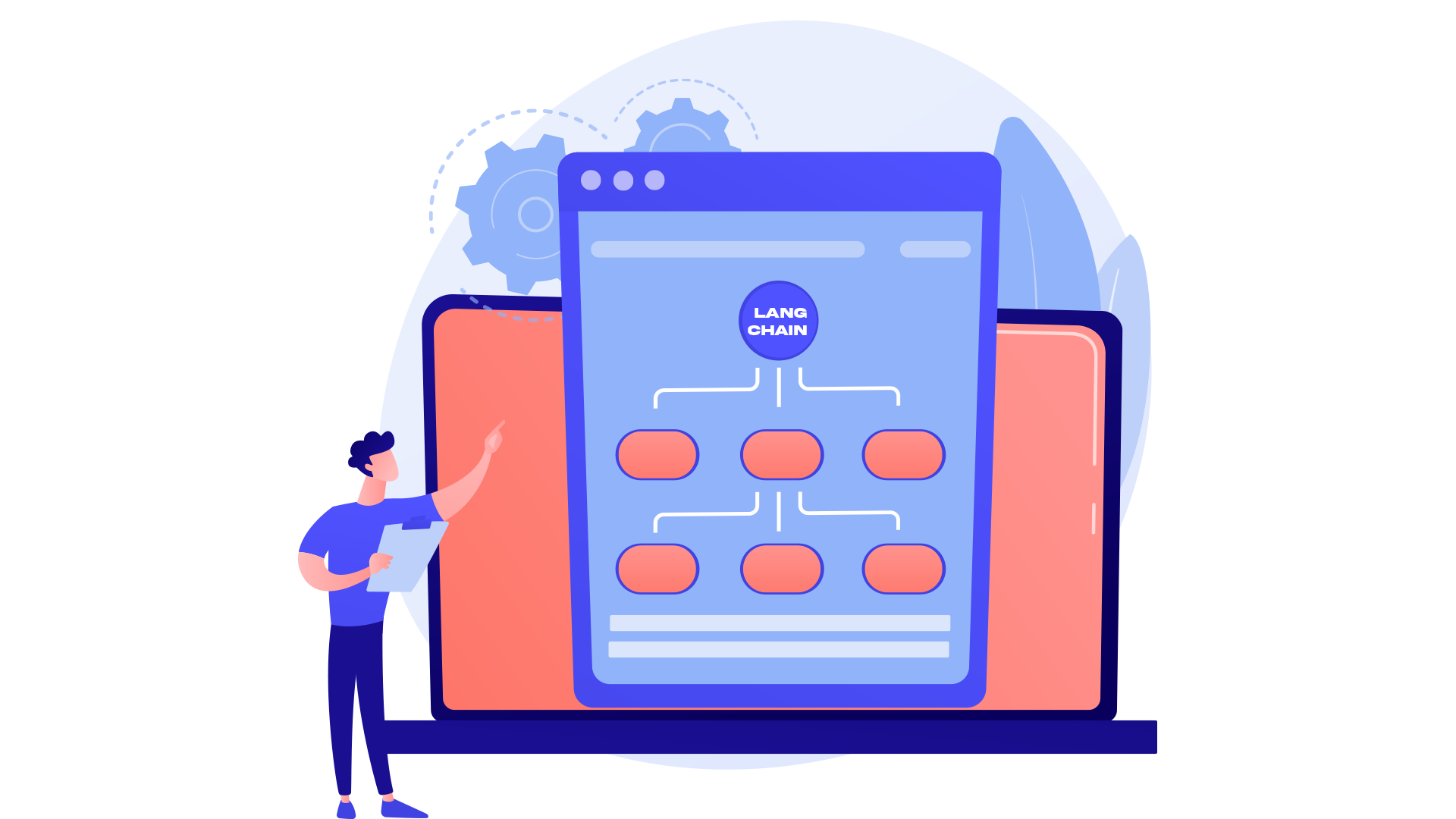
The “LangChain vs LlamaIndex” framing most comparisons default to is the wrong question for a voice agent rag pipeline specifically, and IBM’s own comparison of the two frameworks explains why: LlamaIndex is built for streamlined search-and-retrieval, ingesting, structuring, and querying domain-specific data, while LangChain is a versatile, modular framework for building the broader agentic application around that retrieval, tool use, conversation state, multi-step reasoning. They solve different parts of the same problem rather than competing to solve the same one.
For a voice agent specifically, that division matters more than it does for a text chatbot, because the latency budget is unforgiving in a way text interfaces simply don’t experience. This article covers how LlamaIndex and LangChain’s now-standard production form, LangGraph, actually combine in a voice agent rag pipeline, what sub-second RAG retrieval requires architecturally, and where low-latency vector search decisions actually get made.
A voice agent rag pipeline needs both halves of what these frameworks provide, not a choice between them. Retrieval, finding the right chunks of knowledge base content to ground a response, is a distinct problem from orchestration, managing conversation state, deciding when to call the retrieval step at all, and handling what happens after retrieved content comes back. Collapsing both into a single framework choice is exactly how a voice RAG pipeline ends up with either weak retrieval quality or weak conversation management, since neither framework was built to be excellent at both halves simultaneously.
LlamaIndex’s own positioning, per IBM’s summary, focuses specifically on ingestion, structuring, and accessing domain-specific data, which is precisely the retrieval half a voice agent needs to be fast and accurate. LangChain’s modular framework, now largely expressed in production through LangGraph, handles the conversational orchestration layer: deciding whether a given user turn actually requires a retrieval call, managing the state of a multi-turn conversation, and routing what happens with the retrieved content once it’s back.
Sub-second RAG retrieval isn’t an optional nice-to-have for a voice agent the way it might be for a chat interface where a user tolerates a two-second pause without noticing. A voice agent’s entire response, speech recognition, the retrieval step if one is needed, LLM generation, speech synthesis, has to fit inside a latency budget a caller experiences as a natural pause, not an obvious wait.
| Not sure whether your current RAG pipeline actually fits inside a voice-acceptable latency budget? WebOsmotic will benchmark your retrieval step’s real latency distribution, not just its average case, against what a voice conversation can actually tolerate. |
Low-latency vector search is mostly determined by decisions made before a single query ever runs: index type, chunk size, and how aggressively the search trades recall for speed. An approximate nearest neighbor index configured for maximum accuracy will generally be slower than one tuned to return a slightly less exhaustive but much faster result, and for a voice agent, that tradeoff usually favors speed more than it would for an offline research tool where a user is willing to wait for the most exhaustive possible answer.
LangGraph’s own documentation is the practical answer to what LangChain contributes to a voice agent rag pipeline in 2026: state management through checkpointers, letting a graph track what’s already been discussed and retrieved across a multi-turn conversation, so the same information doesn’t get re-retrieved on every turn unnecessarily. A node in the graph can decide, based on conversation state, whether a given turn actually needs a new retrieval call or whether previously retrieved content already covers what the caller is asking.
LangGraph’s own documentation is also direct about an operational cost worth planning around: over long conversations, checkpoints accumulate, which can increase latency and storage costs, addressed with a pruning or retention policy rather than left unbounded. For a voice agent rag pipeline specifically, that’s one more reason retrieval and conversation state need active monitoring rather than a one-time setup assumed to hold up indefinitely as call volume and conversation length grow.
| Building voice bot knowledge retrieval that needs to stay fast as your knowledge base and call volume grow? WebOsmotic architects the retrieval, caching, and orchestration layers together, not as separate systems bolted on after the fact. |
A voice agent rag pipeline built around “LangChain vs LlamaIndex” as a single either-or decision is solving a framing problem, not a technical one. The two tools address genuinely different halves of the same system, retrieval and orchestration, and most production voice RAG deployments in 2026 use both together rather than picking a winner. Sub-second RAG retrieval and low-latency vector search come from deliberate index and chunking decisions layered under a conversation-aware orchestration layer that only spends retrieval latency when a turn actually needs it, not from choosing the “right” single framework and hoping the rest follows. It’s the same architecture-over-brand-name lesson that applies to the rest of a production voice stack: the specific tool matters less than whether the system underneath it was actually engineered for the latency budget in play.
Should a voice agent rag pipeline use LangChain or LlamaIndex?
Most production systems use both together rather than choosing one: LlamaIndex or a comparable framework for the actual data ingestion and retrieval, and LangChain, typically through LangGraph in production, for the conversational orchestration deciding when retrieval happens and managing state across turns. They address different halves of the same pipeline.
What makes sub-second RAG retrieval specifically necessary for voice, more than for text-based chat?
A voice agent’s entire turn, speech recognition, retrieval, generation, synthesis, has to complete inside a latency window a caller perceives as a natural conversational pause rather than an obvious wait. Text interfaces have more tolerance for delay since a visual loading state can buy patience a voice conversation doesn’t have.
How does low-latency vector search actually get achieved in a voice RAG pipeline?
Primarily through decisions made before any query runs: index type tuned for approximate rather than exact nearest-neighbor search, appropriately sized chunks, and monitoring the vector search step’s latency independently from the full pipeline so a regression there doesn’t hide inside an acceptable-looking average.
Does every conversational turn in a voice agent need a retrieval call?
No, and triggering retrieval indiscriminately on every turn wastes latency budget on turns that don’t actually need knowledge base grounding. A well-built voice agent rag pipeline uses conversation state to determine when a new retrieval call is actually necessary versus when previously retrieved content already covers the current question.
What operational risk does LangGraph’s own documentation flag for long voice conversations using RAG?
Checkpoint accumulation over long conversations, which can increase latency and storage costs if left unaddressed. LangGraph’s own documentation recommends a pruning or retention policy rather than letting conversation state grow unbounded, a detail worth planning around specifically for voice agents that may sustain longer calls than a typical text chat session.