Building Multi-Turn Conversational IVR Systems Using Retell AI and LangGraph
10 Views
Summarize Article



Summarize Article
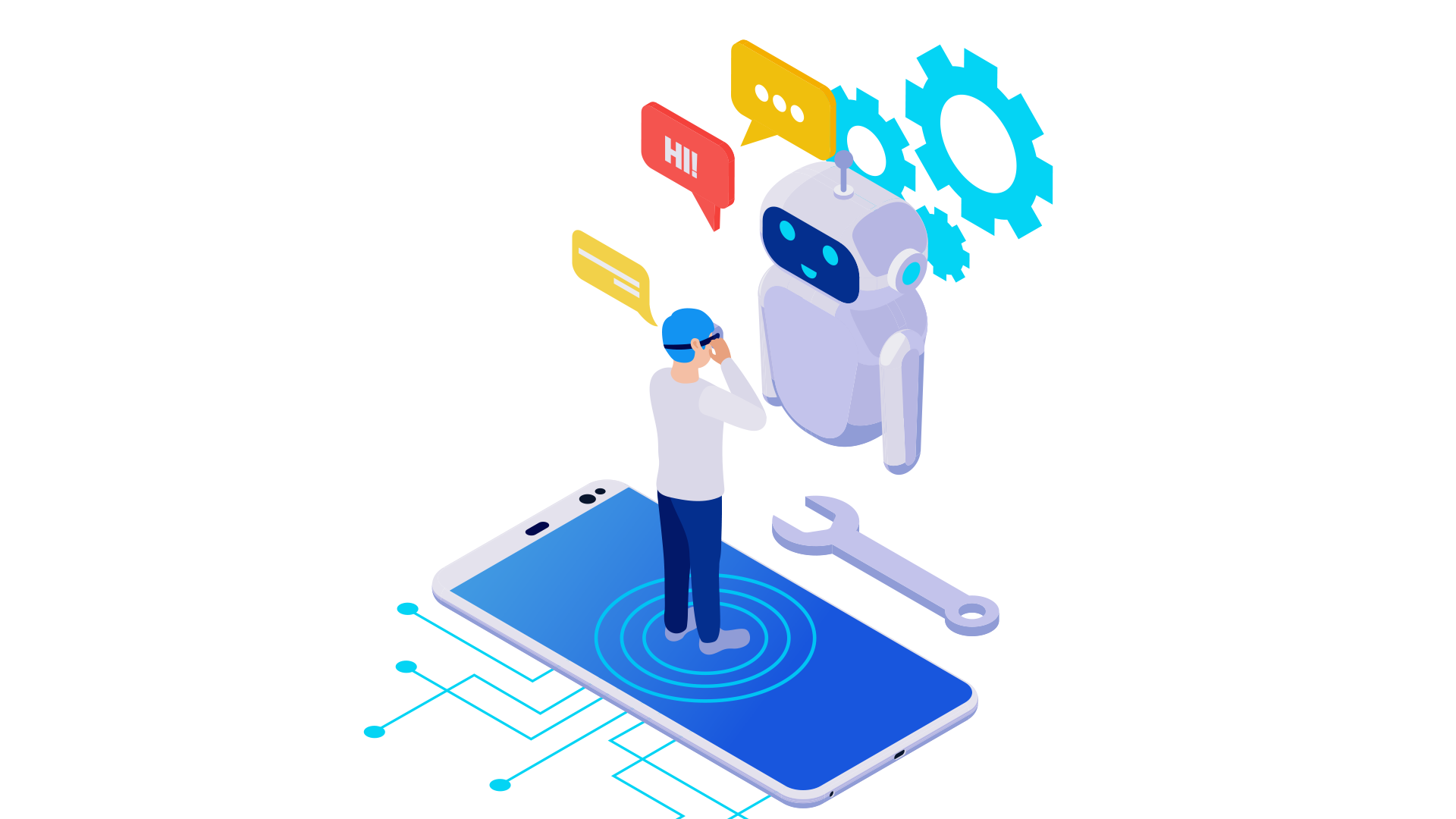
A legacy IVR fails the same way every time: a caller who deviates even slightly from the menu tree’s assumptions gets stuck, repeats themselves, or hangs up. Conversational ivr development replaces that rigid tree with natural, multi-turn dialogue, but doing it well requires two genuinely distinct layers working together, not one platform trying to do both jobs. Retell AI handles the voice layer, telephony, speech-to-text, text-to-speech, streaming audio. LangGraph handles the conversation layer, the actual logic that decides what happens next based on everything said so far.
This article covers how that two-layer architecture actually fits together, what LangGraph’s own documentation says about managing state across a multi-turn call, and where fallback human handoff has to be built deliberately rather than assumed to work by default.
Retell AI supports connecting a Custom LLM to its voice pipeline, meaning Retell manages the audio in and out, the phone connection, and the streaming speech pipeline, while your own backend decides what the agent actually says and does at each turn. That’s the seam where LangGraph fits: instead of relying on Retell’s built-in LLM logic for anything beyond a simple, mostly-linear conversation, a genuinely stateful, multi-turn IVR routes each turn through a LangGraph-orchestrated backend that Retell’s Custom LLM integration calls into.
This division of labor matters because the two problems are genuinely different engineering problems. Voice I/O, latency budgets, streaming audio, telephony reliability, is a real, specialized discipline, the same one that determines whether a broader Retell integration actually holds up in production. Conversation logic, tracking where a caller is in a multi-step process, deciding what question to ask next, knowing when to escalate, is a different discipline entirely. Trying to solve both inside a single, general-purpose voice platform’s built-in logic is exactly how conversational IVR systems end up feeling only marginally better than the menu tree they replaced.
LangGraph’s own documentation is specific about how it handles the memory a stateful voice agent actually needs: checkpointers persist a thread’s graph state for short-term, thread-scoped memory, conversation continuity, human-in-the-loop workflows, and fault tolerance, while stores handle longer-term, cross-thread memory like caller preferences or facts that should persist across separate calls.
The mechanism that makes multi-turn continuity work is a thread_id, specified in the configurable portion of the request each time the graph is invoked. Every turn in a call gets routed through the graph tagged with the same thread_id, so the graph automatically has access to the full accumulated state of that specific conversation rather than treating each turn as a fresh, context-free request. This is what actually separates a stateful voice agent from a chatbot that happens to be attached to a phone line: the state, what’s already been asked, confirmed, or ruled out, persists and accumulates deliberately across the entire call.
LangGraph’s own documentation is honest about a real operational tradeoff here too: over long conversations, checkpoints accumulate, which can increase latency and storage costs, and the documented fix is pruning old checkpoints or setting a retention policy rather than letting state grow unbounded. A genuinely production-ready stateful voice agent needs this addressed deliberately, not discovered after a support call runs unusually long.
| Not sure whether your current IVR logic actually needs LangGraph’s state management, or something simpler? WebOsmotic will assess your actual call flow complexity before recommending a stateful architecture you may not need. |
A legacy IVR’s menu tree is a rigid, pre-defined branching structure: press 1 for this, press 2 for that. LangGraph’s conditional edges accomplish the same fundamental job, deciding what happens next, but based on the LLM’s actual interpretation of what a caller said, not a fixed keypress. A node in the graph handles a specific piece of logic, calling the LLM, checking an external system, validating an input, and a conditional edge function inspects the current state afterward to decide which node runs next.
That’s the mechanism behind genuine multi-turn LLM routing: the graph can branch differently based on the actual content and history of the conversation, loop back to clarify an ambiguous answer, or skip steps entirely when a caller has already provided information a rigid menu tree would have asked for again anyway. The caller experience shifts from working through a tree to just answering questions naturally, while the underlying system is still making the same category of structured, traceable routing decision a menu tree made, just driven by conversation content instead of keypad input.
Fallback human handoff is the part of conversational IVR development most likely to be treated as an afterthought, and it’s exactly the part that determines whether a caller trusts the system on their next call. LangGraph supports this directly through the same checkpointing mechanism that enables multi-turn conversation: a graph can be compiled with an interrupt configured before a specific node, pausing execution and preserving the full accumulated state while a human reviews or takes over.
| Building fallback logic that actually preserves context when a call transfers to a human? WebOsmotic architects the handoff between LangGraph’s state and Retell’s warm transfer so context arrives with the call, not after it. |
Most conversational ivr development projects that stall or underdeliver share a common root cause: the team treated it as a voice platform configuration task rather than a genuine software architecture project with a voice interface. Building the LangGraph state machine correctly, defining conditional edges for every realistic branch a conversation can take, and testing the fallback path under real conditions is engineering work comparable to any other stateful backend system, not a set of dropdown settings inside a voice platform dashboard.
Conversational ivr development that tries to collapse the voice layer and the conversation logic layer into one system usually ends up doing both jobs poorly. Retell’s Custom LLM integration exists specifically to let a team use the right tool for each half of the problem: Retell’s own voice infrastructure for the audio and telephony discipline it’s built for, and a genuinely stateful orchestration framework like LangGraph for the multi-turn routing and fallback logic that discipline requires. A stateful voice agent built this way, through deliberate conversational ivr development rather than a single platform’s default configuration, replaces a menu tree with something that actually feels like a conversation, not a slightly more forgiving version of the same rigid structure.
Why use LangGraph instead of Retell’s built-in LLM logic for conversational IVR development?
Retell’s built-in logic works well for simpler, mostly linear conversations. LangGraph’s explicit state, node, and conditional edge architecture is built specifically for genuinely multi-turn, branching conversations where the system needs to track accumulated context and make different routing decisions based on the full conversation history, not just the current turn.
How does a stateful voice agent actually remember earlier parts of a call?
Through LangGraph’s checkpointing system, which persists the graph’s state to a thread identified by a thread_id. Every turn in the same call is routed through the graph with the same thread_id, so the system automatically has access to everything already discussed, without needing to re-explain the conversation history in the current prompt.
What determines whether multi-turn LLM routing actually replaces a menu tree well?
Whether the conditional routing logic is designed around the real decision points a conversation can take, informed by how callers actually respond, rather than mapping a rigid menu structure onto natural language input and calling it conversational. The routing needs to branch, loop back for clarification, and skip redundant steps the way a human agent naturally would.
When should fallback human handoff actually trigger in a conversational IVR?
Based on specific, explicit conditions defined in advance, an explicit caller request for a human, repeated failed clarification attempts, or a request outside the agent’s intended scope, rather than left to the LLM’s in-the-moment judgment alone. The handoff should also preserve full conversation state so the receiving human doesn’t start from zero.
Does adding LangGraph to a Retell deployment slow down response latency?
It adds a processing step, since Retell’s Custom LLM integration now calls out to a LangGraph-orchestrated backend rather than using built-in logic, but the latency impact depends heavily on how that backend is architected. The larger latency risk documented in LangGraph’s own guidance is checkpoint accumulation over very long conversations, which is addressed with a retention policy rather than avoided by skipping state management altogether.