Agentic AI 2026: How Autonomous Agents Reshape Business
297 Views
Summarize Article



Summarize Article
TLDR: The global AI agents market hit $10.91 billion in 2026, up from $7.63 billion in 2025. Companies deploying autonomous AI agents report an average 171% ROI on deployments, with U.S. enterprises averaging 192%. The pilot era is over. AI agents are now production infrastructure across customer service, finance, HR, and security.
Only 23% of organizations are actively scaling autonomous AI agents, even though 88% already use AI in at least one business function. That gap is not a technology problem. It is a deployment and governance problem.
Gartner projects 40% of enterprise applications will include task-specific AI agents by end-2026, up from under 5% just a year earlier. McKinsey estimates AI agents could add $2.6 to $4.4 trillion in annual business value. And 93% of leaders say organizations that scale AI agents in the next 12 months will gain a structural edge over peers.
Companies deploying autonomous AI agents broadly report 3 to 15% revenue growth and 10 to 20% increases in sales ROI. 78% of executives say they will need to reinvent their operating models to capture full value. The businesses closing that deployment gap faster are not better funded. They are more operationally clear.
This guide explores exactly where AI agents are creating measurable business value in 2026 and how to separate real deployment from expensive experimentation.
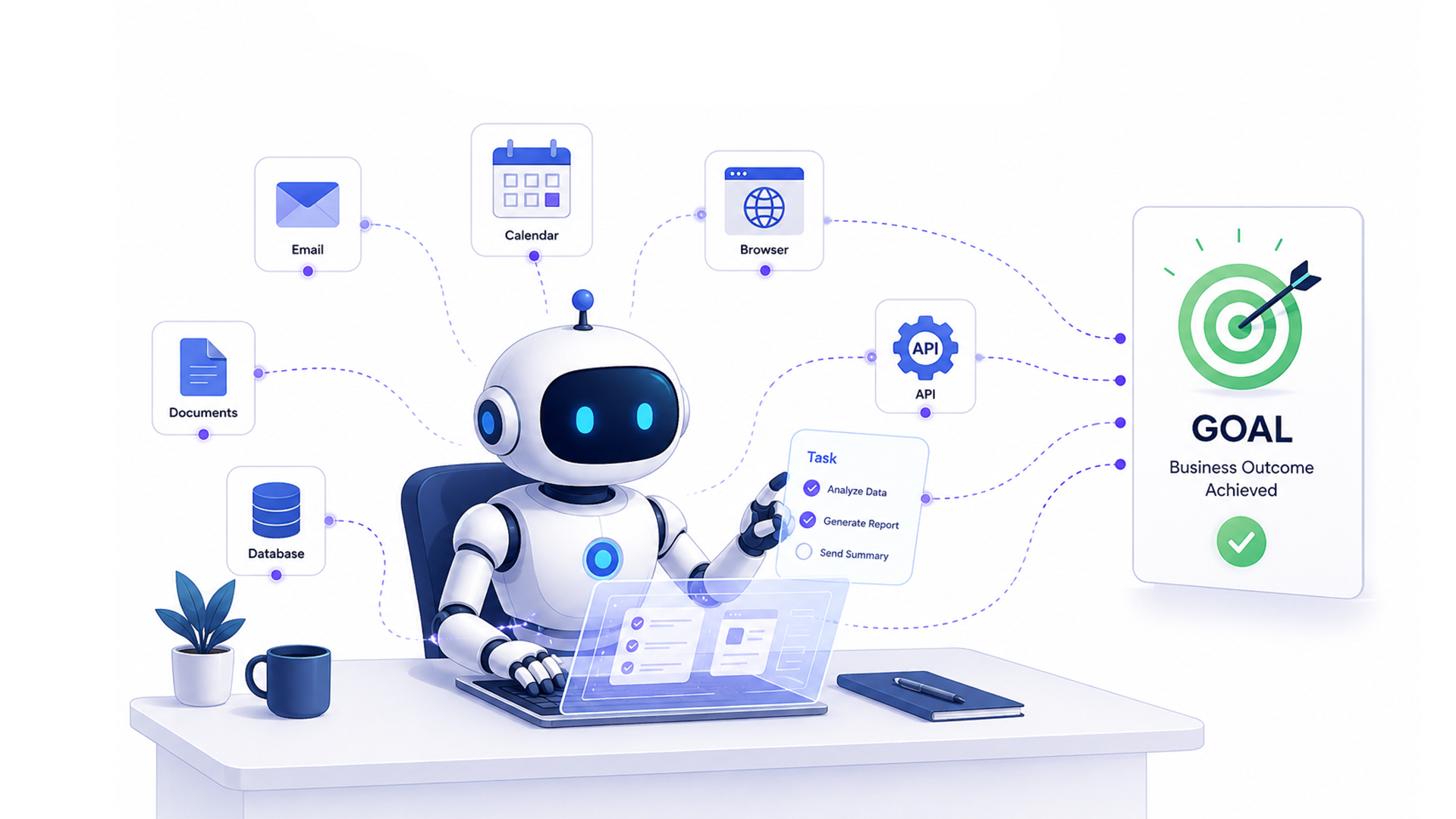
Traditional automation runs fixed scripts. AI agents set sub-goals, adapt mid-task, use external tools, and hand work to other agents without waiting for human input between steps. That structural difference is what changes the ceiling on what automation can actually do.
A chatbot responds within a fixed decision tree. An AI agent operates with persistent memory, tool access, and decision logic that lets it pursue a stated objective across multiple steps and systems.
LLM agents can re-plan when they encounter obstacles, choosing which tools to call and when, based on the current state of the task. When an order flagging issue appears at midnight, the AI agent investigates, escalates if the threshold is crossed, and logs the resolution. That is not a faster chatbot. That is a different system architecture.
The shift from reactive to goal-directed is what makes AI workflow automation a fundamentally different investment than traditional RPA.
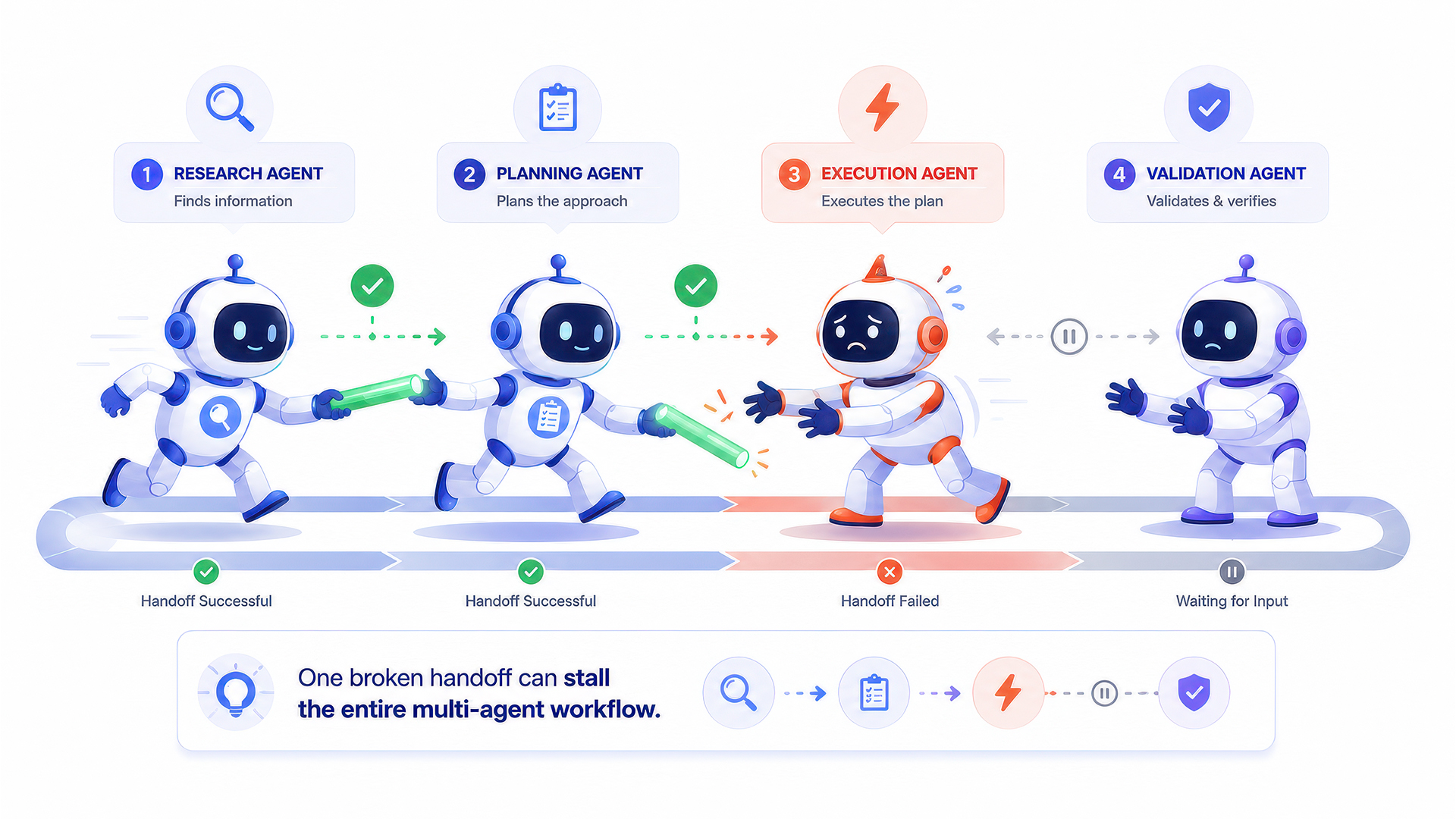
Multi-agent systems currently hold a 66.4% market share, coordinating specialized AI agents across strategy, research, sales, and RevOps functions. Ready-to-deploy AI agents make up 58.5% of current deployments, cutting time-to-value compared to fully custom builds.
The Agent2Agent (A2A) protocol is emerging as the interoperability standard between platforms like Salesforce and Google Cloud, allowing AI agents from different vendors to hand off tasks without manual bridging. A single AI agent running a workflow in isolation is already a legacy pattern.
Next: where AI agent orchestration is producing numbers that justify board-level attention.
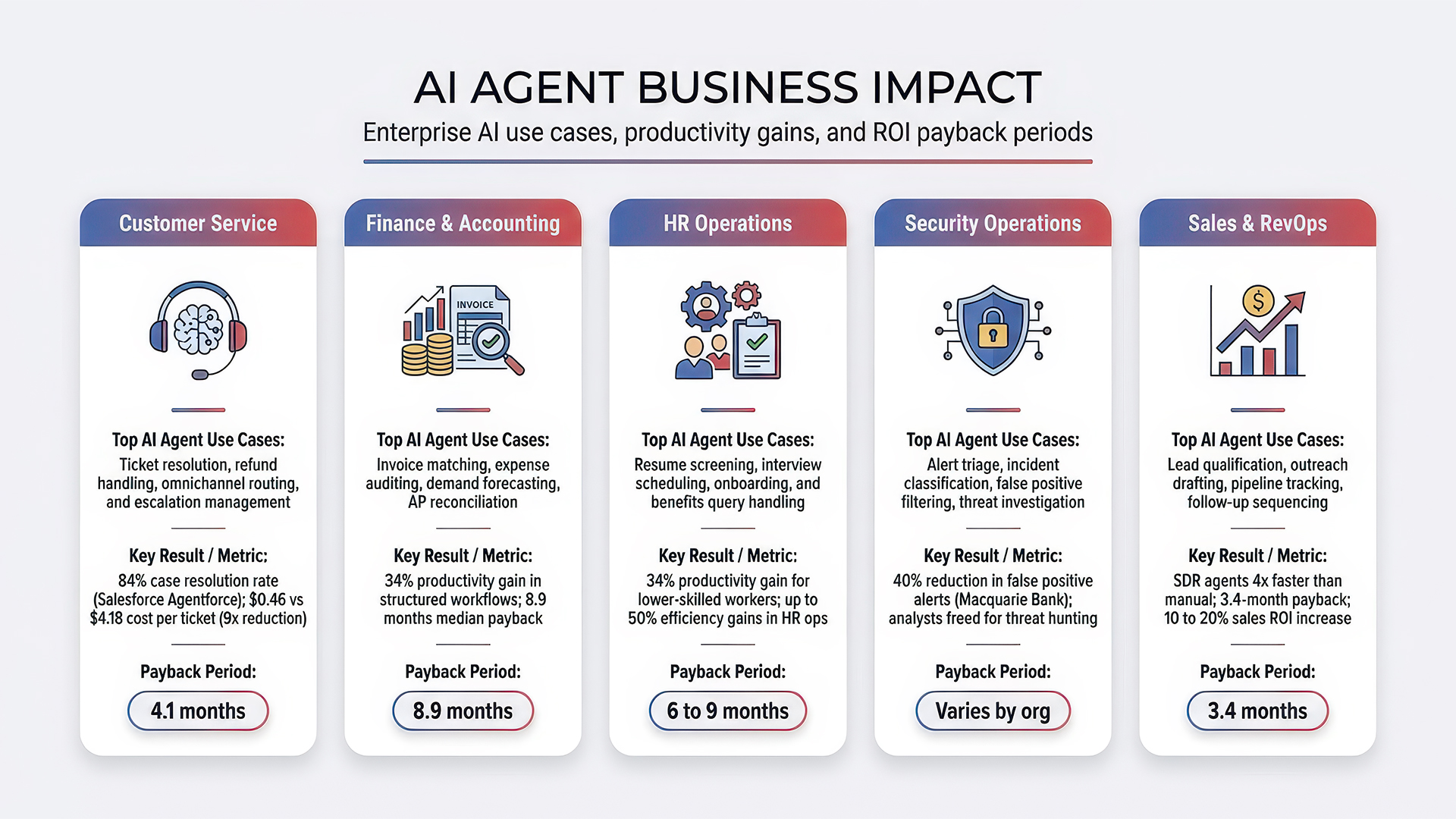
Autonomous AI agents are generating verified ROI in customer service, finance, HR, sales, and security. The functions delivering the clearest returns share one trait: high-volume, structured workflows where cycle time reduction is directly measurable.
Salesforce’s Agentforce handled over 380,000 support interactions and resolved 84% of cases without human involvement in 2026. Around 68% of all customer interactions are projected to be handled by AI agents by 2028.
Cost-per-ticket data is direct: AI agents resolve contained tickets at $0.46 versus $4.18 for human-handled cases, a 9x cost reduction per Forrester TEI studies. Agents are handling refunds, escalations, and omnichannel routing without human queues, shifting support from a headcount cost to a structured operational layer.
Invoice matching, expense auditing, resume screening, interview scheduling, and demand forecasting are the highest-performing AI agent use cases in back-office functions in 2026. Workers in structured roles using AI agents reported 34% higher productivity, with the biggest gains concentrated in repetitive, data-heavy tasks.
Median payback for finance and operations AI agents sits at 8.9 months, with customer service agents paying back in 4.1 months.
Autonomous AI agents are automating alert triage, investigation workflows, and incident classification, freeing human analysts for threat hunting and defensive strategy. Macquarie Bank directed 38% more users toward self-service and reduced false positive security alerts by 40% using Google Cloud AI agents.
Quick-Glance ROI by Business Function:
AI decision-making systems in security are risk reduction infrastructure, not efficiency tools.
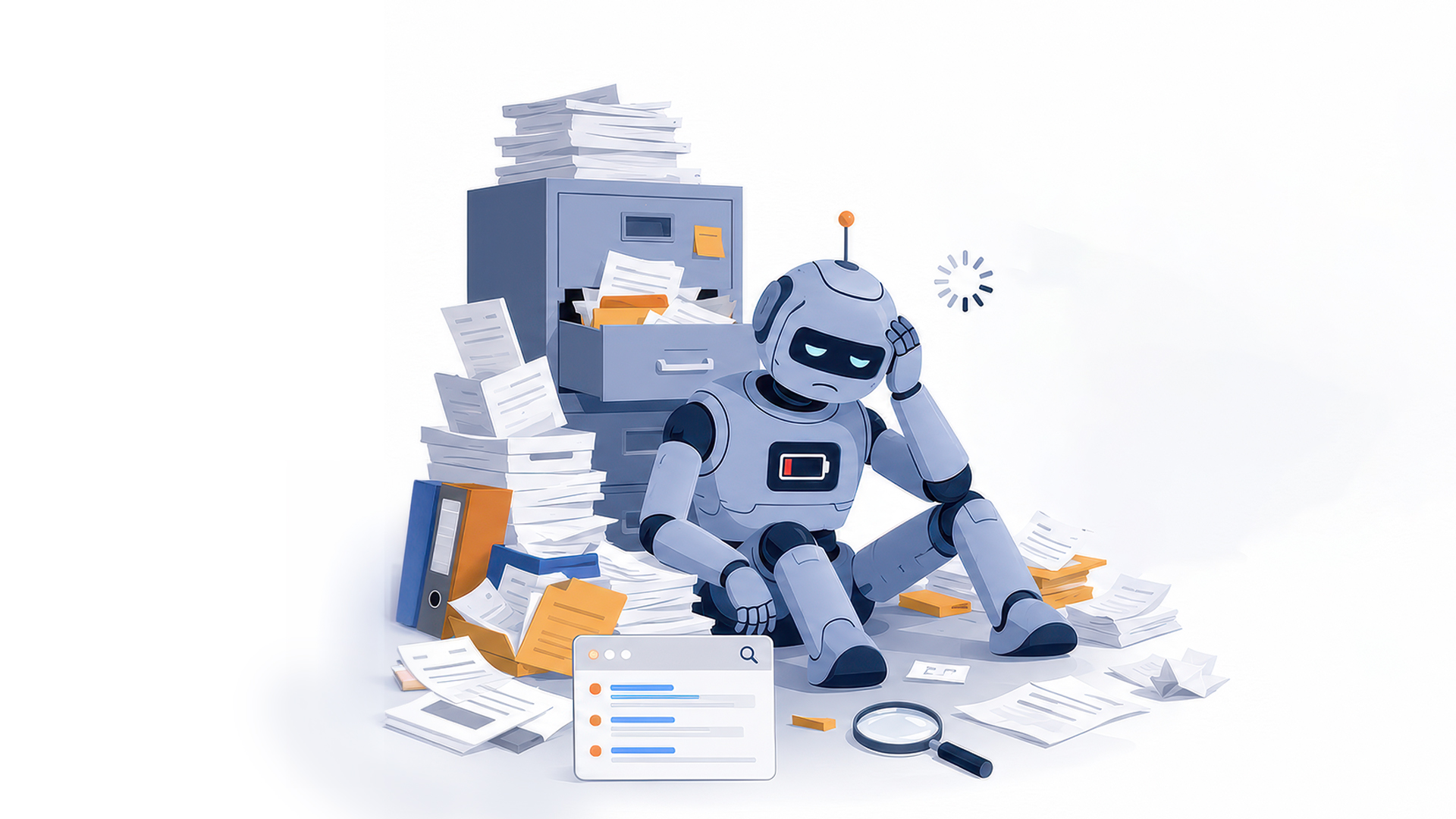
Most organizations are not failing at AI agent adoption because the technology does not work. They are failing because they deploy without governance, measurement, or a clearly defined scope. This is a structural failure, not a capability gap.
Only 11 to 14% of enterprise AI agent pilots have reached production at scale. Deloitte’s 2026 research shows that only 34% of companies are deeply transforming their businesses with AI, while 37% are still using it at a surface level. Over 40% of agentic AI projects risk cancellation by 2027.
Gartner’s root cause analysis flagged three failure modes: escalating infrastructure costs, inability to prove business value early, and absence of governance frameworks. Pilot accuracy does not predict production performance. Real users surface task variants that pilots never tested, and that gap accounts for 12 to 19 percentage point accuracy drops on launch.
Only 1 in 5 companies has a mature governance model for autonomous AI agents, meaning 80% are deploying AI agents without the oversight infrastructure to manage them safely at scale.
AI governance frameworks, auditability, explainability, and ethics controls are becoming foundational to enterprise trust. The concept of governance-as-code is gaining traction: building compliance, scope limits, and accountability directly into agent deployment design rather than retrofitting oversight after incidents occur.
The EU AI Act, enforceable from August 2026, classifies most multi-agent systems orchestration in high-impact sectors as high-risk, adding regulatory urgency to what was previously a best-practice recommendation.
Agentic AI does not eliminate jobs at the rate predictions suggested. It shifts what those jobs contain. Workers are moving from task execution to task direction, and the organizations managing that transition deliberately are seeing better AI agent adoption outcomes.
More than 57,000 team members at Telus are regularly using AI agents, saving 40 minutes per AI interaction. McKinsey’s Q1 2026 survey reports knowledge workers save an average of 6.4 hours per week when working alongside AI agents. That is structural time reallocation, not a marginal productivity gain.
Employees can now delegate execution to AI agents, shifting focus to evaluation, exception handling, and strategic planning. Fluency with AI-powered workflows is becoming as fundamental as spreadsheet skills by 2026.
Organizations that invest in training alongside accessible tools avoid the adoption bottlenecks that consistently derail agentic automation programs at mid-scale.
AI agents execute. Humans define plans, review outputs, and own accountability. Five roles are emerging in organizations running autonomous AI agents at scale:
These roles do not replace existing functions. They sit on top of them, which is why the upskilling strategy is as important as the enterprise AI platform selection itself.
WebOsmotic identifies agent-ready workflows before writing a line of code, directly addressing the scoping failures behind the 22% of AI agent deployments that report negative ROI.
Our governance-first deployment framework is built to avoid the 40% cancellation risk Gartner flagged for autonomous AI agents without clear ROI structures.
Whether you are at the pilot stage or ready to scale existing AI agent infrastructure, WebOsmotic’s consulting-to-production pipeline ensures every initiative ships with a clear ROI roadmap.
Explore how WebOsmotic builds AI agents for your business.
AI agents are operational infrastructure in 2026, not experiments. The gap between pilots and production is a governance and measurement problem, not a technology problem. Organizations that get autonomous AI agents orchestration, workforce alignment, and governance frameworks right this year will build structural advantages that are very hard to close later.
The businesses winning with AI agents are not the ones with the biggest budgets. They are the ones that scoped correctly, governed early, and measured from day one.
Ready to move your AI agent strategy from pilot to production? Connect with WebOsmotic to build agent deployments that are measurable, governed, and built to scale.
A chatbot responds within a fixed script. An AI agent sets sub-goals, uses external tools, retains memory across tasks, and hands work to other AI agents without waiting for human input between steps. The key difference is decision logic, memory, and tool access rather than just response sophistication.
Customer service, finance operations, HR screening, security alert triage, and sales pipeline management are delivering the clearest ROI in 2026. These are structured, high-volume functions where AI agents reduce cycle time and free human capacity for exception handling and strategic work.
Level 1 to 2 autonomy deployments typically take weeks. Complex multi-agent systems across functions take 6 to 18 months, depending on data infrastructure readiness, integration complexity, and governance requirements (Bayelsa Watch, 2025).
Multi-agent orchestration coordinates specialized AI agents where each handles a distinct task under a central system. One agent qualifies leads, another drafts outreach, and a third checks compliance. Together, they run complete workflows with no human handoff required between steps, making end-to-end agentic automation possible.
Gartner’s 2026 analysis points to three root causes: escalating infrastructure costs, inability to prove business value early, and absent AI governance frameworks. Organizations that deploy AI agents without defined ROI metrics and oversight structures consistently hit these blockers before scaling, regardless of model quality.
Not exactly. Traditional AI automation follows fixed rules with human-defined logic for every scenario. Agentic AI uses large language models to reason through new situations, adapt to changing inputs, and coordinate with other AI agents, making it suited for complex, non-linear workflows that rule-based automation cannot handle.