Agentic AI in 2026: what it is, what it isn’t, and where it actually works
291 Views
Summarize Article



Summarize Article
Key takeaways
|
Agentic AI is the most used and least precisely defined term in enterprise AI in 2025. Gartner documents agent washing, vendors rebranding existing RPA bots and chatbots as AI agents without substantive capability changes. The practical consequence is that engineering and product teams evaluating agentic AI cannot consistently distinguish a genuine architectural capability from a rebrand.
The distinction matters commercially. A genuine agentic system, one that perceives, reasons over multiple sources, plans tool calls, and adapts based on intermediate results, is architecturally different from a chatbot that classifies intent and calls a predefined function. Deploying the wrong architecture is the most common root cause of AI project abandonment, and Gartner documents that over 40% of agentic AI projects will be abandoned.
This post maps the agreed-upon definition from IBM, Microsoft, and Gartner, explains what separates agentic AI from chatbots and RPA, identifies the process characteristics that make a use case suitable, and documents where agentic AI is producing results in production and where it is not.
| Building an agentic AI system and need to scope the right architecture? WebOsmotic designs and builds agentic AI systems for fintech, healthcare, eCommerce, and logistics clients. We scope the agent type, orchestration layer, tool integrations, and governance controls before any development begins. |
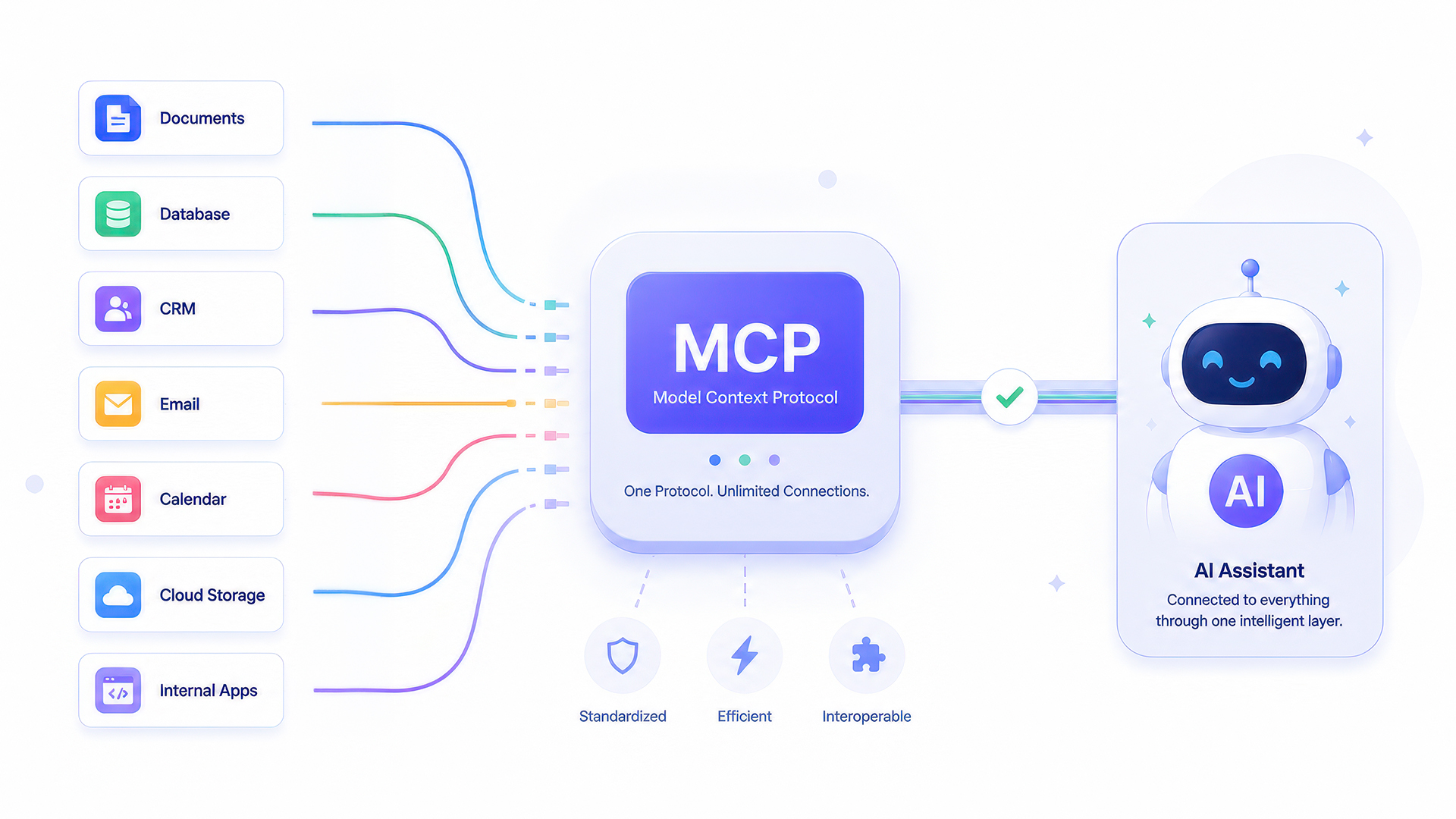
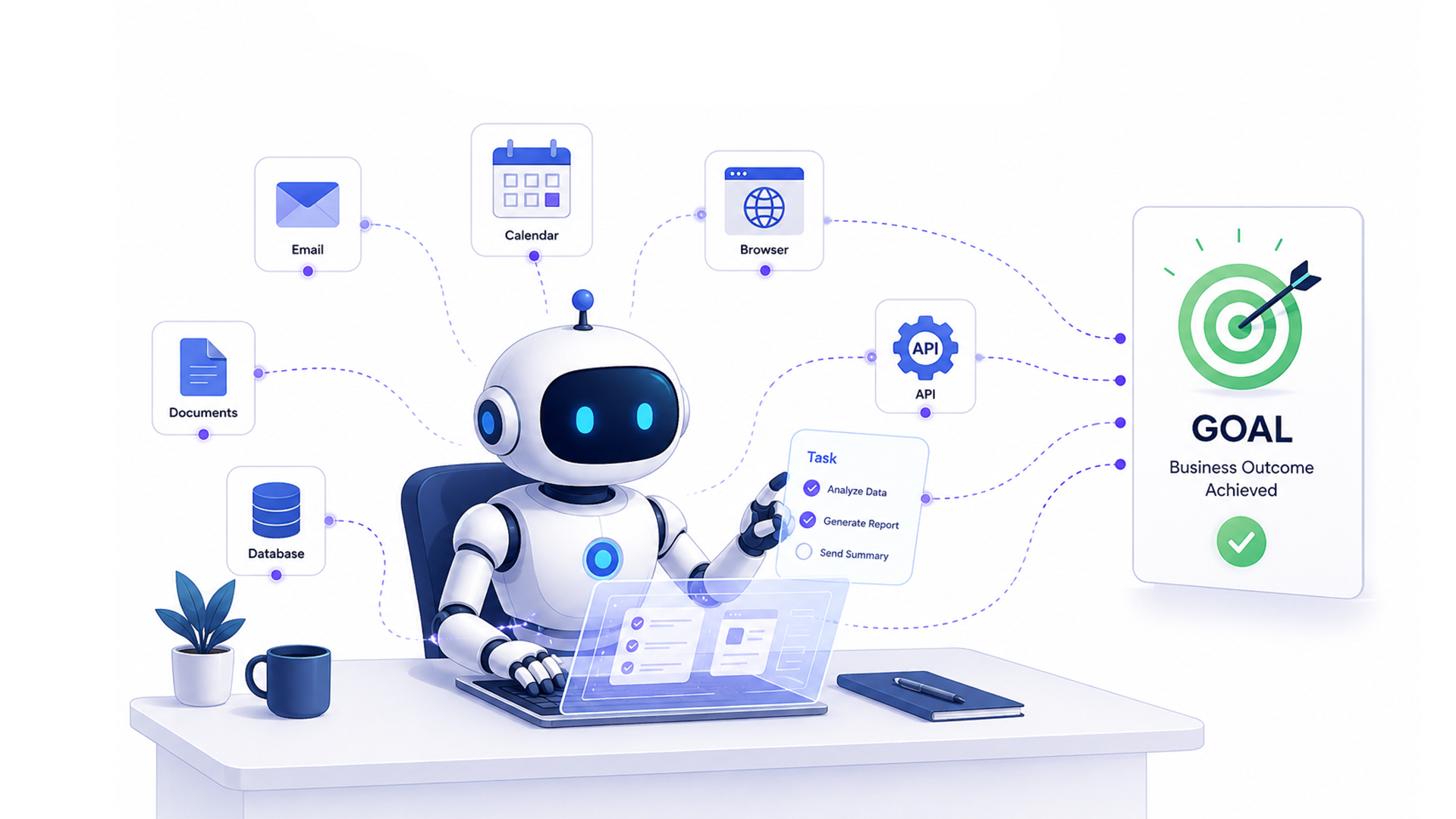
IBM defines agentic AI as a system or program capable of autonomously performing tasks on behalf of a user or another system by designing its own workflow and using available tools. The system has agency to make decisions, take actions, solve complex problems, and interact with external environments beyond the data on which its models were trained. It brings together the versatility of large language models with the precision of traditional programming.
Three properties distinguish a genuinely agentic system from a standard LLM application:
Microsoft’s criteria for agentic process fit are practical: high volume of interactions, involvement of multiple systems, variability in each interaction, and tasks that traditionally require a human to seek, read, consider, and reason over multiple pieces of information. Microsoft specifically names swivel-chair integration, processes where users manually consolidate data from multiple systems, as a prime candidate.
The IBM, Microsoft, and Gartner definitions are equally useful for what agentic AI is not. Conflating it with simpler approaches leads to mismatched architecture and the project failures Gartner documents.
| System type | What it does | What it cannot do | When it’s the right choice |
| Chatbot | Classifies user intent from a predefined taxonomy; returns a predefined response or calls a predefined function | Handle intents outside its defined set without explicit programming; plan multi-step workflows | High-volume, narrow-scope customer service with predictable question types and stable rules |
| RPA | Executes rule-based tasks on structured data following a deterministic sequence | Handle unstructured inputs; adapt to process variation; make decisions when inputs fall outside the rule set | Highly structured back-office processes with stable inputs and defined logic |
| LLM without tools | Generates text, code, or structured output from a prompt based on training data | Take actions in external systems; maintain state across sessions; access real-time data | Content creation, summarization, code generation when no external action is needed |
| Agentic AI | Perceives environment, reasons over multiple sources, plans tool calls, executes them, adapts based on results, stores memory across sessions | Guarantee deterministic outcomes; fully replace human judgment in high-stakes decisions without oversight | Complex, multi-step workflows involving multiple systems, variable inputs, and tasks requiring human-level reading and reasoning |
Microsoft’s retail and consumer goods guidance provides the most operationally useful framework for evaluating whether a process should be built as an agentic system. The criteria are not binary thresholds, they are signals that, in combination, indicate where agentic AI is likely to deliver more value than simpler automation.
IBM’s agent use case documentation identifies the enterprise functions where agentic AI is already delivering production results: customer support, supply chain management, healthcare monitoring, financial services, and cybersecurity. All share the Microsoft criteria: high volume, multi-system interaction, variability, and the need for human-like reasoning.
Gartner’s June 2025 report is direct: most agentic AI propositions lack significant value or ROI because current models do not have the maturity to autonomously achieve complex business goals or follow nuanced instructions over time. Many use cases positioned as agentic today do not require agentic implementations. This is the Gartner finding that every enterprise AI team should internalize before committing a budget.
WebOsmotic’s agentic AI development practice designs and builds agent systems for clients in fintech, healthcare, eCommerce, and logistics. The agent type, orchestration pattern, and human-in-the-loop requirements are all determined at the architecture stage before any model or framework is selected.
| Ready to build an agentic AI system for a real production use case? WebOsmotic designs and delivers agentic AI systems for enterprise clients. We evaluate agent type, orchestration pattern, tool integration scope, and governance controls, and include auditability requirements in every production deployment. |
What is the definition of agentic AI?
IBM defines agentic AI as a system or program capable of autonomously performing tasks on behalf of a user or another system by designing its own workflow and using available tools. It has agency to make decisions, take actions, and interact with external environments beyond its training data. IBM distinguishes it from generative AI by noting that agentic AI is focused on decisions and actions, not content creation, and does not require human oversight for each step. Microsoft’s operational criteria add that agentic processes are characterized by high volume, multi-system interaction, variability in inputs, and tasks requiring human-level reading and reasoning across multiple data sources.
What is the difference between AI agents and chatbots?
A chatbot classifies user intent from a predefined taxonomy and returns a predefined response or calls a predefined function. It cannot handle intents outside its defined set without explicit programming. An AI agent perceives its environment, reasons over multiple data sources, plans a sequence of tool calls, executes them, and adapts based on intermediate results. IBM documents the key differentiators as: agents store memory across interactions, agents call additional tools and APIs to accomplish goals, and agents autonomously design their workflow rather than following a predefined script. The practical consequence is that agents handle complex, variable, multi-step tasks where chatbots handle narrow, structured tasks reliably.
What is an agentic workflow?
An agentic workflow is a process executed by an AI agent that involves autonomous planning, multi-step execution across tools and systems, and adaptation based on intermediate results. Unlike a deterministic workflow where every step is predefined, an agentic workflow allows the agent to determine the appropriate action sequence based on current conditions. Microsoft identifies agentic workflows as appropriate for high-volume, multi-system processes with variable inputs.
Is agentic AI ready for enterprise production in 2025?
It depends on the use case. Goal-based agents are in production in customer service, supply chain management, financial risk monitoring, and healthcare monitoring, use cases that match Microsoft’s four criteria: volume, multi-system interaction, variability, and human judgment requirements. Gartner’s prediction that over 40% of agentic AI projects will be canceled by 2027 applies primarily to over-scoped deployments where the use case demands more autonomous capability than current models reliably deliver. Gartner simultaneously predicts 15% of daily work decisions will be autonomous by 2028 and 33% of enterprise apps will include agentic AI by then.
What does Gartner say about agentic AI?
Gartner’s June 2025 analysis states that most agentic AI propositions lack significant value because current models cannot reliably achieve complex business goals over time. Gartner predicts over 40% of agentic AI projects will be canceled by the end of 2027 due to unclear value, cost escalation, and inadequate risk controls. Gartner also documents agent washing, vendors rebranding RPA bots and chatbots as AI agents without substantive capability changes. On the growth trajectory, Gartner predicts 15% of daily work decisions will be made autonomously by 2028 (from 0% in 2024), 33% of enterprise apps will include agentic AI by 2028, and AI agent software spending will reach $206.5 billion in 2026 from $86.4 billion in 2025.
How does WebOsmotic approach agentic AI development?
WebOsmotic starts every agentic AI engagement by mapping the target process against Microsoft’s criteria, volume, multi-system interaction, variability, and human judgment requirements, to confirm the process genuinely suits an agentic architecture rather than a simpler chatbot or RPA approach. We then select the agent type, orchestration pattern, and tool integration scope based on workflow complexity and governance requirements. For clients in fintech, healthcare, and other regulated industries, human-in-the-loop checkpoints and audit trail requirements are designed into the architecture before development begins.